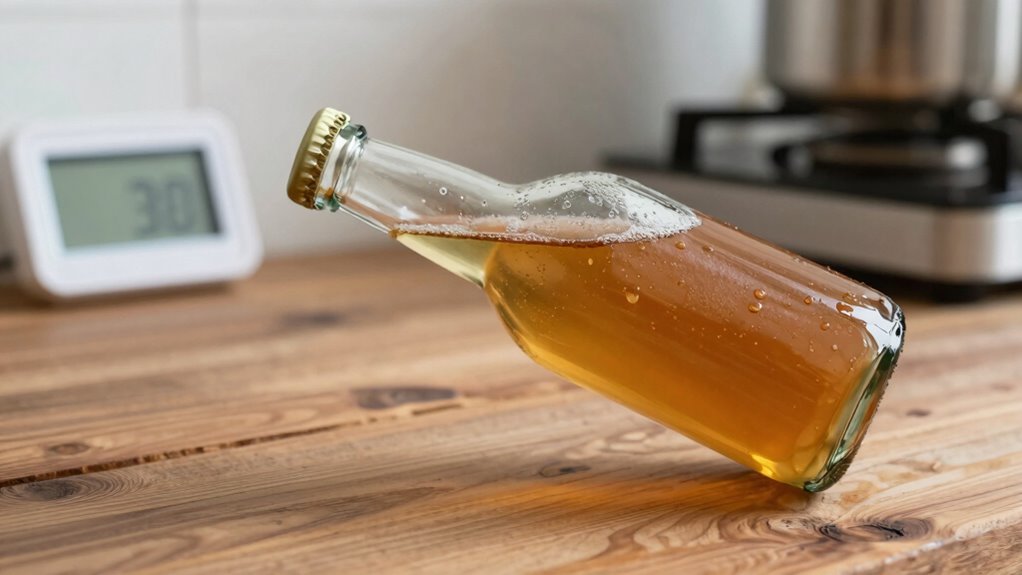

To avoid exploding bottles, you should regularly monitor your kombucha during secondary fermentation, burping bottles daily to release pressure and prevent buildup. Don’t bottle too early, as the brew may still produce excess gas, nor wait too long, risking over-carbonation. Use proper, pressure-safe bottles and store them in a cool, dark place. Following these safety steps helps prevent dangerous accidents—keep going to learn essential tips for safe fermentation.
Key Takeaways
- Monitor fermentation progress regularly to prevent over-carbonation and pressure buildup.
- Use proper bottles with airtight caps designed for carbonation to withstand pressure.
- “Burp” bottles daily during secondary fermentation to release excess gases safely.
- Avoid bottling too early, as incomplete fermentation increases explosion risk.
- Store bottles in a cool, dark place and refrigerate once desired carbonation is achieved.
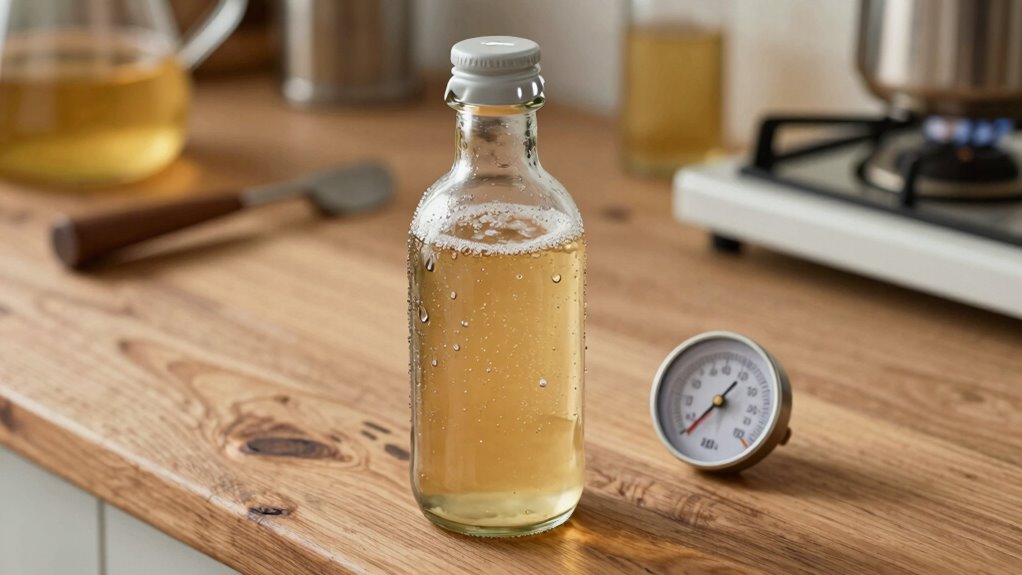
Kombucha can be an invigorating and healthy beverage, but it’s important to follow safety guidelines to avoid potential health risks. One common concern among home brewers is the danger of bottles exploding during fermentation. To prevent this, paying close attention to fermentation tips and storage guidelines is essential. These steps help ensure your kombucha ferments safely without creating a mess or risking injury.
First, understanding fermentation tips is crucial. During fermentation, yeast and bacteria produce carbon dioxide, which creates the natural fizz in kombucha. If fermentation progresses too long or if the bottle is sealed too tightly, pressure can build up to dangerous levels. To avoid this, you should regularly check your brew’s progress. Typically, a fermentation period of 7 to 14 days is recommended, but this varies based on temperature, tea, and sugar content. Use a wide-mouthed jar or a breathable cloth cover during primary fermentation to allow gases to escape safely. When you see signs of carbonation, like bubbles forming, it’s time to move to the next stage.
Check your kombucha regularly during fermentation to prevent dangerous pressure buildup.
Storage guidelines also play an essential role in safety. Once fermentation reaches the desired level, you need to transfer the kombucha into bottles designed for carbonation, preferably with air-tight caps that can withstand pressure. Keep in mind that bottling too early or too late can lead to problems. Bottling too early may cause under-carbonation, but bottling too late can result in excessive pressure buildup. Always store the bottles in a cool, dark place and refrigerate once they reach your preferred carbonation level. Refrigeration slows down fermentation and helps maintain consistent pressure inside the bottles, reducing the risk of explosions.
Monitoring your bottles closely during secondary fermentation is equally important. Gently “burp” them daily by opening the caps briefly to release excess gases if you notice a lot of fizz. This simple step can prevent dangerous pressure from accumulating. If you’re unsure whether your kombucha is ready for storage, check for a balance between carbonation and pressure. Over-carbonated bottles are more likely to explode when opened or moved. Additionally, understanding Free Floating in the context of fermentation can help you better gauge the activity of yeast and bacteria, ensuring a safer brewing process.
Frequently Asked Questions
Can I Speed up Kombucha Fermentation Safely?
You can speed up kombucha fermentation safely by slightly increasing the temperature during the fermentation process, which accelerates fermentation. However, focus on safe timing by tasting your brew regularly, typically after 5-7 days. Avoid over-fermentation, which can cause excess carbonation and potential bottle explosions. Always use proper bottles with secure caps and follow recommended fermentation guidelines to guarantee a safe and delicious kombucha.
What Are the Signs of a Spoiled Kombucha?
When in doubt, better safe than sorry. To spot spoiled kombucha, look for unusual fermentation indicators like a strong vinegar smell, mold, or a slimy film on the surface. If it tastes off or has an overly yeasty or sour flavor beyond normal fermentation, it’s a red flag. Spoilage detection is key—trust your senses, and if anything seems abnormal, it’s best to discard it to avoid health risks.
How Long Can I Store Homemade Kombucha?
You can store homemade kombucha for up to 1 to 3 weeks in airtight fermentation containers in the refrigerator. During this time, the fermentation timeline slows, preserving the flavor and preventing over-fermentation. Be sure to check for signs of spoilage, like mold or off smells, before drinking. Proper storage containers help maintain carbonation and prevent explosions. After this period, your kombucha may become overly sour or fizzy, so taste regularly.
Is It Safe to Drink Kombucha With Visible Mold?
Did you know that mold growth on kombucha is more common than you might think? If you see visible contamination or mold growth, it’s safest to toss it out. Drinking kombucha with visible mold can cause health issues, as mold produces toxins that aren’t safe to consume. Never taste or drink kombucha with visible contamination—discard it immediately to protect your health.
Are There Any Health Risks From Over-Fermentation?
Over-fermentation can pose health risks, such as excessive alcohol content or increased acidity that may upset your stomach. To prevent this, you should focus on fermentation monitoring, regularly testing your brew’s taste and smell. Proper mold prevention is also essential; discard the batch if you notice mold or off-putting odors. Staying vigilant helps guarantee your kombucha remains safe and delicious to drink.
Conclusion
So, next time you’re brewing your kombucha, remember the golden rule: don’t ignore those tiny bubbles or rushed bottling. After all, what’s more fun than an unexpected fizzy explosion in your kitchen? Avoid the ‘exploding bottle’ mistake and keep your fermentation safe—and your countertops intact. Because nothing says “homebrewer” like a surprise geyser and a lesson learned the hard way. Cheers to safe brewing—and keeping your kombucha inside the bottle!