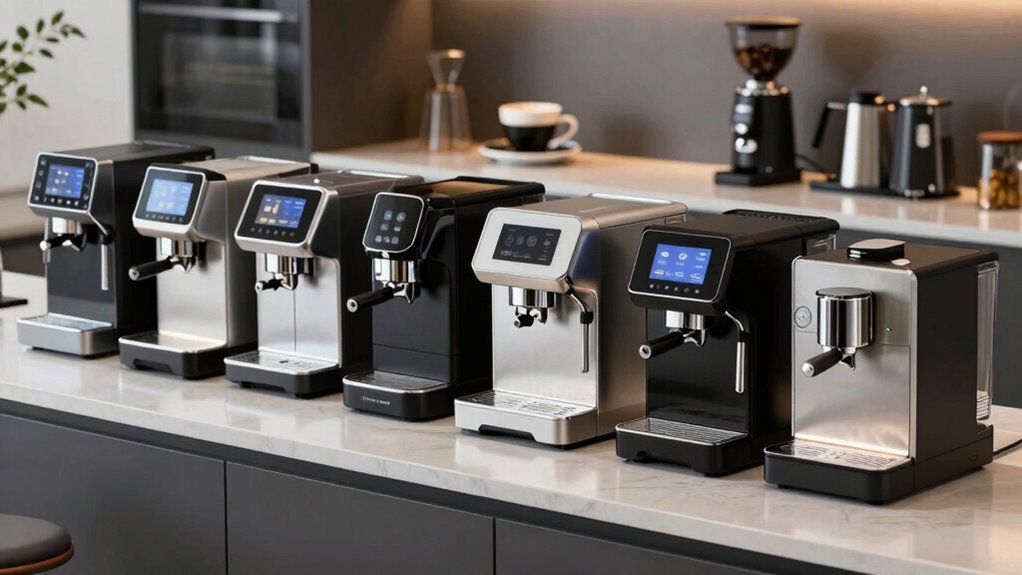
Shopping for super automatic espresso machines under $1000 means balancing grind quality, milk frothing, and daily usability without paying the premium-luxury tax. My top pick is the Philips 5500 Series with LatteGo, which offers one-touch milk drinks, a ceramic grinder, and the most drink variety at this price point. If your budget is tighter, the Philips 3200 Series delivers nearly the same LatteGo convenience for less, while the De’Longhi Magnifica Duo stands out for its dual-shot brewing and classic manual-froth flexibility. The main tradeoff in this category is between automated milk systems that prioritize convenience and steam wands or carafes that give you more control but require more effort. Below is my full breakdown of all ten machines, with clear guidance on who each one suits and which ones to skip.

Get kitchen staples and gadgets delivered free with Prime
- Fast, free delivery on millions of items
- Prime Video, Amazon Music and more included
- Member-only deals all year
Complete the kit


Key Takeaways
- Philips dominates this price bracket with five of the ten spots, and its LatteGo milk system (on the 3200, 4400, and 5500) proved to be the biggest convenience differentiator in the lineup.
- Sub-$400 models like the LINKLIFE, EUHOMY, and generic ‘Fully Automatic’ machines offer similar feature lists on paper but cut corners on grinder quality and long-term reliability, making them risky first machines.
- The Philips 2200 Series is the cheapest way into a trusted brand with a ceramic grinder, but its manual pannarello frother means it is espresso-focused rather than latte-focused.
- The Ninja AutoBarista Pro is the strongest non-Philips challenger, bringing barista-style pressure profiling and cold espresso to a category otherwise dominated by traditional European brands.
- Within the Philips range, the 3300 (EP3326/90) is the awkward middle child — glossier finish than the 3200 but weaker milk convenience, so most buyers should step up or down, not sideways.
| Philips 3200 Series Fully Automatic Espresso Machine with LatteGo Milk Frother (EP3241/54) |  | Best Overall | Model: EP3241/54 | Coffee Varieties: Espresso, Coffee, Americano, Cappuccino, Latte Macchiato | Milk System: LatteGo 2-part system, no tubes | VIEW ON AMAZON | See Our Full Breakdown |
| LINKLIFE Automatic Espresso Machine with Grinder and Milk Frother (Black) |  | Best for Iced Coffee Drinkers | One-Touch Recipes: 7 (incl. iced coffee) | Grinder: Built-in, 4-step adjustable | Milk Frother: Automatic | VIEW ON AMAZON | See Our Full Breakdown |
| Fully Automatic Espresso Machine with Milk Frother & Grinder |  | Best for Customization on a Budget | Grinder: Built-in conical burr | Grind Settings: 15 | Pressure System: 20-bar | VIEW ON AMAZON | See Our Full Breakdown |
| Philips 2200 Series Fully Automatic Espresso Machine with Classic Milk Frother (EP2220/14) |  | Best Value | Model: EP2220/14 | Coffee Options: Espresso, coffee, hot water | Milk System: Classic milk frother (steam wand) | VIEW ON AMAZON | See Our Full Breakdown |
| EUHOMY Fully Automatic Espresso Machine with Built-in Grinder and Milk Frother |  | Best for Maintenance-Conscious Households | Pump Pressure: 20 bars | Grinder: Integrated burr, 15 adjustable levels | Controls: Smart touchscreen | VIEW ON AMAZON | See Our Full Breakdown |
| Ninja AutoBarista Pro Fully Automatic Espresso Machine (AE1051) |  | Most Versatile Drink Menu | Model: AE1051 | Drink Options: 13 one-touch presets | Grind Settings: 50 (Grind iQ auto-selection) | VIEW ON AMAZON | See Our Full Breakdown |
| Philips 5500 Series Fully Automatic Espresso Machine with LatteGo Milk System | 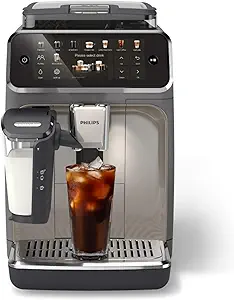 | Best Premium Pick | Series: Philips 5500 | Coffee Presets: 20 | Milk System: LatteGo (3 parts, no tubes, dishwasher safe) | VIEW ON AMAZON | See Our Full Breakdown |
| De’Longhi Magnifica Duo Automatic Espresso Machine with Milk Frother |  | Best for Iced Coffee and Cold Brew | Drink Recipes: 20 preset hot and iced recipes | Brewing Modes: Espresso, drip coffee, cold brew | Cold Brew Time: Under 3 minutes | VIEW ON AMAZON | See Our Full Breakdown |
| Philips 3300 Series Fully Automatic Espresso Machine with Milk Frother and Grinder (EP3326/90) |  | Best Value Pick | Model: EP3326/90 | Pressure: 15-bar | Beverage Presets: 5: Espresso, Coffee, Espresso Lungo, Iced Coffee, Hot Water | VIEW ON AMAZON | See Our Full Breakdown |
| Philips 4400 Series Fully Automatic Espresso Machine with LatteGo Milk System (EP4444/90) |  | Best Overall | Model: EP4444/90 | Presets: 12 hot and iced coffee presets | Milk System: LatteGo (3 parts, no tubes, dishwasher safe) | VIEW ON AMAZON | See Our Full Breakdown |
| super automatic espresso machines under 1000 | Grinder | Milk System | Model |
|---|---|---|---|
| Philips 3200 Series Fully Auto | 100% ceramic | LatteGo 2-part system, no tubes | EP3241/54 |
| LINKLIFE Automatic Espresso Ma | Built-in, 4-step adjustable | — | — |
| Fully Automatic Espresso Machi | Built-in conical burr | Automatic frother, detachable container | — |
| Philips 2200 Series Fully Auto | 100% ceramic | Classic milk frother (steam wand) | EP2220/14 |
| EUHOMY Fully Automatic Espress | Integrated burr, 15 adjustable levels | Built-in automatic frother | — |
| Ninja AutoBarista Pro Fully Au | — | — | AE1051 |
| Philips 5500 Series Fully Auto | — | LatteGo (3 parts, no tubes, dishwasher safe) | — |
| De’Longhi Magnifica Duo Automa | Integrated conical burr grinder | — | — |
| Philips 3300 Series Fully Auto | Integrated grinder | Integrated classic milk frother | EP3326/90 |
| Philips 4400 Series Fully Auto | Integrated burr grinder | LatteGo (3 parts, no tubes, dishwasher safe) | EP4444/90 |
More Details on Our Top Picks
Philips 3200 Series Fully Automatic Espresso Machine with LatteGo Milk Frother (EP3241/54)
Best Overall goes to the machine that solves the two biggest super-automatic headaches — milk cleanup and descaling — without asking the buyer to learn anything complicated. The Philips 3200 Series does exactly that. Its LatteGo milk system has no tubes to scrub, which is a genuine advantage over the detachable milk containers on the EUHOMY and generic touchscreen models that need rinsing after every milk drink. The AquaClean filter stretches descaling intervals up to 5,000 cups, a maintenance profile most budget rivals can’t match. Compared with its cheaper sibling, the Philips 2200 Series, this model adds cappuccino, latte macchiato, and Americano presets, making it the better fit for multi-drink households. The tradeoff is real, though: five presets with limited customization feels restrictive for tinkerers, and those AquaClean filters are an ongoing expense if you want the descaling benefit to hold.
Pros:- LatteGo milk system has no tubes and rinses clean in seconds
- AquaClean filter extends descaling intervals up to 5,000 cups
- Five one-touch drink presets cover the most popular café orders
- 100% ceramic grinder won’t overheat or impart metallic flavors
Cons:- AquaClean filter replacements are a recurring cost required to maintain the descaling benefit
- Milk texture is less customizable than a traditional steam wand
- Limited to five preset drinks with modest adjustment range
Best for: Households with mixed tastes — espresso drinkers and latte lovers sharing one machine who want near-zero daily maintenance
Not ideal for: Tinkering home baristas who want to dial in grind, dose, and milk texture manually — the presets and automatic frother cap how far you can push a shot
- Model:EP3241/54
- Coffee Varieties:Espresso, Coffee, Americano, Cappuccino, Latte Macchiato
- Milk System:LatteGo 2-part system, no tubes
- Grinder:100% ceramic
- Display:Intuitive touch display
- Filter:AquaClean
- Descaling Interval:Up to 5,000 cups with filter changes
Our verdict“If you want the most hassle-free, well-rounded super-automatic experience under $1,000, this is the default choice — unless manual control matters more to you than convenience.”
LINKLIFE Automatic Espresso Machine with Grinder and Milk Frother (Black)
Among the budget super-automatics in this lineup, the LINKLIFE earns its spot for one reason the others can’t claim: a dedicated iced coffee preset. Neither the Philips 3200 Series nor the Philips 2200 Series offers a cold-drink option at the touch of a button, which makes this model the obvious pick for anyone whose daily order is an iced latte rather than a hot cappuccino. Seven one-touch recipes also beat the Philips 2200’s two coffee options outright. The 4-step adjustable grinder is coarser in its adjustment range than the 15-level grinders on the EUHOMY or the generic touchscreen model, so flavor tuning is more blunt than precise. Add a 300 ml frothing pitcher that must live in the fridge between uses and a footprint that eats counter space, and you’re trading refinement for recipe variety at this price.
Pros:- Seven one-touch recipes including a genuine iced coffee option
- Built-in adjustable grinder delivers fresher flavor than pod machines
- Removable, dishwasher-safe parts make cleanup genuinely easy
- Low water and full grounds alerts reduce guesswork
Cons:- Milk carafe must be refrigerated between uses and washed regularly
- Only 4 grind steps limits how precisely you can tune extraction
- Bulky footprint for small counters
Best for: Iced-coffee and iced-latte drinkers who want a true cold preset without paying premium-brand prices
Not ideal for: Espresso purists chasing fine-tuned shots — the 4-step grinder offers far less precision than 15-level rivals
- One-Touch Recipes:7 (incl. iced coffee)
- Grinder:Built-in, 4-step adjustable
- Milk Frother:Automatic
- Frothing Pitcher:300 ml
- Water Tank:1.5 L
- Brew Capacity:Up to 12 cups
- Removable Parts:Dishwasher safe
Our verdict“Pick this if iced drinks are non-negotiable and you’re willing to accept a less refined grinder to get them affordably.”
Fully Automatic Espresso Machine with Milk Frother & Grinder
This unbranded touchscreen model takes the opposite approach to the Philips 3200 Series: instead of polished presets, it hands you 15 grind settings, adjustable strength, and adjustable volume so you can shape each drink yourself. That’s the appeal — the Philips locks you into five fixed recipes, while this machine invites experimentation and rewards buyers who already know what they like. The 20-bar extraction system and conical burr grinder produce respectable crema, though high pump pressure matters far less than grind quality, so don’t expect café-grade espresso just from the spec sheet. Like the EUHOMY, it relies on a detachable milk container that demands regular rinsing, a step up in daily effort from Philips’ tubeless LatteGo design. The self-cleaning cycle helps, but milk hygiene still falls on you. Fewer brand-name support resources are the hidden tradeoff if something goes wrong.
Pros:- 15 grind settings plus adjustable strength and volume for genuine shot tuning
- Conical burr grinder produces fresh, balanced crema
- Self-cleaning system reduces routine maintenance effort
- 200g bean hopper and 1.5L tank suit daily multi-cup use
Cons:- Detachable milk container requires frequent rinsing and refilling
- Weaker warranty and support network than major brands
- Combined grinder and milk hardware takes up serious counter space
Best for: Hands-on drinkers who want to tweak grind, strength, and volume for every cup without spending near the $1,000 ceiling
Not ideal for: Buyers who prioritize long-term reliability and brand support — an unbranded machine carries more risk than established names like Philips or De’Longhi
- Grinder:Built-in conical burr
- Grind Settings:15
- Pressure System:20-bar
- Controls:Touchscreen
- Milk System:Automatic frother, detachable container
- Water Tank:1.5 L
- Bean Hopper:200 g
- Beverages:Espresso, cappuccino, latte, Americano
Our verdict“The right choice if you’d rather tune your own espresso than trust fixed presets — just accept the maintenance burden and brand risk that come with it.”
Philips 2200 Series Fully Automatic Espresso Machine with Classic Milk Frother (EP2220/14)
The Philips 2200 Series proves that a budget pick doesn’t have to mean compromise on the fundamentals. You get the same ceramic grinder and AquaClean filter platform as the pricier Philips 3200 Series, so shot quality and descaling intervals are on nearly equal footing — what you give up is automation. The classic milk frother here is a manual steam wand rather than the 3200’s tubeless LatteGo system, meaning you froth milk yourself. For some buyers that’s a drawback; for anyone who drinks mostly black coffee or espresso with the occasional cappuccino, it’s a fair trade that lowers the entry price. Compared with unbranded rivals like the LINKLIFE, the Philips brand pedigree and filter ecosystem offer better long-term ownership confidence. The hard limit is variety: just espresso and coffee presets, no automatic milk drinks, and the descaling claim depends on faithfully replacing filters.
Pros:- Same ceramic grinder and AquaClean platform as pricier Philips models
- Classic steam frother handles both dairy and plant-based milks
- Adjustable strength and volume let you refine the two presets
- Backed by an established brand with real support infrastructure
Cons:- Only two coffee presets with no automatic milk drinks
- Manual milk frothing adds effort the 3200 Series avoids
- Descaling benefit requires consistent AquaClean filter replacement
Best for: Black coffee and espresso drinkers who want Philips build quality and low maintenance at the lowest entry price
Not ideal for: Latte and macchiato lovers who want one-touch milk drinks — the manual steam wand and two presets will feel limiting fast
- Model:EP2220/14
- Coffee Options:Espresso, coffee, hot water
- Milk System:Classic milk frother (steam wand)
- Grinder:100% ceramic
- Display:Intuitive touch display
- Water Filter:AquaClean
- Descaling Interval:Up to 5,000 cups with prompted filter changes
Our verdict“The smartest spend for people who mostly drink their coffee black — skip it if one-touch milk drinks are the whole point of going super-automatic.”
EUHOMY Fully Automatic Espresso Machine with Built-in Grinder and Milk Frother
Where the Philips 3200 Series simplifies cleaning with its tubeless LatteGo design, the EUHOMY attacks maintenance from another angle: automation. Its self-cleaning program plus one-touch bean purge handles the drudgery internally, and smart alerts for beans, water, grounds, and component placement mean the machine tells you what it needs rather than leaving you guessing — something neither the Philips 2200 nor the LINKLIFE does as thoroughly. The 15-level burr grinder gives it the same tuning range as the unbranded touchscreen model, but with clearer ergonomics: an adjustable spout height lets you brew into everything from an espresso cup to a tall travel mug without splatter. The milk system still needs regular manual attention — automatic frothers are never fully self-cleaning — and like most machines with integrated grinders and milk hardware, it occupies a large slice of counter. It sits between the Philips presets-first philosophy and the unbranded tinkerer’s approach, splitting the difference well.
Pros:- Self-cleaning program and one-touch bean purge cut daily maintenance
- Smart alerts cover beans, water, grounds, and part placement
- 15 grind levels match the tuning range of more customizable rivals
- Adjustable spout height fits everything from espresso cups to travel mugs
Cons:- Milk system still requires regular manual cleaning despite automation
- Large countertop footprint rivals the biggest machines here
- Brand’s long-term reliability track record is less proven than Philips
Best for: Busy households that want a machine that manages its own upkeep and tells them when something needs attention
Not ideal for: Compact kitchens or minimalists — the integrated grinder, frother, and 1.5L tank make this one of the larger footprints in the lineup
- Pump Pressure:20 bars
- Grinder:Integrated burr, 15 adjustable levels
- Controls:Smart touchscreen
- Milk System:Built-in automatic frother
- Water Tank:1.5 L
- Bean Hopper:200 g
- Spout:Adjustable height
- Cleaning:Automatic self-cleaning with bean purge
Our verdict“A strong middle path for buyers who want customization and self-maintaining features together — as long as counter space isn’t tight.”
Ninja AutoBarista Pro Fully Automatic Espresso Machine (AE1051)
This option stands out for refusing to pick a lane: espresso, drip coffee, and rapid cold brew all live in one machine, governed by 13 one-touch presets. Compared with the Philips 3300 Series, which stops at five presets, the AutoBarista Pro gives you both true 9-bar espresso and a drip-style brew, which matters if your household splits between espresso drinkers and regular-coffee drinkers. Grind iQ auto-selects from 50 grind settings, meaning less guesswork than machines that leave grind calibration entirely to you. The tradeoff is size and upkeep — an all-in-one platform this ambitious eats counter space, and the grinder plus FrothPerfect frother demand regular maintenance to stay at their best. This pick makes the most sense for buyers who want a single machine covering every possible craving rather than the most streamlined espresso workflow.
Pros:- 13 one-touch presets spanning espresso, drip coffee, and rapid cold brew
- Grind iQ auto-selects from 50 grind settings for balanced extraction without guesswork
- True 9-bar espresso with real crema
- Hands-free microfoam frothing handles dairy and plant-based milks, hot or iced
Cons:- Large countertop footprint typical of all-in-one machines
- Combined grinder and frother systems require regular cleaning and maintenance
Best for: Households where some people drink espresso and others want drip coffee or cold brew from one machine
Not ideal for: Minimalist kitchens or low-maintenance buyers — the large footprint and multi-system upkeep are real commitments
- Model:AE1051
- Drink Options:13 one-touch presets
- Grind Settings:50 (Grind iQ auto-selection)
- Pressure:15-bar system tuned to 9-bar espresso
- Frothing:FrothPerfect, 5 microfoam styles, hot or iced
- Wattage:1650 watts, 120V
- Cleanup:Auto-rinse, removable parts, self-drying fan
Our verdict“Choose this if one machine truly has to do everything for a mixed household of espresso and drip coffee drinkers.”
Philips 5500 Series Fully Automatic Espresso Machine with LatteGo Milk System
The 5500 Series sits at the top of Philips’ lineup here, and the 20 drink presets are the clearest separator from the Philips 4400 Series, which offers 12. That wider menu, paired with a color display and personalized strength, volume, and milk settings, makes it the better fit for households with varied, milk-heavy routines. The LatteGo system is the standout practical feature: three parts, no hidden tubes, dishwasher safe — a meaningful step up in daily convenience over the classic frother on the 3300 Series, which needs more manual attention. SilentBrew operation and a 3-second QuickStart round out a polished experience. The tradeoffs are honest ones: you still have to clean the milk system after every milky drink, it occupies serious counter space, and buyers who enjoy hands-on dialing-in will find full automation limits their control compared with a manual setup.
Pros:- 20 one-touch presets covering hot and iced drinks
- LatteGo milk system has no internal tubes and is dishwasher safe
- 3-second QuickStart with 40% quieter SilentBrew operation
- AquaClean filter extends descaling intervals up to 5,000 cups
Cons:- Milk system still requires cleaning after every milk-based drink
- Full automation offers less control for hands-on espresso enthusiasts
- Substantial counter footprint for a fully automatic machine
Best for: Busy households that want the widest one-touch menu and the easiest milk-system cleanup
Not ideal for: Tinkerers who want manual control over extraction, or anyone with tight counter space
- Series:Philips 5500
- Coffee Presets:20
- Milk System:LatteGo (3 parts, no tubes, dishwasher safe)
- Display:Color display
- Pressure Pump:15 bar
- Ready Time:3 seconds (QuickStart)
- Noise:SilentBrew, 40% quieter than earlier models
- Water Filter:AquaClean, up to 5,000 cups before descaling
Our verdict“The most complete and convenient package in this lineup, best for families willing to trade manual control for breadth and speed.”
De’Longhi Magnifica Duo Automatic Espresso Machine with Milk Frother
Where the Ninja AutoBarista Pro treats cold brew as one option among thirteen, the Magnifica Duo builds its identity around cold drinks: cold brew in under three minutes, iced lattes, and dedicated LatteCrema Hot and Cool technologies for milk foam at either temperature. That dual-temperature frothing is the differentiator — plant-based and dairy milks can be frothed cold for iced drinks without compromise, something the classic frother on the Philips 3300 Series doesn’t handle as gracefully. The integrated conical burr grinder and 20 preset recipes keep it competitive with the Philips 5500 on menu breadth. Where it falls short of Philips’ LatteGo is tube-free simplicity: while the frother components are removable and dishwasher safe, De’Longhi’s milk system generally asks a bit more of you at cleanup time. This model is better suited to iced-coffee-first buyers than to anyone whose routine is almost entirely straight espresso.
Pros:- Cold brew ready in under 3 minutes
- 20 preset hot and iced recipes
- LatteCrema froths dairy and plant-based milks hot or cold
- Integrated conical burr grinder for fresh grounds
Cons:- Milk frothing system is more involved to maintain than Philips’ tube-free LatteGo
- Its cold-drink focus adds complexity buyers may not need
Best for: Iced latte and cold brew drinkers who want speed and hot-or-cold milk foam from one machine
Not ideal for: Straight-espresso purists — its headline features are wasted if you never touch cold drinks
- Drink Recipes:20 preset hot and iced recipes
- Brewing Modes:Espresso, drip coffee, cold brew
- Cold Brew Time:Under 3 minutes
- Milk Frothing:LatteCrema Hot and Cool
- Grinder:Integrated conical burr grinder
- Frother Components:Removable and dishwasher safe
Our verdict“The clear choice if iced drinks drive your daily routine and you want them in minutes, not hours.”
Philips 3300 Series Fully Automatic Espresso Machine with Milk Frother and Grinder (EP3326/90)
This model makes the most sense for buyers who want core super-automatic functionality without paying for a long drink menu. Five presets — espresso, coffee, lungo, iced coffee, hot water — cover the essentials, and compared with the Philips 4400 Series, you give up seven presets and the tube-free LatteGo system, but keep the same AquaClean filter (up to 5,000 cups before descaling), the same 15-bar pump, and the same SilentBrew quietness. That shared engineering is what makes it a value rather than a compromise. The classic integrated frother is the main gap: it works for lattes and cappuccinos but demands more hands-on control than the one-touch milk systems higher up the Philips range. Anyone who mostly drinks black coffee or straight espresso won’t miss much; latte lovers should consider stretching to the 4400 instead.
Pros:- One-touch brewing with adjustable strength and volume
- AquaClean filter reduces descaling to roughly every 5,000 cups
- SilentBrew operation, 40% quieter, with full 15-bar pressure
- Full color display despite the entry-level positioning
Cons:- Classic milk frother requires more manual control than LatteGo
- Reduced descaling benefit depends on ongoing filter replacements
- Only five preset beverage options
Best for: Budget-conscious espresso and black coffee drinkers who want a grinder and presets without a premium milk system
Not ideal for: Daily latte and cappuccino drinkers — the classic frother adds manual steps the LatteGo models eliminate
- Model:EP3326/90
- Pressure:15-bar
- Beverage Presets:5: Espresso, Coffee, Espresso Lungo, Iced Coffee, Hot Water
- Milk System:Integrated classic milk frother
- Grinder:Integrated grinder
- Display:Full color display
- Filter:AquaClean, up to 5,000 cups between descaling
- Noise:SilentBrew, 40% quieter
Our verdict“The smartest spend in the roundup for black-coffee-first buyers who want Philips reliability at the lowest commitment level.”
Philips 4400 Series Fully Automatic Espresso Machine with LatteGo Milk System (EP4444/90)
This is the pick I’d point most buyers toward, because it hits the balance point the whole category is searching for. Against the 3300 Series, the step up gets you the LatteGo system — three parts, no tubes, rinsed clean in 10 seconds — which is the single biggest quality-of-life upgrade a milk-drinking household can buy. Against the 5500 Series, you give up eight presets but keep the 3-second QuickStart, Quiet Mark-certified operation, and customizable strength, volume, and milk levels with two saved user profiles. Twelve hot and iced presets is plenty for most routines; twenty is a luxury few actually use. The tradeoffs are real but modest: two profiles can feel tight for larger households, and like any fully automatic, it costs more than a manual setup while offering less hands-on control for hobbyists.
Pros:- 12 hot and iced one-touch presets
- LatteGo cleans in 10 seconds — 3 dishwasher-safe parts, no tubes
- 3-second QuickStart heat-up with Quiet Mark-certified operation
- Customizable strength, volume, and milk level with 2 user profiles
Cons:- Limited to 2 user profiles, which larger households will outgrow
- Premium over manual machines without offering manual-level control
Best for: Couples and small households who drink milk-based coffee daily and want the easiest cleanup in the class
Not ideal for: Larger households needing more than two profiles, or espresso hobbyists who want manual dialing-in
- Model:EP4444/90
- Presets:12 hot and iced coffee presets
- Milk System:LatteGo (3 parts, no tubes, dishwasher safe)
- Grinder:Integrated burr grinder
- Pressure:15-bar
- Heat-up Time:3 seconds (QuickStart)
- Noise:40% quieter than earlier models, Quiet Mark certified
- User Profiles:2
Our verdict“The best all-around choice in this price bracket — the sweet spot of drink variety, cleanup speed, and daily usability.”

How We Picked
I evaluated each machine against the factors that actually determine satisfaction at this price: grinder and brewing quality (ceramic vs. steel burrs, adjustable grind settings, 15-bar pump consistency), milk system convenience and cleanability, drink variety and customization, and daily usability including water tank size, hopper capacity, and interface clarity. Because these machines live on countertops for years, I also weighed maintenance burden and build reputation — how easily each unit descales, how many removable parts are dishwasher-safe, and how established the manufacturer’s service network is.
Ranking was driven by value-to-capability ratio rather than feature counts alone. The Philips LatteGo models rose to the top because their two-part milk system eliminates the tubes and cleaning cycles that frustrate owners of carafe-based machines. Established-brand entry models ranked above feature-rich generics because grinder durability and parts availability matter more at this price than an extra preset. Machines were also compared directly against their siblings — the 3200 vs. 3300 vs. 4400 vs. 5500 — so the ranking reflects which specific model earns its premium, not just brand reputation.
| super automatic espresso machines under 1000 | Model | Milk System |
|---|---|---|
| Philips 3200 Series Fully Auto | EP3241/54 | LatteGo 2-part system, no tubes |
| LINKLIFE Automatic Espresso Ma | — | — |
| Fully Automatic Espresso Machi | — | Automatic frother, detachable container |
| Philips 2200 Series Fully Auto | EP2220/14 | Classic milk frother (steam wand) |
| EUHOMY Fully Automatic Espress | — | Built-in automatic frother |
| Ninja AutoBarista Pro Fully Au | AE1051 | — |
| Philips 5500 Series Fully Auto | — | LatteGo (3 parts, no tubes, dishwasher safe) |
| De’Longhi Magnifica Duo Automa | — | — |
| Philips 3300 Series Fully Auto | EP3326/90 | Integrated classic milk frother |
| Philips 4400 Series Fully Auto | EP4444/90 | LatteGo (3 parts, no tubes, dishwasher safe) |
Factors to Consider When Choosing Super Automatic Espresso Machines Under 1000
Before choosing a machine, it helps to understand what actually separates a satisfying purchase from a regrettable one in this category. These are the factors I weighed most heavily, along with the mistakes buyers make when evaluating them.Milk System Type Is the Biggest Decision
The milk delivery method shapes your entire daily routine more than any other feature. Automated systems like Philips’ LatteGo brew milk drinks at the touch of a button and clean up in seconds under a tap, which is why they dominate the top of my ranking. Classic pannarello wands, like the one on the Philips 2200, give you acceptable foam for cappuccinos but require manual steaming and rinsing every time. Carafe-based systems sit in between — convenient for back-to-back lattes, but they add tubes and cleaning cycles that many owners skip until the machine complains. My advice: if you drink more than two milk beverages a day, pay for automation. If you mostly drink straight espresso or americanos, the milk system barely matters and you can save your budget.
Grinder Quality Predicts Longevity
Every machine in this roundup has a built-in burr grinder, but burr material and adjustment range differ meaningfully. Ceramic burrs, used across the Philips lineup, run cooler, resist corrosion, and stay sharp far longer than the steel burrs in budget generics, which can dull within a couple of years of heavy use. A wider grind adjustment range also matters — five or more settings let you compensate for bean age and roast level, while three coarse settings leave you stuck when shots pull sour or bitter. The common mistake here is buying on preset count and ignoring the grinder entirely; a machine with 12 presets and a mediocre grinder will always lose to one with 5 presets and a proper ceramic burr set. Since replacing a grinder usually costs more than the machine is worth, treat it as the component you are actually paying for.
The Brand-Name vs. Generic Trap
This price bracket is flooded with generic machines that list impressive specs — 15-bar pumps, 20 grind settings, dual milk systems — at prices established brands can’t match. The catch is that brewing performance depends on thermoblock quality, pump consistency, and firmware, none of which appear on a spec sheet. Generic machines also carry real risks around warranty support, replacement parts, and availability of descaling and cleaning products. An established brand like Philips, De’Longhi, or Ninja gives you a service network, documented maintenance routines, and machines that technicians know how to repair. My rule: under $500, brand-name entry models beat generic feature-stacked machines almost every time; the generics only make sense for very light use or as a low-commitment experiment.
Maintenance Burden Determines Whether You Keep Using It
Super automatics fail in a predictable way: owners stop descaling, milk residue builds up, and the machine ends up in a cabinet within a year. When comparing models, look at how many parts are removable and dishwasher-safe, how the machine signals cleaning cycles, and whether it has an automated rinsing routine at startup and shutdown. Philips’ AquaClean filter system, for example, can postpone descaling for months if you keep the filter fresh — a genuine lifestyle difference, not a marketing line. Carafe machines demand disassembly and tube flushing that wand machines don’t, and generic machines often have vague manuals that make routine maintenance guesswork. Choose the machine whose cleaning routine you will realistically follow, because a slightly worse espresso from a clean machine always beats great espresso from a neglected one.
Capacity and Footprint: Match the Machine to Your Household
Water tank size, bean hopper capacity, and counter depth separate machines that fit your life from machines that fight it. A 1.8-liter tank suits one to two daily drinkers; a household of four will refill it constantly and should prioritize larger tanks or easy front access. Hopper size follows the same logic, with one added wrinkle: large hoppers left full go stale, so a smaller 8-ounce hopper is not always a downgrade for people who rotate beans. Also measure your counter and cabinet height before buying — several machines in this class need significant overhead clearance for the bean lid and maintenance access, and some are deep enough to block a standard outlet. Skipping this step is one of the most common and easily avoided buying mistakes.
Knowing When to Pay More Within Your Budget
Because this roundup caps at $1000, the question is less about whether you can afford the category and more about where each extra dollar goes. Stepping up within a brand’s lineup typically buys you the better milk system first, then drink presets and user profiles, then quieter grinders and displays — in roughly that order of real-world value. The jump from a wand machine to a LatteGo-class system changes your daily routine; the jump from five presets to twelve rarely does. User memory profiles are worth paying for only in multi-drinker households where everyone wants different strengths. Display type is the weakest upgrade: touch panels look nicer, but a well-labeled button interface like the 2200’s is honestly easier to operate half-awake.
Frequently Asked Questions
Is the Philips 5500 worth the premium over the 3200 if both have LatteGo?
It depends entirely on drink variety and household size. The 5500 adds more one-touch specialties, user profiles for multiple drinkers, and a larger interface, which matters if your household orders differently — one person wants a mild lungo, another a strong flat white. For a single person or couple who drinks the same two or three beverages daily, the 3200 produces the same core espresso and milk quality through the same LatteGo system, and the extra presets would go unused. The 5500 makes the most sense when its profile feature will actually get used by three or more people. If you are deciding between them for a one-person kitchen, save the difference and spend it on better beans.
Are the generic machines under $400 really that much worse than Philips or De’Longhi?
On day one, often not — many pull a respectable shot and offer features the big brands reserve for pricier models. The differences show up over months: steel burrs that dull faster, thermoblocks with less stable temperature control, vague manuals, and thin warranty support. If a generic machine fails outside the return window, you are usually replacing it rather than repairing it, which erases the initial savings. They can work as low-risk starter machines for light use or for testing whether you will actually enjoy a super automatic at all. For daily, multi-cup households, the established brands are the safer long-term bet.
LatteGo or classic milk frother — which should I choose?
LatteGo is about speed and hygiene: no tubes, two dishwasher-safe parts, and milk drinks in one button press with a rinse cycle that takes seconds. The tradeoff is texture control — LatteGo produces consistently good froth but not the microfoam quality a manual wand can achieve with skill. A classic pannarello wand, like on the Philips 2200 or De’Longhi Magnifica Duo, gives denser, more customizable foam and works with any milk carton, but demands 30–60 seconds of steaming and immediate wiping every single time. If your morning has no room for technique, LatteGo wins. If you enjoy the ritual and occasionally want latte-art-grade milk, the wand is more satisfying.
Do I need to use filtered water or AquaClean-style filters in these machines?
Water quality is the single biggest driver of maintenance frequency in this category. Hard water scale is what kills thermoblocks and triggers constant descaling cycles, so if you have hard tap water, an integrated filter system pays for itself in reduced descaling alone — Philips’ AquaClean claims to extend descaling intervals dramatically when kept fresh. If your water is naturally soft or you already use a whole-house softener, filters are more optional, though they still improve taste by removing chlorine. The mistake to avoid is buying the machine and then never replacing the filter, which gives you neither protection nor savings. Check your local water hardness before deciding, because it should genuinely change which machine and maintenance routine make sense for you.
Can a super automatic under $1000 actually match a manual espresso setup?
For consistency, yes; for peak quality, not quite. A skilled barista with a $300 manual machine, a good grinder, and fresh beans can out-pull any machine here — but that skill takes months to build and five minutes per drink to execute. What a good super automatic delivers is a very good shot at 90-plus percent of that quality, on demand, with zero technique. The gap has narrowed enough that for most daily drinkers, the convenience outweighs the last bit of refinement. The honest framing: buy a super automatic for reliable, effortless coffee every day, not for hobbyist perfection. If chasing the perfect shot is the appeal, this category will feel limiting within a year.
Conclusion
After comparing all ten machines, the right choice comes down to how you drink coffee and how much routine you will tolerate. For best overall, the Philips 5500 Series earns the top spot with one-touch milk drinks, user profiles, and the most complete feature set under $1000. The best value pick is the Philips 3200 Series, which delivers the same LatteGo convenience and ceramic grinder at a friendlier price — most buyers honestly do not need more machine than this. For best premium balance, the Philips 4400 Series sits between the two with a quieter grinder and more customization than the 3200.
Best for beginners goes to the Philips 2200 Series: simple controls, a trusted brand, and a gentle entry price, provided you are content mostly with espresso, americano, and occasional manual-frothed cappuccino. For specific needs, the Ninja AutoBarista Pro suits adventurous drinkers who want cold espresso and pressure variety outside the Philips formula, while the De’Longhi Magnifica Duo is the pick for households that brew two shots at once. I would skip the 3300 in favor of either the cheaper 3200 or the stronger 4400, and treat the generic machines as experiments rather than daily drivers. Whatever your budget within this range, prioritize the grinder and the milk system you will actually maintain — those two choices determine whether you love the machine in year three or quietly stop using it.
NFL season / tailgating Picks
team gear
As an affiliate, we earn on qualifying purchases.