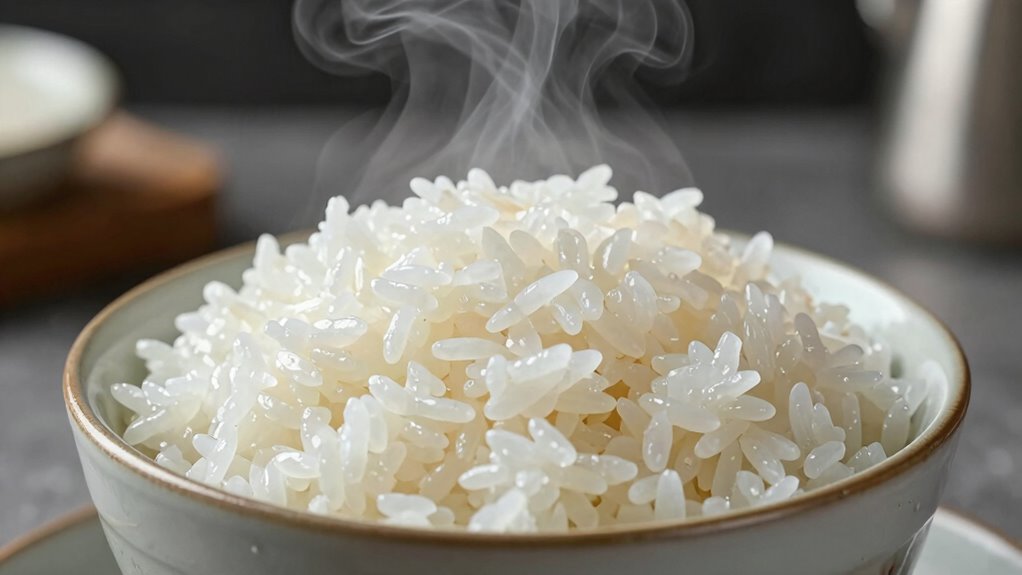

To reheat rice without weird textures, use the steam method. Place cooled rice in a microwave-safe dish or pot, add about one tablespoon of water per cup of rice, and cover tightly to trap steam. Reheat on low heat for 5-10 minutes, stirring occasionally, or microwave for 1-2 minutes, checking and stirring in between. Using this gentle steam preserves the rice’s fluffiness and prevents it from drying out or becoming mushy—keep going to discover more tips.

Get kitchen staples and gadgets delivered free — and shop member deals
- Fast, free delivery on millions of items
- Access to Prime Big Deal Days deals on October 6–7
- Prime Video, Amazon Music and more included
Key Takeaways
- Use a small amount of water (about one tablespoon per cup) and cover tightly to create steam during reheating.
- Reheat rice on low heat or in the microwave in short intervals, stirring to distribute moisture evenly.
- Always reheat rice straight from the fridge to maintain proper texture and prevent dryness.
- Choose the right reheating method based on rice variety to prevent stickiness or dryness.
- Proper storage in airtight containers and quick refrigeration keep rice safe and help maintain its original texture.
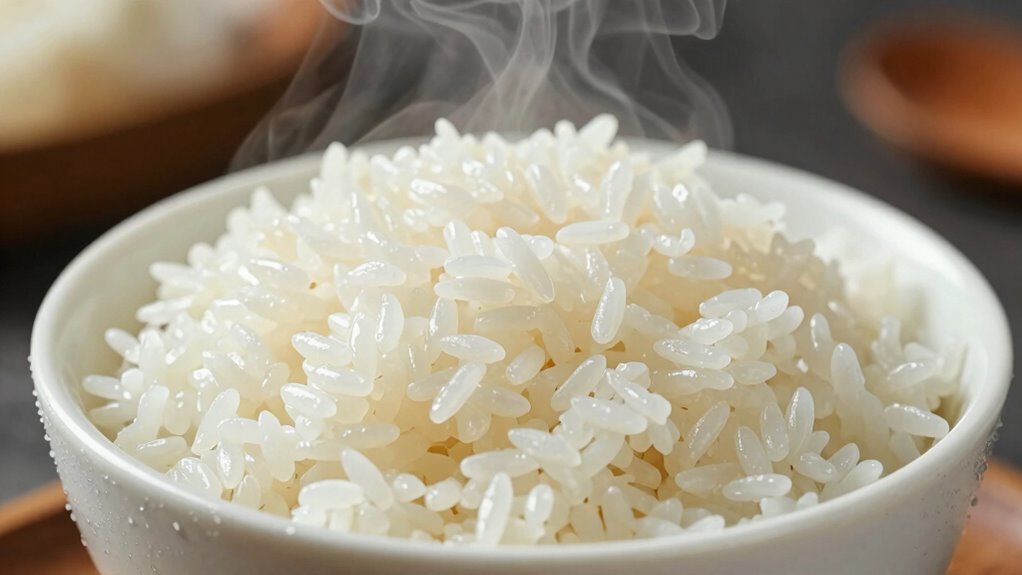
Reheating rice can often result in a strange, mushy texture that ruins the dish, but with the right techniques, you can preserve its original firmness and fluffiness. The key is to use the steam method, which gently reheats rice without overcooking or drying it out. To start, proper storage tips are essential. Once rice cools after cooking, transfer it to an airtight container and refrigerate within two hours. Keeping rice at a consistent, cold temperature slows bacterial growth and maintains its texture. Avoid leaving rice at room temperature for too long, as this can lead to spoilage and uneven reheating. When you’re ready to reheat, take the rice straight from the fridge, as bringing it to room temperature first can cause uneven heating.
Properly store cooled rice in an airtight container within two hours to maintain freshness and prevent spoilage.
Different rice varieties respond differently to reheating, so understanding your rice type helps achieve the best results. For example, long-grain rice like basmati or jasmine tends to stay fluffy when reheated using the steam method, while shorter grains like sushi rice may become stickier if not reheated carefully. Whichever variety you choose, the steaming process helps restore moisture evenly throughout the grains, preventing dryness and mushiness.
To reheat, place a small amount of water—about a tablespoon per cup of rice—in the bottom of a pot or a microwave-safe dish. Add the rice, then cover tightly with a lid or plastic wrap to trap steam. If you’re using a stove, set the heat to low and let the rice gently heat through for 5-10 minutes, stirring occasionally to distribute the moisture. For microwave reheating, start with 1-2 minutes, then check the rice and stir. Continue in short intervals until the rice is hot all the way through. The steam created from the added water will soften the grains and revive their fluffiness.
This method works well for all rice varieties, but it’s especially effective because it prevents the rice from becoming dry or clumpy. The gentle steam reheating preserves the rice’s original texture, making leftovers taste freshly cooked. Remember, the secret is in the moisture and gentle heat—avoid microwaving rice without added water, as it can lead to uneven heating and a rubbery texture. With these storage tips, understanding your rice variety, and the steam technique, you’ll reheat rice perfectly every time, maintaining the deliciousness without the weird, undesirable texture.
As an affiliate, we earn on qualifying purchases.
Frequently Asked Questions
Can I Reheat Rice Multiple Times Using the Steam Method?
Yes, you can reheat rice multiple times using the steam method, but it’s best to do so carefully to avoid food safety issues. When reheating, make sure you store rice properly in an airtight container and reheat only what you’ll eat to prevent bacteria growth. For microwave reheating, steaming keeps the rice moist and fresh. Follow rice storage tips and reheat thoroughly each time to enjoy safe, delicious rice.
Is the Steam Method Suitable for All Types of Rice?
The steam method works well for most rice varieties, but not all. Long-grain and jasmine rice reheat beautifully with steaming, maintaining moisture and texture. However, sticky or sushi rice may become overly soft or mushy. You can use common steaming equipment like a steamer basket or microwave steamer. Just be mindful of the rice type you’re reheating, adjusting the steam time to prevent over-softening.
How Long Should I Steam Rice to Prevent Dryness?
You should steam rice for about 5 to 10 minutes to prevent dryness and maintain moisture retention. Keep an eye on the rice to make certain it doesn’t overheat, which can affect texture preservation. Use a steaming basket with a lid to trap moisture, and check periodically. This quick steaming time helps keep your rice tender, fluffy, and fresh, avoiding the common problem of dryness after reheating.
Can I Add Seasoning While Reheating Rice With Steam?
Yes, you can add seasoning while reheating rice with steam. Just sprinkle your desired flavors—like soy sauce, herbs, or spices—over the rice before steaming. This approach allows for flavor infusion without compromising texture preservation, keeping your rice moist and fluffy. Be sure not to add too much liquid, as it can make the rice soggy. Steam gently, and your seasoned rice will taste fresh and perfectly textured.
Does Steaming Rice Kill Bacteria Effectively?
Imagine a gentle cloud enveloping your rice, transforming it back to warm perfection. Steaming effectively boosts bacterial safety by reaching high temperatures that kill most bacteria, ensuring your rice is safe to eat. The steaming effectiveness depends on maintaining consistent heat, so you should reheat thoroughly. This method not only preserves texture but also reduces the risk of foodborne illness, giving you peace of mind with every fluffy, steaming bite.
Conclusion
Reheating rice with the steam method is like giving your leftovers a gentle hug, restoring their softness without the odd texture. It’s simple, effective, and keeps your rice fluffy and perfect for every bite. Just a little steam transforms the tough, chilled grains back into a warm, inviting dish. So next time you reheat rice, remember this method—your leftovers will thank you, and your taste buds will dance with delight.
Fall Picks
fall essentials
As an affiliate, we earn on qualifying purchases.