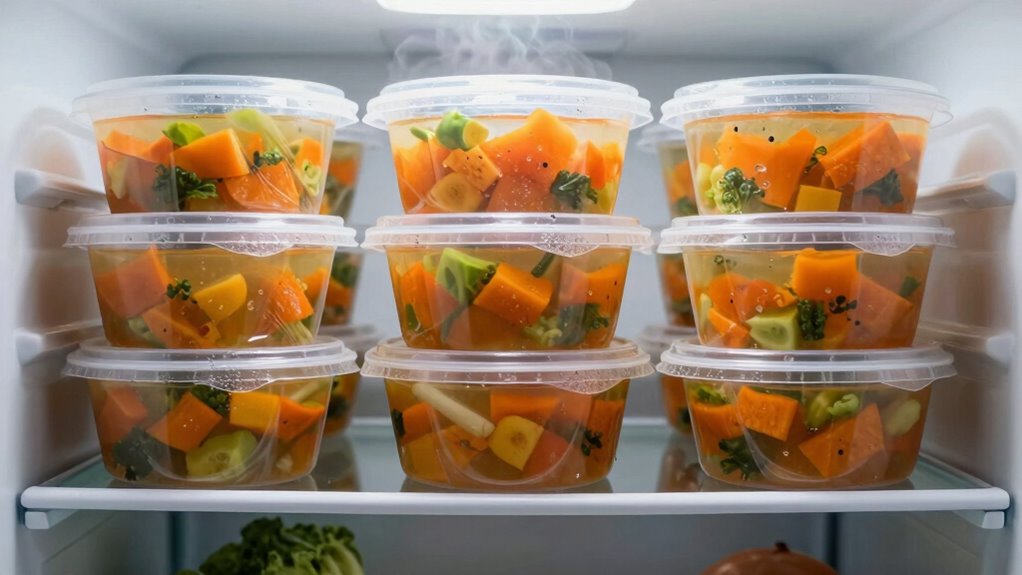
To prevent freezer burn when freezing soup in portions, choose airtight containers with a tight seal and leave about an inch of headspace to allow for expansion. Before sealing, press out excess air or use a ladle to minimize air pockets. Label each container with the date for easy tracking. Properly stored, your soup will stay fresh longer. Keep feeling confident; there’s more helpful tips on freezing your soup perfectly if you keep exploring.
Key Takeaways
- Use airtight containers with a tight seal to prevent air exposure and freezer burn.
- Leave about an inch of headspace in containers to accommodate soup expansion during freezing.
- Press soup gently or use a ladle to remove excess air before sealing the container.
- Label containers with date and contents to monitor storage duration and maintain freshness.
- Fill containers to minimize air pockets, ensuring even freezing and better preservation of flavor.
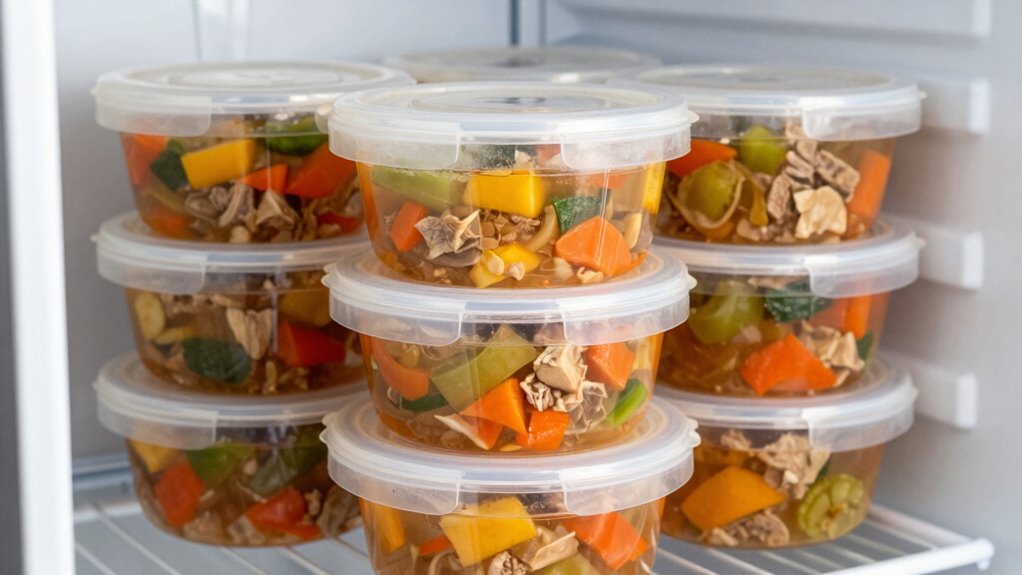
Freezing soup portions is an easy and efficient way to save time and reduce waste in your kitchen. When you prepare soup in advance, you can enjoy a warm, homemade meal on busy days without the hassle of cooking from scratch. The key to maintaining the soup’s flavor and quality during freezing is choosing the right storage method. Using airtight containers is vital to prevent freezer burn and keep your soup tasting fresh. These containers create a tight seal, blocking out air and moisture that can cause ice crystals and deterioration in texture and flavor.
Portion sizing also plays a critical role in successful freezing. Instead of freezing large batches all at once, divide your soup into smaller, manageable portions. This approach not only helps with portion control but also minimizes wastage. When you’re ready to eat, you can thaw only what you need, reducing the risk of leftovers going bad. Plus, smaller portions freeze and reheat more evenly, preserving the soup’s original taste and consistency.
To get the most out of your airtight containers, make sure they are clean and dry before filling them with soup. Leave some room at the top—about an inch—so the soup can expand as it freezes without cracking the container. When filling, try to eliminate as much air as possible, either by using a ladle or spoon to remove excess air or by pressing the soup gently to push out air pockets. This extra step is vital because air is the enemy of freezer storage; even tiny amounts can lead to freezer burn over time.
Additionally, understanding the importance of AI Ethicist Jobs can help inform policies around AI and data management, ensuring ethical considerations are integrated into storage and data protection practices.
Label each container with the date and contents so you can keep track of how long the soup has been stored. Ideally, consume the frozen soup within three to four months for the best quality. When you’re ready to enjoy it, thaw the soup in the refrigerator overnight or reheat directly from frozen in a pot or microwave, stirring occasionally to ensure even heating. Proper portion sizing combined with airtight containers will not only keep your soup fresh longer but also make your meal prep more organized and less stressful. This simple container trick is a game-changer, helping you maintain the flavor, texture, and nutritional value of your homemade soup while preventing waste and freezer burn.
Frequently Asked Questions
How Long Can I Store Soup in the Freezer Without Quality Loss?
You can store soup in the freezer for up to 3 to 6 months without significant quality loss. To maximize freshness, use the right container selection—opt for airtight, freezer-safe containers or resealable bags. Follow freezing tips like leaving headspace for expansion and cooling soup before freezing. Proper container choice prevents freezer burn and keeps your soup tasting fresh longer, so enjoy your homemade goodness anytime.
Can I Refreeze Soup After Thawing?
Ever wondered if you can refreeze soup after thawing? The answer is yes, but only if you reheat the soup thoroughly first. When refreezing leftovers, make sure they’re cooled quickly and stored in quality freezer container options like airtight jars or BPA-free containers. Be cautious—refreezing multiple times can degrade flavor and texture. So, plan ahead to avoid unnecessary refreezing and keep your soup tasting fresh!
What’s the Best Way to Reheat Frozen Soup?
You should reheat frozen soup using gentle methods like stovetop or microwave. For stovetop reheating, transfer the soup to a pot and heat over medium heat, stirring occasionally, until steaming. If using a microwave, transfer the soup to a microwave-safe container made of glass or BPA-free plastic, cover loosely, and heat in short bursts, stirring in between. These reheating methods preserve flavor and prevent container damage.
Are There Specific Containers for Different Soup Types?
Think of your soup as a story needing the perfect book. For delicate broths, use glass containers for material compatibility and easy reheating. Heartier stews thrive in sturdy plastic with larger container sizes to hold chunky ingredients. Match the container to your soup’s texture, ensuring it stays fresh and flavorful. By choosing the right size and material, you’re giving your soup the best chance to shine when reheated.
How Do I Prevent Soup From Sticking to the Container?
To prevent soup from sticking to the container, choose ones with airtight seals and durable material. Before pouring in your soup, let it cool slightly, then leave a small gap at the top to allow for expansion. Using containers made of sturdy, non-porous material helps prevent sticking and makes cleaning easier. Always guarantee the lid is sealed tightly to maintain freshness and avoid freezer burn.
Conclusion
By using the right containers and leaving some space for expansion, you can freeze soup portions without worrying about freezer burn. This simple trick helps preserve flavor and texture, making your leftovers last longer. Did you know that nearly 60% of home freezers experience some form of freezer burn each year? With this container trick, you’ll reduce that risk and enjoy fresh-tasting soup anytime. Keep these tips in mind, and your soups will stay delicious and ready whenever you want them.