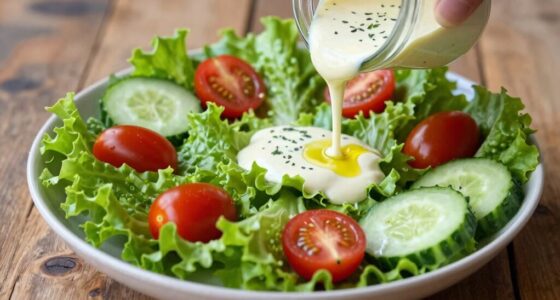

To make a perfect vinaigrette without measuring cups, memorize the simple ratio of three parts oil to one part acid like vinegar or lemon juice. You can adjust seasonings and flavors by taste, adding a touch of mustard or honey to stabilize the emulsion and enhance flavor. Practice whisking or shaking until smooth, and soon you’ll master quick, balanced dressings that suit any dish—if you keep exploring, you’ll find even more tips to perfect your technique.

Get kitchen staples and gadgets delivered free with Prime
- Fast, free delivery on millions of items
- Prime Video, Amazon Music and more included
- Member-only deals all year
Key Takeaways
- Remember the basic 3:1 ratio of oil to acid for quick vinaigrette mixing.
- Use emulsification techniques like whisking, shaking, or blending to stabilize the dressing.
- Adjust flavor by tasting and adding more oil, acid, honey, or seasonings as needed.
- Rely on senses to add salt, pepper, garlic, or herbs gradually without measuring.
- Practice frequently to develop intuition and create balanced dressings effortlessly.

Creating a perfect vinaigrette starts with understanding its fundamental ratios. When you get the proportions right, you can whip up a delicious dressing without fussing over measurements every time. The key is mastering emulsification techniques and flavor balancing, which are essential for a smooth, well-integrated vinaigrette. Emulsification involves combining oil and acid—usually vinegar or lemon juice—so they stay mixed and don’t separate. To achieve this, you can whisk vigorously, shake in a jar, or use a blender. The goal is to create a stable emulsion that coats greens evenly and provides a pleasing texture. As you practice, you’ll notice that incorporating a small amount of mustard or honey helps stabilize the mixture, making it easier to emulsify and maintain consistency.
Master emulsification by whisking, shaking, or blending oil and acid for a smooth, stable vinaigrette.
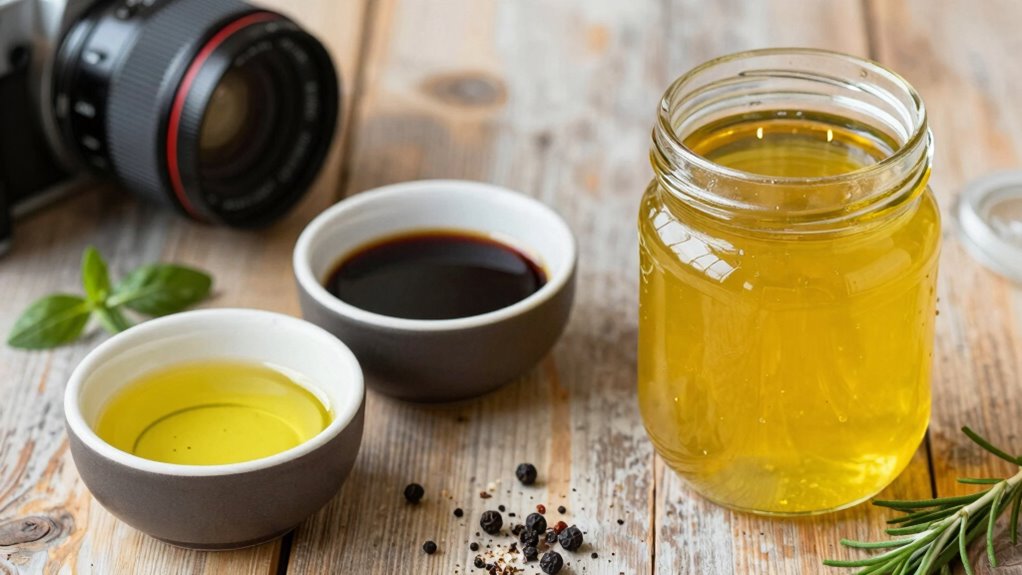
Flavor balancing is equally important. You want your vinaigrette to have a harmonious taste—bright acidity, rich oil, and complementary seasonings. Start with the basic ratio of 3 parts oil to 1 part acid. For example, if you’re using 3 tablespoons of oil, add 1 tablespoon of vinegar or lemon juice. From there, taste and adjust. If it’s too sharp, add a touch more oil or a sweetener like honey or maple syrup to mellow the acidity. If it’s too bland, boost the acid or incorporate herbs, garlic, or shallots to add depth. Remember, the best vinaigrettes are tailored to your palate, so don’t be afraid to experiment with small adjustments until it’s just right.
Once you understand the core ratios, you can rely on your senses rather than measuring cups. For instance, you’ll develop an intuitive sense for what a “pinch” of salt or a “dash” of pepper means for your dressing. When you add ingredients like garlic or herbs, do so gradually, tasting as you go to ensure flavor balance. This approach allows you to make quick, flavorful vinaigrettes on the spot, whether for a simple salad or a more complex dish. Keep in mind, the consistency of your vinaigrette depends on good emulsification techniques, so take your time to whisk or shake thoroughly.
In the end, memorizing these ratios and techniques turns vinaigrette making into an effortless skill. It’s about understanding the science behind emulsification and trusting your taste buds for flavor balancing. With practice, you’ll be able to whip up vibrant, well-rounded dressings without reaching for measuring cups, transforming a simple task into an art form.
stainless steel salad dressing shaker
As an affiliate, we earn on qualifying purchases.
As an affiliate, we earn on qualifying purchases.
Frequently Asked Questions
Can I Substitute Apple Cider Vinegar for Balsamic Vinegar?
Yes, you can substitute apple cider vinegar for balsamic vinegar, but keep in mind it will change the flavor profile. Apple cider vinegar is tangier and less sweet, so you’ll need to adjust other ingredients to balance the flavors. Use a bit less if you want a milder taste, or add a touch of honey or sugar to replicate balsamic’s sweetness. This vinegar substitution works well for a bright, tangy vinaigrette.
What’s the Best Oil for a Light Vinaigrette?
You’ll love using extra virgin olive oil for a light vinaigrette—its smooth, subtle flavor enhances salads without overpowering. Other oil options like avocado or grapeseed offer mild, neutral profiles perfect for delicate dressings. Imagine the freshness you feel when each bite is perfectly balanced; choosing the right oil elevates your dish. So, pick an oil that complements your flavor profiles, and enjoy a beautifully light, flavorful vinaigrette every time.
How Long Can Homemade Vinaigrette Be Stored?
Homemade vinaigrette can last up to a week in the refrigerator if stored properly. Make sure to use an airtight container and keep it refrigerated at all times. To extend its freshness, give it a good shake before each use, as ingredients may separate. Check for any off smells or changes in appearance before using it. Following these refrigeration tips helps maintain flavor and safety longer.
Are There Vegan or Allergy-Friendly Vinaigrette Options?
You can easily find vegan or allergy-friendly vinaigrette options that cater to your needs. Some people worry about flavor, but using vegan egg replacements or nut-free ingredients like tahini or sunflower seed butter creates delicious dressings. These alternatives eliminate common allergens while maintaining a rich taste. So, whether you’re avoiding eggs or nuts, you can whip up a flavorful vinaigrette that’s safe for everyone to enjoy.
How Do I Adjust Ratios for Extra Tanginess?
To add extra tanginess, increase the acidic ingredients like vinegar or lemon juice in your vinaigrette. Start by adding small amounts, about a teaspoon at a time, and taste as you go to maintain the right acidic balance. This adjustment enhances flavor without overpowering, giving your dressing a lively, sharper taste. Remember, balancing acidity with a little oil or sweetness keeps the flavor enhancement smooth and well-rounded.
Conclusion
Now that you know the vinaigrette ratios, you can whip up dressings effortlessly—no measuring cups needed. Remember, a little practice makes perfect, and “trust the process” when experimenting with flavors. With these simple ratios, you’ll be able to dress your salads confidently and creatively. So go ahead, mix, taste, and enjoy—your kitchen skills are about to get a flavorful upgrade. Happy dressing!
Fall Picks
fall essentials
As an affiliate, we earn on qualifying purchases.