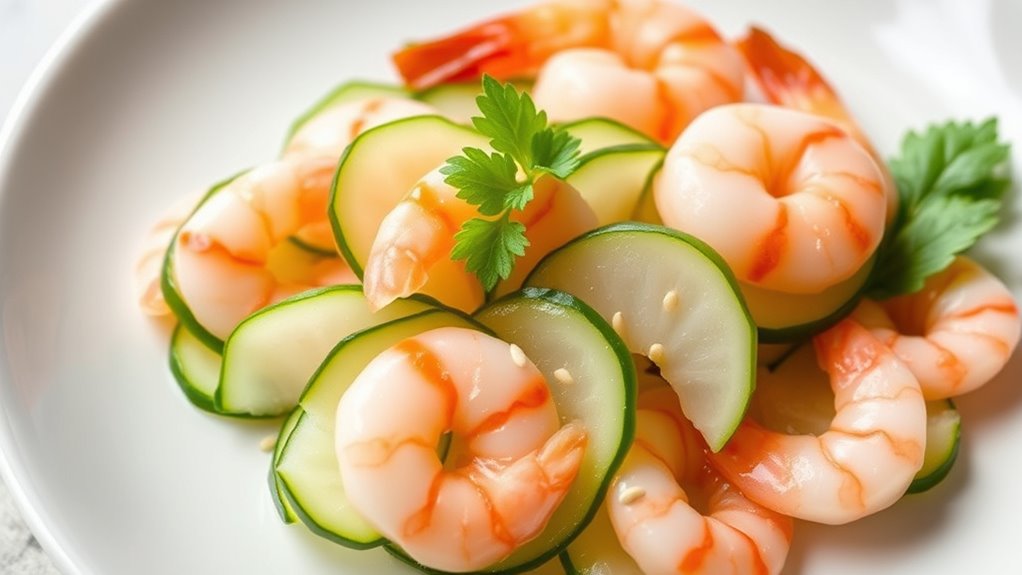

Japanese sunomono is a fresh, light salad made with cucumbers and often seafood, all dressed in a tangy vinegar mixture. It’s been part of Japanese cuisine for centuries, valued for its invigorating taste and palate-cleansing qualities. Variations include ingredients like seaweed, shrimp, or tofu, with flavor adjustments such as adding sesame seeds or soy sauce. Its versatility makes it suitable for any meal or occasion. Continue exploring to discover more about its cultural significance and delicious variations.

Get kitchen staples and gadgets delivered free — and shop member deals
- Fast, free delivery on millions of items
- Access to Prime Big Deal Days deals on October 6–7
- Prime Video, Amazon Music and more included
Key Takeaways
- Sunomono is a traditional Japanese vinegared salad featuring fresh vegetables, seafood, and seaweed, known for its light, tangy flavor.
- It offers various ingredient options like cucumber, wakame, octopus, or shrimp, adaptable to regional tastes and preferences.
- The dish is typically seasoned with rice vinegar, soy sauce, sugar, and sesame seeds, with customizable acidity and sweetness levels.
- Sunomono serves as a refreshing side or appetizer suitable for everyday meals or special occasions.
- Its cultural significance reflects Japanese culinary history, emphasizing freshness, simplicity, and regional ingredient use.

Have you ever tried Japanese sunomono? If not, you’re missing out on an invigorating, tangy salad that’s perfect as a side or appetizer. Sunomono, which translates to “vinegared thing” in Japanese, has a long history rooted in the country’s culinary traditions. The history of sunomono dates back centuries when Japanese cuisine evolved to include simple, palate-cleansing dishes that highlight fresh ingredients with a light vinegar dressing. Originally, these salads were crafted using local vegetables and seafood, seasoned with rice vinegar, sugar, and soy sauce, creating a balance of sweet and sour flavors that stimulate the palate. Over time, sunomono became a staple at meals and special occasions, appreciated for both its taste and its ability to aid digestion.
Discover the refreshing, tangy tradition of Japanese sunomono, a centuries-old palate-cleansing salad with versatile ingredients.
As you explore sunomono, you’ll notice there are numerous variations of sunomono that cater to different tastes and ingredients. The most common version features cucumber slices, thinly sliced or julienned, soaked in a vinegar-based dressing. But the variations go far beyond cucumbers. For instance, some recipes include seaweed, such as wakame or hijiki, adding a chewy texture and umami flavor. Others incorporate seafood like octopus, shrimp, or crab, turning the salad into a light seafood dish that’s both flavorful and nutritious. You might also encounter versions with daikon radish, carrots, or even small tofu cubes, each variation offering a different taste experience.
The versatility of sunomono makes it an ideal dish for various occasions. If you prefer a more robust flavor, you can add sesame seeds or a dash of soy sauce to the dressing. For a tangier profile, more vinegar can be incorporated, while sweeteners like sugar or mirin help balance the acidity. You’ll also find regional variations that reflect local ingredients and culinary preferences, making sunomono a dynamic dish that can be adapted to suit your palate. Whether you’re preparing a simple cucumber salad or a seafood-rich version, the key is maintaining that light, invigorating vinegar dressing that defines sunomono.
In essence, sunomono isn’t just a salad; it’s a reflection of Japanese culinary history and adaptability. Its origins in traditional flavor combinations have allowed it to evolve into countless variations, making it a versatile and beloved part of Japanese cuisine. An understanding of spiritual symbolism behind ingredients like seaweed or seafood can add a deeper appreciation for the harmony and balance in this dish. So next time you see it on a menu or decide to make it at home, remember that each version tells a little story about regional ingredients and culinary innovation. Try different variations and discover how this simple, tangy dish can brighten up any meal with its crisp texture and invigorating acidity.
Top picks for "japanese sunomono light"
As an affiliate, we earn on qualifying purchases.
Frequently Asked Questions
Can Sunomono Be Made Vegan or Vegetarian?
Yes, you can make sunomono vegan or vegetarian. Simply use vegan substitutions like rice vinegar, soy sauce, and sesame oil for the dressing, and choose vegetarian options like cucumber, seaweed, and radish. Avoid fish-based ingredients like bonito flakes or fish stock. With these tweaks, you’ll enjoy a fresh, light, and plant-based sunomono perfect for vegan or vegetarian diets.
How Long Can Sunomono Be Stored in the Refrigerator?
Sunomono can stay fresh in your fridge for about 1 to 2 days. While the vibrant flavors might fade, proper storage helps prevent spoilage. To extend its shelf life, keep it airtight and avoid cross-contamination with other foods. However, don’t rely on it beyond this window, as exposure to air and bacteria accelerates spoilage. Your best bet is to enjoy it fresh for ideal taste and safety.
What Are Traditional Ingredients Used in Sunomono?
You’ll find that traditional sunomono ingredients include cucumber slices, rice vinegar, sugar, salt, and wakame seaweed. To add flavor and visual appeal, chefs often include a ginger garnish and sprinkle sesame seeds on top. These ingredients create a revitalizing, tangy salad with a hint of spice and nuttiness. You can customize with other vegetables or seafood, but ginger and sesame seeds remain classic staples for authentic sunomono.
Are There Regional Variations of Sunomono in Japan?
Did you know that regional differences influence nearly 70% of traditional Japanese dishes? Sunomono varies across Japan, showcasing ingredient variations like cucumber, seaweed, or daikon depending on the region. For example, in Okinawa, you might find sunomono with tropical fruits, while in northern areas, root vegetables are popular. These regional differences make each sunomono unique, reflecting local tastes and available ingredients.
Can Sunomono Be Served Warm or Is It Strictly Cold?
You can serve sunomono warm or cold, depending on your temperature preferences and the serving suggestions you follow. Typically, it’s enjoyed chilled to highlight its invigorating qualities, but some enjoy it slightly warm, especially in colder weather. If you choose to serve it warm, do so gently to preserve the delicate flavors. Adjust the temperature to suit your taste, making it a versatile dish for any season.
Conclusion
As you savor the crisp, tangy notes of Japanese sunomono, you’re invited into a symphony of flavors that dance like delicate cherry blossoms in spring. This light vinegared salad isn’t just a dish; it’s a invigorating breeze that awakens your palate and whispers tales of tradition. Embrace its subtle elegance, allowing each bite to transport you to tranquil Japanese gardens where simplicity and grace flourish. Let sunomono be your culinary gust of fresh air.
Fall Picks
fall essentials
As an affiliate, we earn on qualifying purchases.