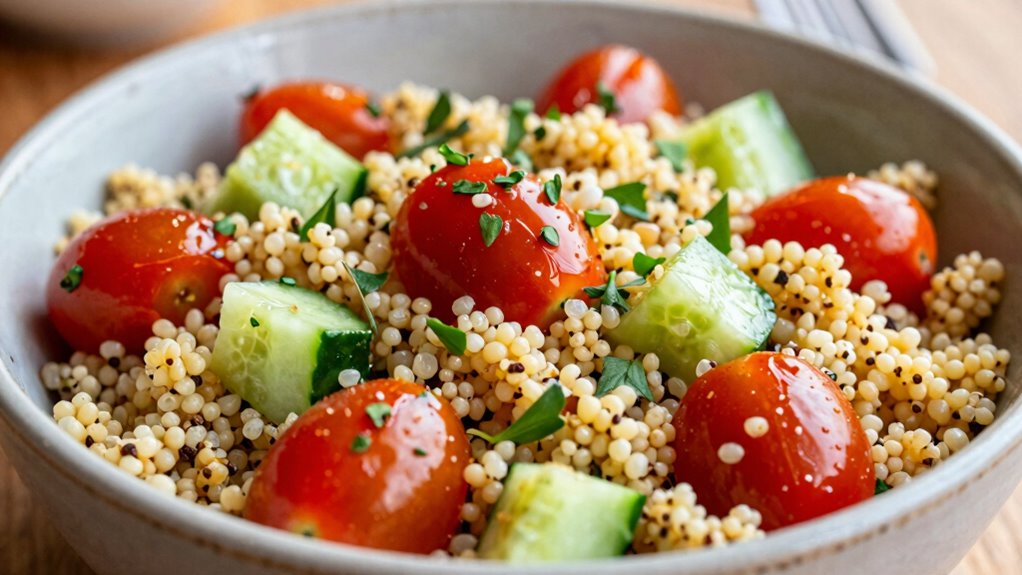

To prevent mushy quinoa and sticky couscous in your grain salads, make certain you rinse quinoa thoroughly to remove bitterness and cook it in a 2:1 water-to-grain ratio, then let it sit off heat to steam. For couscous, use boiling water, cover, and avoid overcooking. Drain excess water and cool grains quickly to keep them firm and fluffy. Mastering these techniques will help you create fresh, perfectly textured salads every time—keep exploring for more tips.
Key Takeaways
- Rinse quinoa thoroughly to remove saponins and prevent bitterness before cooking.
- Use a 2:1 water-to-quinoa ratio and avoid overcooking for fluffy grains.
- Drain cooked grains well and cool on a baking sheet to prevent stickiness.
- Cook couscous quickly and fluff with a fork to keep it light and non-sticky.
- Incorporate a splash of oil or lemon juice after cooking to help grains stay separate.
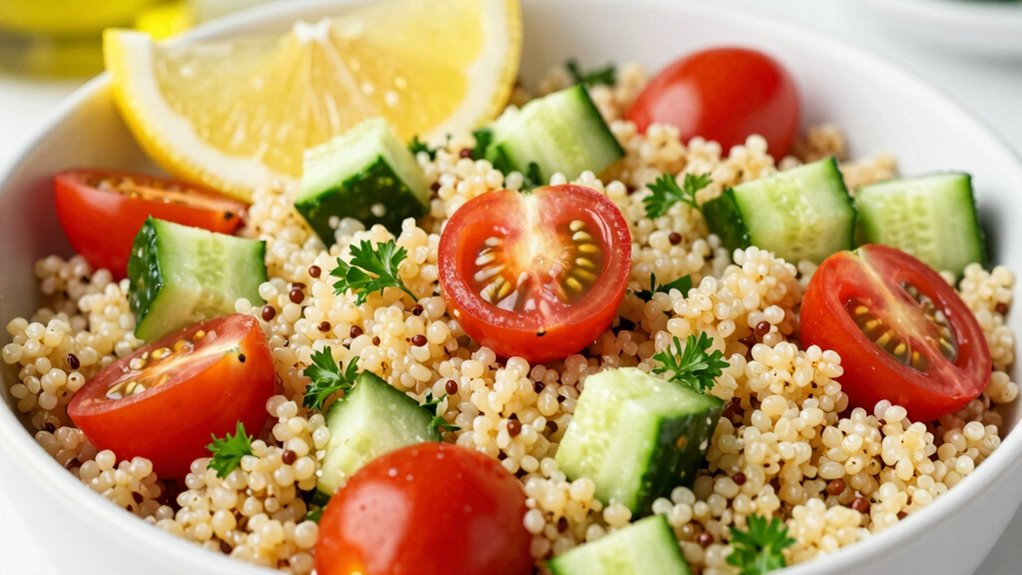
Have you ever wondered how to turn simple grains into a lively, satisfying meal? The secret lies in understanding different grain varieties and how to prepare them properly. Not all grains are created equal, and choosing the right one can make a huge difference in your salad’s texture and flavor. For example, quinoa, farro, bulgur, and barley each bring their own unique qualities to the table. Quinoa offers a light, fluffy texture when cooked correctly, while farro provides a chewy bite that adds heartiness. Bulgur cooks quickly and retains a slightly nutty flavor, and barley offers a tender yet substantial bite. Knowing these differences helps you select the perfect grain for your salad.
Choosing the right grains like quinoa, farro, bulgur, or barley enhances your salad’s texture and flavor.
Once you’ve picked the right grain, the next step is ensuring it stays tender but not mushy. Overcooking is a common mistake that leads to sticky, unappetizing results. To avoid this, always follow the recommended cooking times for each grain. For quinoa, rinse it thoroughly before cooking to remove saponins, which can cause bitterness. Cook it in a 2:1 water-to-grain ratio, then let it sit off the heat, covered, for a few minutes to finish steaming. For barley and farro, use a generous amount of water and cook until tender but still firm. Drain excess water and spread the grains on a baking sheet to cool quickly, preventing over-softening. Properly cooked grains should be fluffy or chewy, depending on the variety, and should hold their shape without turning to mush. Additionally, understanding the role of texture in grains can help you achieve the perfect consistency for your salads.
Salad dressing options also play a crucial role in elevating your grain salads. A good dressing ties all the ingredients together and adds flavor. Classic vinaigrettes made with olive oil, vinegar or lemon juice, and seasonings are versatile and revitalizing. For a creamier touch, consider adding Greek yogurt or tahini to your dressing. Herbs like parsley, cilantro, or basil brighten up the flavors, while a touch of honey or maple syrup balances acidity. Don’t be afraid to experiment with different dressings, as they can completely change the profile of your salad. Light dressings work well for delicate grains like quinoa, while richer, oil-based dressings complement heartier grains like farro or barley.
In the end, mastering grain varieties and salad dressing options transforms a simple salad into a culinary delight. With the right grains, proper cooking techniques, and flavorful dressings, your grain salads will never be mushy or sticky again. Instead, they’ll be lively, satisfying, and full of texture. So next time you’re planning a meal, remember these tips, and enjoy creating salads that are both nutritious and delicious.

ZENSEWEN 3-Piece Fine Mesh Strainer Set, Stainless Steel Sieves & Colanders for Kitchen – Perfect for Sifting Flour, Rinsing Quinoa & Straining Pasta – Includes 3, 5, and 7 Inch Food Strainers
THE PERFECT SIZE FOR EVERY KITCHEN TASK: Stop searching for the right tool! This versatile set includes 3-inch,…
As an affiliate, we earn on qualifying purchases.
As an affiliate, we earn on qualifying purchases.
Frequently Asked Questions
Can Grain Salads Be Made Ahead of Time?
Yes, you can make grain salads ahead of time. To maintain their freshness and flavor, follow meal prep tips like storing grains separately from dressings and add flavor enhancements just before serving. This prevents mushiness and sticky textures. You can prepare components in advance, then assemble when ready. Proper storage and timing ensure your grain salads stay vibrant, delicious, and perfect for quick meals later.
What Are Some Gluten-Free Grain Options?
Did you know that over 70% of people are trying to eat gluten-free for health reasons? When choosing grain varieties, ancient grains like millet, amaranth, and teff are fantastic gluten-free options. These grains not only add unique flavors and textures but also boost nutrition. Incorporate them into your salads for a hearty, gluten-free meal that’s both satisfying and healthy, no gluten needed!
How Do I Store Grain Salads for Freshness?
You should store grain salads in airtight storage containers to keep them fresh. Keep the salad dressing separate and add it just before serving to prevent sogginess. For the best results, refrigerate the salad within two hours of making it, and consume it within 2-3 days. Proper storage helps maintain the texture and flavor, ensuring your grain salad stays delicious and fresh when you’re ready to enjoy it.
Are There Vegan-Friendly Grain Salad Recipes?
Yes, you can make vegan-friendly grain salads with plant-based proteins like chickpeas, tofu, or tempeh. Focus on flavor combinations such as lemon, herbs, and spices to keep each bite exciting. Mix grains like quinoa, bulgur, or farro with vegetables and these proteins. You’ll enjoy a wholesome, satisfying meal that’s perfect for vegans and packed with nutrients, all while avoiding mushy textures.
How Can I Make Grain Salads More Filling?
To make your grain salads more filling, you should add a protein boost, like chickpeas, tofu, or edamame, which help keep you full longer. Incorporate fiber enhancement by mixing in vegetables like spinach, carrots, or bell peppers. Nuts and seeds also add crunch and extra nutrients. Combining these ingredients creates a hearty, satisfying salad that fuels your body and keeps hunger at bay.

304 Stainless Steel Egg Steamer Bowl with Handle – Brushed Interior, Anti-Slip Feet, Thickened Design, Fast Heating, Steaming Bowl for Eggs, Soups, Custards, Rice, Desserts & More
✅ Premium 304 Stainless Steel Construction – Built from food-grade 304 stainless steel, this bowl is rust-resistant, durable,…
As an affiliate, we earn on qualifying purchases.
As an affiliate, we earn on qualifying purchases.
Conclusion
So there you have it—grain salads that actually taste good and don’t turn into a soggy mess. Say goodbye to mushy quinoa and sticky couscous, and hello to perfectly fluffy grains every time. Now, go forth and impress your friends with salads that look as good as they taste—without sacrificing your sanity or your patience. Because honestly, if you’re going to get your grains right, you might as well do it with style.

AIDEA Salad Bowls, Wooden Salad Bowls Set, Large Acacia Wood Serving Bowl for Fruits, Salad, 12.5" Big Salad Bowl with Serving Utensils
Large Capacity: Bowl set includes one large salad bowl, one serving spoon, and one serving fork; bowl measures…
As an affiliate, we earn on qualifying purchases.
As an affiliate, we earn on qualifying purchases.

Wooden Spoons for Cooking – 10 Pcs Teak Wood Utensil Set, Durable, Nonstick Safe & Heat Resistant with Ergonomic Handles
WHAT’S INCLUDED? The only wooden cooking utensils set with 10 pcs that meet all your cooking needs. This…
As an affiliate, we earn on qualifying purchases.
As an affiliate, we earn on qualifying purchases.