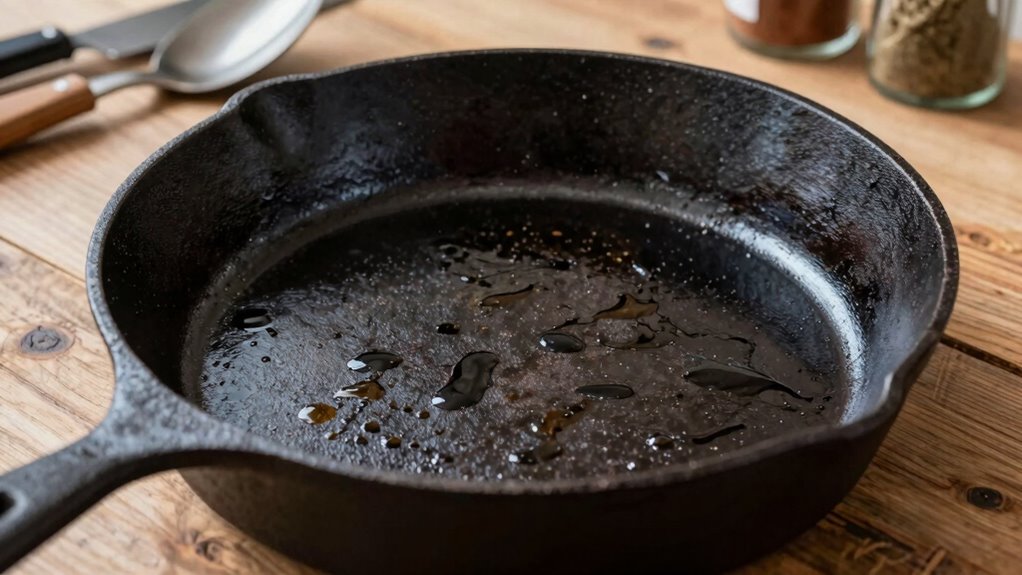
Many believe harsh scrubbing or skipping cleaning ruins your cast iron seasoning, but that’s a myth. Using mild soap occasionally, drying thoroughly, and oiling afterward won’t damage the seasoning if you follow proper maintenance steps. The real threat is neglect—leaving food residue, moisture, or ignoring routine care. If you want to keep your skillet in top shape, understanding what truly impacts its seasoning is key. Keep exploring to discover the best care practices.
Key Takeaways
- Using overly harsh cleaning agents can strip away the seasoning, but mild soap used occasionally is generally safe.
- Neglecting to dry and oil your cast iron after cleaning accelerates rust and damages the seasoning.
- Scrubbing with abrasive tools may remove seasoning layers if done excessively or aggressively.
- Food residue baked onto the surface can cause deterioration, but proper cleaning maintains seasoning integrity.
- The seasoning layer is durable and can withstand minor cleaning, so heavy myths about soap ruining it are often exaggerated.
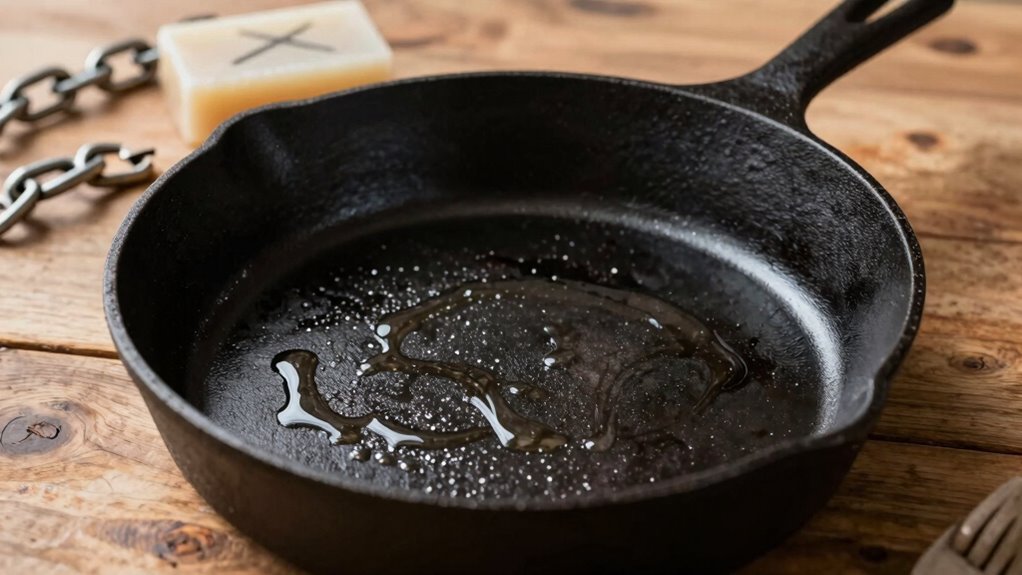
Many people also believe that you should avoid soap entirely because it can harm the seasoning. While it’s true that aggressive cleaning agents can strip away layers of seasoning, the occasional use of mild soap isn’t a deal-breaker. What truly damages your seasoning is neglect—letting food residue bake onto the surface or leaving moisture to cause rust. Proper cleaning, including gentle soap use when necessary, combined with prompt drying and oiling, maintains your cast iron’s seasoning and longevity. Remember, seasoning is a layer of polymerized oils** that improves with use and care. It’s resilient enough to withstand minor cleaning rituals, including soap, as long as you follow up with proper drying and oiling**.
cast iron skillet cleaning brush
As an affiliate, we earn on qualifying purchases.
As an affiliate, we earn on qualifying purchases.
Frequently Asked Questions
Can I Use Soap on My Cast Iron Pan?
Yes, you can use soap on your cast iron pan, but do so sparingly. Proper cast iron maintenance involves cleaning with a small amount of soap occasionally without harming the seasoning. Avoid harsh detergents or scrubbing vigorously, as this can strip away seasoning and reduce its longevity. Regular cleaning with soap helps keep your pan hygienic while preserving the seasoning, ensuring your cast iron stays non-stick and durable over time.
Does Dishwasher Cleaning Ruin Seasoning?
Using a dishwasher can damage your cast iron by causing seasoning removal and exposing it to harsh detergents and high heat. The dishwasher’s strong cleaning cycle strips away the seasoned layer, leaving your pan vulnerable to rust and corrosion. It’s best to hand wash with minimal soap and dry promptly. This way, you preserve your seasoning and keep your cast iron in excellent condition for years to come.
Is It Okay to Store Food in Cast Iron?
Yes, you can store food in your cast iron, but keep in mind that proper food storage helps maintain your seasoning. Avoid storing highly acidic foods for long periods, as they can break down the seasoning over time. After cooking, clean and dry your skillet thoroughly before storing it. This prevents rust and preserves the seasoning, ensuring your cast iron stays in great shape for future use.
How Often Should I Reseason My Skillet?
You should reseason your skillet when it starts losing its non-stick magic, usually every few months or after heavy use. Don’t wait for it to become a sticky disaster—trust your senses! For perfect seasoning frequency, observe how your pan cooks and looks. Reseason with simple tips: apply a thin layer of oil, bake upside-down, and let it cool. Keep your skillet legendary with these reseasoning tips!
Can Metal Utensils Scratch the Seasoning?
Metal utensil scratches can cause seasoning removal, but it’s usually minimal if you’re careful. You won’t ruin your seasoning just by using metal tools occasionally, especially if you maintain your skillet with proper cleaning and re-seasoning. To protect the seasoning, use utensils with softer tips or avoid excessive scraping. Regularly re-season your skillet to restore any minor scratches and keep the non-stick surface in top shape.
Conclusion
Remember, a stitch in time saves nine—taking proper care of your cast iron now prevents costly repairs later. Don’t fall for myths that can ruin your seasoning; instead, stick to proven cleaning and maintenance methods. With patience and the right approach, your cast iron skillet will reward you with a lifetime of non-stick performance. Keep it simple, stay consistent, and enjoy cooking with a piece that truly stands the test of time.