
Fermented condiments like miso and kimchi are powerful tools to enhance flavor and support your health. They develop through natural fermentation, which involves beneficial bacteria that break down ingredients, creating rich umami flavors and probiotic benefits. Miso adds depth to soups and dressings, while kimchi offers a tangy, spicy kick loaded with gut-friendly probiotics. To discover how these condiments can boost your meals and wellness, keep exploring their traditional uses and health benefits.
Key Takeaways
- Fermented condiments like miso and kimchi develop complex flavors and rich umami through natural microbial activity.
- These condiments boost digestive health by providing beneficial probiotics and enhancing nutrient absorption.
- Miso is a Japanese paste with deep umami flavor, used in soups and marinades, enhanced by long fermentation.
- Kimchi is a spicy, tangy Korean fermented cabbage, rich in lactic acid bacteria and probiotics.
- Incorporating fermented condiments enriches meals with flavor and promotes overall health through fermentation benefits.
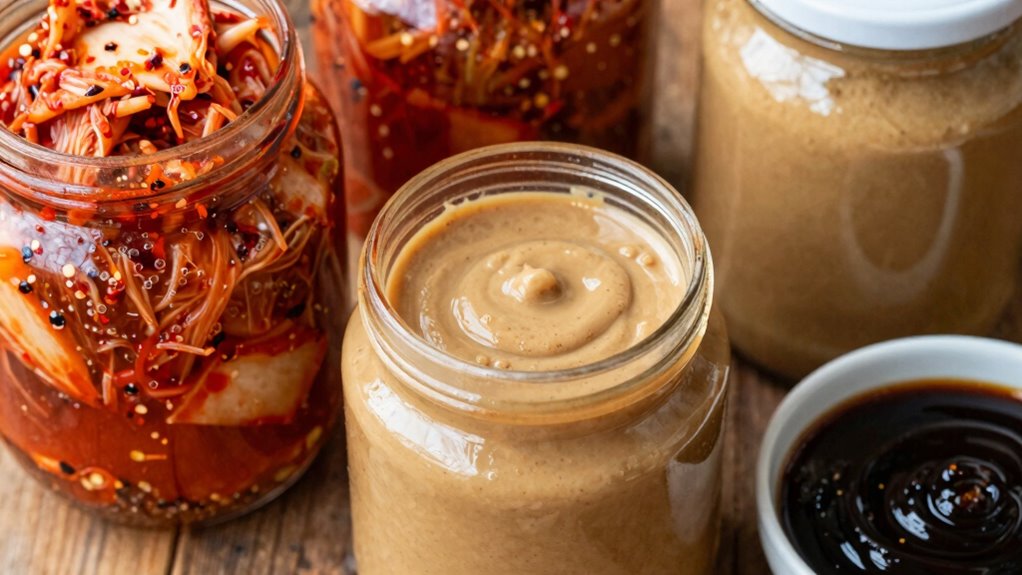
Have you ever wondered why fermented condiments add such rich flavor and depth to dishes? The answer lies in their unique fermentation process, which transforms simple ingredients into flavorful, probiotic-rich additions. This process isn’t just about taste; it offers notable health benefits too. When you incorporate fermented condiments like miso and kimchi into your meals, you’re not only enhancing flavor but also supporting your digestive health and immune system. During fermentation, naturally occurring bacteria break down complex carbohydrates and proteins, creating beneficial probiotics that promote a healthy gut. These probiotics help balance your digestive flora, potentially reducing bloating and improving nutrient absorption. Plus, the fermentation process increases the bioavailability of vitamins such as B vitamins and vitamin K, giving your body more of the nutrients it needs to function at its best.
Fermentation also involves controlled microbial activity, which is essential for developing the characteristic flavors and health benefits of these condiments. Miso, a traditional Japanese paste, exemplifies how fermentation enhances both flavor and health. Made from soybeans, salt, and koji mold, miso ferments over months or even years, developing a complex umami taste that can elevate soups, marinades, and dressings. The fermentation process not only deepens its flavor but also boosts its nutritional profile, providing you with a source of beneficial bacteria. Kimchi, a spicy fermented cabbage from Korea, undergoes a similar transformation. As it ferments, lactic acid bacteria develop, giving kimchi its signature tang and probiotic punch. Consuming kimchi regularly can help improve digestion, reduce inflammation, and support your immune system. The fermentation process here involves salting the vegetables and allowing bacteria to naturally thrive, creating a vibrant, health-boosting condiment that’s both flavorful and nourishing.
The beauty of fermented condiments is that they’re easy to prepare at home and retain their health benefits through the fermentation process. The long fermentation not only brings out their signature flavors but also ensures that you’re consuming live cultures that support your gut health. As you enjoy these condiments, you’re tapping into centuries-old culinary traditions that prioritize both taste and wellness. Incorporating fermented condiments into your diet is a simple way to enrich your meals with umami, improve digestion, and boost your overall health. So, next time you add miso or kimchi to a dish, remember that the fermentation process has transformed basic ingredients into powerful, flavorful allies for your well-being.

Marukome Organic Reduced Sodium Miso Paste Broth, 13.2 OZ
Organic Certification: This miso paste is certified organic, ensuring high-quality ingredients without synthetic pesticides or fertilizers
As an affiliate, we earn on qualifying purchases.
As an affiliate, we earn on qualifying purchases.
Frequently Asked Questions
How Long Does Homemade Miso Fermentation Typically Take?
You can expect homemade miso fermentation to take about 6 months to a year, depending on your desired flavor intensity. During this fermentation timeline, microbial activity steadily develops, transforming the soybeans and grains. Warmer temperatures speed up fermentation, while cooler temperatures slow it down. Patience is key, as longer fermentation enhances umami depth and complexity. Check periodically to guarantee proper conditions and enjoy the rich, savory results once it’s fully matured.
Can Kimchi Be Made Without Fish Sauce?
Yes, you can make kimchi without fish sauce by using vegetarian alternatives like soy sauce, miso, or seaweed. These options add umami flavor and depth to your kimchi. Keep in mind, flavor modifications may be necessary, so taste as you go and adjust seasonings accordingly. This way, you create a delicious, pescatarian-friendly kimchi that suits your dietary preferences without sacrificing flavor.
Are Fermented Condiments Suitable for All Diets?
Like a garden’s diverse blooms, fermented condiments can suit many diets. You’re guided by your dietary restrictions, and ingredient substitutions make it possible to enjoy flavors without compromising your needs. Most fermented condiments, such as vegan kimchi or miso made without animal products, are adaptable. Always check labels or prepare them yourself to guarantee they align with your restrictions, making your culinary landscape rich and inclusive.
How Should I Store Fermented Condiments for Longevity?
To maximize shelf life, store fermented condiments in airtight containers and keep them refrigerated. Follow storage tips like maintaining consistent temperature and avoiding contamination to prevent spoilage. Proper storage can lengthen their shelf life for several months to even a year, depending on the condiment. Always use clean utensils when scooping, and check for signs of spoilage before use. This ensures your fermented condiments stay fresh and safe longer.
What Are the Signs of Spoilage in Fermented Condiments?
To spot spoilage indicators in fermented condiments, look for mold, off smells, or slimy textures, which can compromise fermentation safety. If you notice any of these signs, it’s best to discard the condiment to prevent health risks. Proper storage in airtight containers and keeping the condiments submerged help prevent spoilage. Always trust your senses—when in doubt, throw it out for safe fermentation practices.

Eden Organic Sauerkraut, 18 oz Glass Jar, Kimchi, Fine Cut
Eden Foods is a principled natural food company, est. 1968. Healthy soil, long-term organic, non-GMO, skilled growers and…
As an affiliate, we earn on qualifying purchases.
As an affiliate, we earn on qualifying purchases.
Conclusion
Incorporating fermented condiments like miso and kimchi can boost your gut health and add rich flavor to your meals. Did you know that a 2018 study found that consuming fermented foods can improve gut microbiota diversity by up to 20%? So, next time you spice up your dishes, remember these natural umami boosters aren’t just tasty—they’re a smart choice for your health. Start experimenting today and enjoy the delicious benefits!

Olive My Pickle Fermented Mixed Olives Bundle – 48 oz | 3 Packs of Castelvetrano Olives Pitted, Greek Olives Mix, Muffuletta Olive Mix Live Culture & Probiotic Olives for Gut Health – 16 oz per bag
BRINE CURED, NATURALLY FERMENTED OLIVES: Made with salt water brine and no vinegars, lyes, or sugar. This product…
As an affiliate, we earn on qualifying purchases.
As an affiliate, we earn on qualifying purchases.

Traditional Korean Rice Koji Starter, Ideal Yeast Base for Home Brewing Makgeolli_29.98 oz (850g)
Artisan-Style Koji Starter with Rice and Wheat Carefully crafted using a balanced blend of rice and wheat, ideal…
As an affiliate, we earn on qualifying purchases.
As an affiliate, we earn on qualifying purchases.