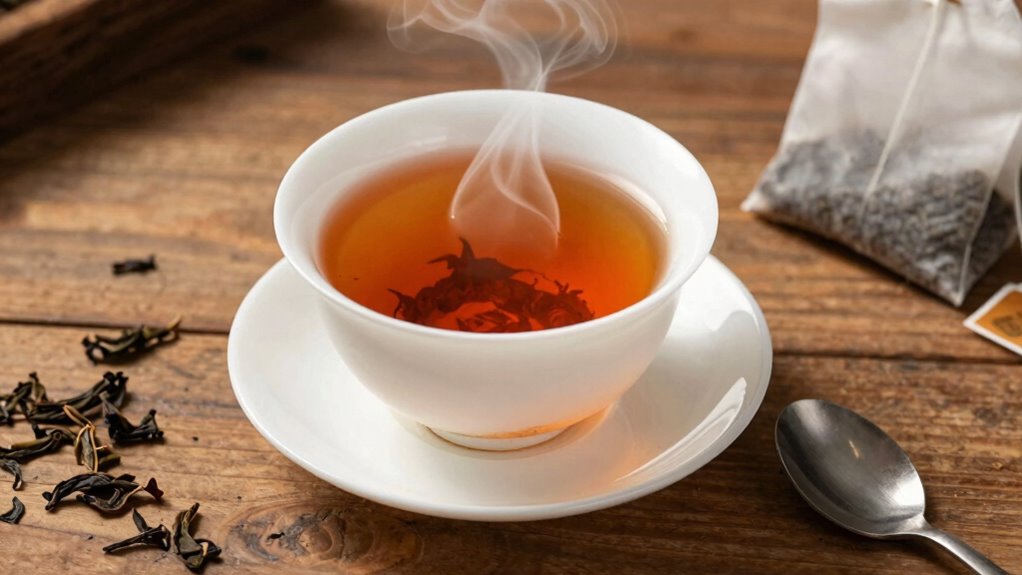

Poor tea brewing starts with choosing low-quality, stale, or overly processed leaves, which diminish flavor and aroma before steeping. Using water that’s too hot or too cold ruins delicate teas and makes others bitter or flat. Ignoring water quality also impacts taste, masking the tea’s true flavor. Small mistakes in selecting ingredients, water temperature, or quality can ruin your tea before the first sip. Keep exploring to discover how to brew your perfect cup and avoid these pitfalls.
Key Takeaways
- Using low-quality, stale, or pre-packaged tea bags compromises flavor and aroma.
- Brewing with incorrect water temperature causes bitterness or weak extraction.
- Using impure or mineral-rich water alters the tea’s natural flavor profile.
- Oversteeping or understeeping leads to dull, bitter, or flat taste.
- Neglecting to select the right tea type and quality hampers optimal flavor development.
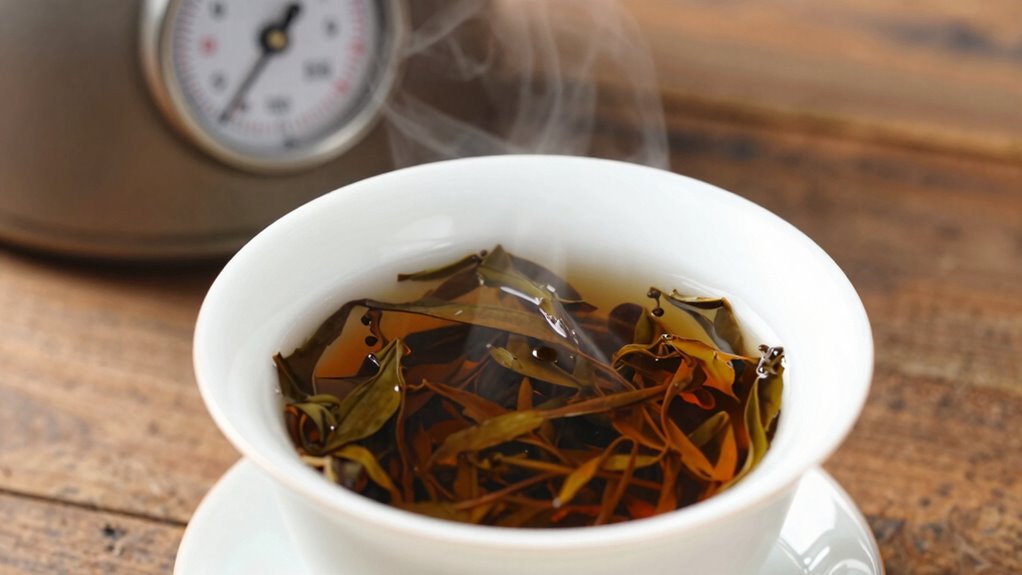
Brewing the perfect cup of tea might seem simple, but even small mistakes can considerably affect the flavor and aroma. One of the biggest errors you can make is in tea leaf selection. Not all leaves are created equal, and choosing the wrong type or quality of tea leaves can lead to a lackluster brew. If you opt for cheap, stale, or overly processed leaves, you’ll miss out on the nuanced flavors and vibrant aromas that fresh, high-quality leaves provide. For the best results, select whole leaves or loose leaf tea instead of pre-packaged tea bags, which often contain broken or lower-grade leaves. Pay attention to the origin and type of tea—whether it’s green, black, oolong, or herbal—and match your choice to your flavor preferences and brewing method. Proper tea leaf selection is the foundation of a good cup; neglecting it means you’re starting off on the wrong foot. Using the right tea leaf quality can make all the difference in achieving a flavorful brew.
Another common mistake involves water temperature. Getting this wrong can easily ruin the delicate balance of flavors in your tea. Too hot, and you risk scorching the leaves, resulting in a bitter, astringent taste. Too cool, and the tea may become weak, under-extracted, and flat. Each type of tea has an ideal brewing temperature—green and white teas generally require lower temperatures around 160-180°F, while black and oolong teas thrive at higher temperatures closer to 200-212°F. Using a thermometer or a temperature-controlled kettle can help you hit the mark precisely. If you ignore the recommended temperature, even the freshest leaves won’t reach their full potential, and your tea could taste dull or overly harsh. The water temperature influences how the tea’s compounds are extracted, impacting flavor, aroma, and mouthfeel. Paying attention to brewing guidelines can help you optimize each cup and truly appreciate the nuanced flavors of different teas. Additionally, understanding the tea brewing process can help you avoid common pitfalls and achieve a more consistent result. Furthermore, proper water quality can also significantly influence the final taste, as impurities or minerals can alter the flavor profile.
Failing to pay attention to these details—tea leaf selection and water temperature—can sabotage your entire brewing process before you even take that first sip. You might think that brewing tea is just about steeping leaves in hot water, but the quality of your ingredients and the precision of your method determine the final result. Skimp on these aspects, and you risk ending up with a cup that’s either bland, bitter, or just uninspiring. Instead, take the time to choose the right tea leaves for your taste and guarantee your water is at the proper temperature. These small but essential steps elevate your tea brewing from a casual activity to a true craft, giving you a richer, more satisfying experience with every cup.

Tiesta Tea – Top 8 Favorites Sampler Set, Loose Leaf, Up to 80 Cups
- Diverse Tea Selection: Popular handcrafted blends with fruits, herbs, spices
- Versatile Brewing Options: Enjoy hot or iced, high to no caffeine
- Ideal Gift Set: Includes 8 flavorful blends like Maui Mango
As an affiliate, we earn on qualifying purchases.
As an affiliate, we earn on qualifying purchases.
Frequently Asked Questions
Can Water Mineral Content Affect Tea Flavor?
Yes, water mineral content can affect tea flavor. Mineral interaction influences how the tea’s natural flavors develop during brewing. Hard water, rich in minerals like calcium and magnesium, can dull delicate notes, while pure water enhances clarity and brightness. Water purity is crucial for ideal taste; using water with balanced mineral levels ensures your tea’s flavor isn’t compromised, helping you enjoy a more authentic and satisfying cup.
Does the Type of Teapot Influence Brewing Results?
Yes, the type of teapot influences brewing results because of its material and impact on tea leaf oxidation. For instance, clay teapots retain heat and enhance oxidation, bringing out richer flavors, while glass teapots allow you to see the leaves and prevent over-oxidation. Your choice of brewing vessel material affects temperature stability, extraction, and ultimately, the flavor profile, so select one that suits your tea type and preferred oxidation level.
How Does Altitude Impact Tea Brewing Temperature?
Did you know that at higher altitudes, boiling points drop, affecting brewing temperature? Altitude effects mean water boils below 100°C, so your tea brews at a lower temperature, which can lead to under-extraction and dull flavors. To compensate, you might need to increase brewing time or slightly elevate water temperature to ensure your tea fully develops its aroma and taste. Adjusting for altitude improves your tea experience markedly.
Should Tea Leaves Be Rinsed Before Brewing?
You should rinse tea leaves before brewing, especially if they’re less fresh, to remove dust and impurities. This step can enhance the tea’s flavor and aroma. However, there’s a rinsing controversy because some believe it washes away delicate flavors and antioxidants. If you prioritize tea leaf freshness, rinsing may not be necessary. Ultimately, it depends on your taste preferences and the quality of your tea.
What Is the Ideal Tea-To-Water Ratio?
You might think a perfect cup means precise measurements, but ironically, the ideal tea-to-water ratio depends on tea leaf quality and your brewing time adjustment. Typically, use one teaspoon of loose tea for every 8 ounces of water. Higher-quality leaves need less, while brewing longer can intensify flavor, so adjust accordingly. Don’t follow a strict rule—trust your taste buds and tweak the ratio to suit your preference.
Conclusion
By avoiding common brewing mistakes like incorrect water temperature, steeping time, and using stale leaves, you set the stage for a perfect cup. Think of it as a dance—you need the right rhythm and timing to get it just right. When you pay attention to these details, your tea’s flavor blossoms, revealing its true character before the first sip. So, master these steps, and enjoy a consistently delightful brew every time.