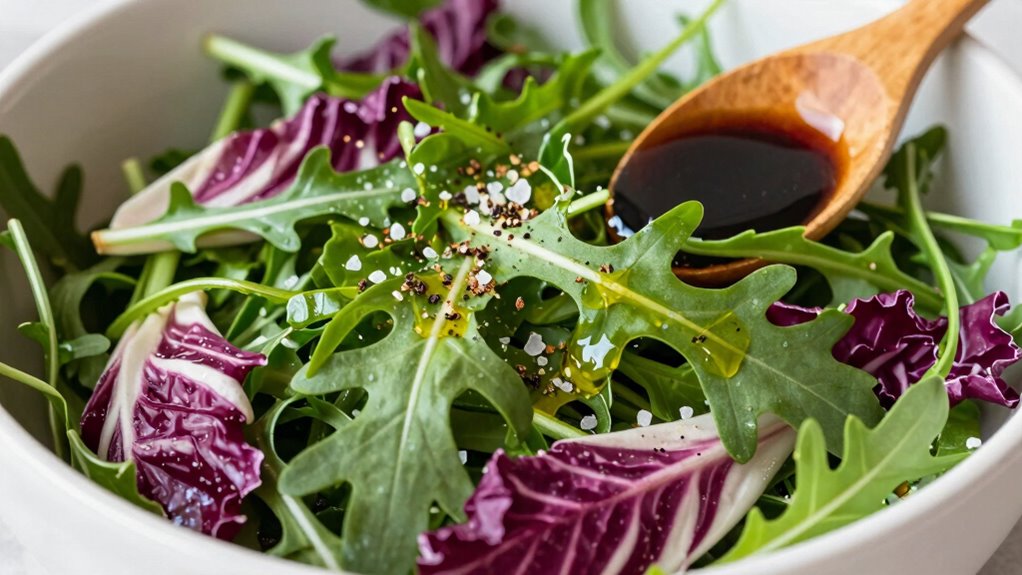

To fix bitter greens without heavy dressing, start by blanching them briefly in boiling water, then shock in ice water to soften and preserve color. Sauté with garlic or onions to add aromatic depth and counteract bitterness. Incorporate natural sweetness like honey or maple syrup, and add acidity with a splash of vinegar or lemon juice to brighten flavors. Using gentle heat and avoiding overcooking helps maintain a tender, yet slightly crisp texture. If you explore further, you’ll discover more ways to balance flavors naturally.
Key Takeaways
- Blanch greens briefly in boiling water, then shock in ice water to reduce bitterness and improve texture.
- Sauté greens with garlic, onions, or a touch of honey to add aromatic depth and counteract bitterness.
- Incorporate acidic ingredients like lemon juice or apple cider vinegar to brighten flavors and diminish bitterness.
- Add umami-rich ingredients such as Parmesan cheese or mushrooms to enhance flavor without masking greens.
- Pair greens with nuts, dried fruit, or citrus to create a balanced, flavorful contrast without heavy dressings.

Have you ever been disappointed by bitter greens ruining your favorite dish? It can be frustrating when a healthy, vibrant vegetable ends up overpowering the entire meal with its sharp, bitter taste. The good news is, you don’t have to drown your greens in dressing to make them palatable. Instead, focus on flavor balancing through simple cooking techniques that can mellow out bitterness and enhance their natural flavors.
One of the most effective ways to tame bitterness is by applying the right cooking techniques. Blanching greens in boiling water for a minute or two, then shocking them in ice water, can significantly reduce their bitterness. This method not only preserves their bright color but also softens their texture while removing some of the bitter compounds. Sautéing greens with garlic or onions adds aromatic depth and creates a savory foundation that naturally counteracts bitterness. The gentle heat helps break down bitter-tasting molecules, making the greens more enjoyable.
Another technique to consider is slow-cooking or braising greens with ingredients that have a natural sweetness. For example, cooking them with a touch of honey, maple syrup, or even a splash of apple cider vinegar can create a harmonious flavor profile. The sweetness balances out the bitterness, while acidity can brighten the dish. Adding a pinch of salt during cooking also helps enhance sweetness and suppress bitterness by stimulating your taste buds to focus on other flavors. Recognizing the role of flavor balancing is key to transforming bitter greens into a delicious dish. Additionally, understanding how different cooking methods impact the bitterness levels of greens can help you choose the most effective approach. Incorporating cooking techniques that influence flavor compounds can further optimize your results. Incorporating nutritional chemistry into your cooking process can also help you better understand how to manipulate flavors and reduce bitterness. Exploring different cooking methods can reveal how heat, moisture, and ingredients interact to affect bitterness and overall flavor.
Incorporating ingredients rich in umami, such as mushrooms or Parmesan cheese, can further improve flavor balancing. These elements add depth and complexity, drawing attention away from the bitter notes. When preparing greens, avoid overcooking, as this can intensify bitterness; instead, aim for tender yet slightly crisp textures. Combining these cooking techniques with careful seasoning allows you to coax out the greens’ best qualities without relying on excessive dressings or overpowering sauces.
Finally, consider pairing your greens with complementary flavors like citrus, nuts, or dried fruit. A squeeze of lemon or a sprinkle of toasted almonds can elevate the dish and mask any residual bitterness. By mastering these cooking techniques and focusing on flavor balancing, you’ll transform bitter greens into a delightful, well-rounded component of your meal—without drowning them in dressings. Instead, you’ll enjoy their nutritional benefits and vibrant taste, all while maintaining a balanced, satisfying dish.

Cuisinart 4-Piece Cookware Set, 12 Quarts, Chef's Classic Stainless Steel Pasta/Steamer, 77-412P1
- Material: Chef's Choice Stainless Steel with Mirror Finish
- Heat Distribution: Aluminum Encapsulated Base for Even Heating
- Cooking Surface: Discoloration-Resistant Stainless Steel
As an affiliate, we earn on qualifying purchases.
As an affiliate, we earn on qualifying purchases.
Frequently Asked Questions
Can Cooking Reduce the Bitterness of Greens?
Yes, cooking can reduce the bitterness of greens through flavor balancing and specific techniques. Sautéing or blanching greens helps mellow their bitterness by breaking down bitter compounds. Adding a touch of sweetness, like honey or caramelized onions, also balances flavors. Using techniques like boiling or steaming for a few minutes can diminish bitterness while preserving texture. These methods make greens more palatable without overwhelming them with dressing.
Are There Specific Greens That Are More Bitter?
Some greens, like arugula, radicchio, and endive, are naturally more bitter, like a sharp dagger in your palate. To balance this, you can use sweetening techniques like adding honey or apples, which act as flavor balancers. Leafy greens such as spinach or kale tend to be milder, making them easier to enjoy without overwhelming bitterness. Choosing the right greens and applying these techniques helps turn bitterness into a harmonious flavor.
How Does Salting Greens Affect Their Bitterness?
Salting greens helps reduce their bitterness through salt extraction, drawing out excess water and bitter compounds. As you sprinkle salt and let the greens sit, the bitterness begins to mellow, balancing the taste. Rinse off the salt afterward to prevent overly salty greens. This simple step enhances flavor, making them more palatable without drowning them in dressing, and results in a more enjoyable, balanced dish.
Does Blanching Greens Help in Reducing Bitterness?
Blanching greens definitely helps in reducing bitterness. When you blanch, you briefly cook the greens in boiling water, which loosens the bitter compounds. The blanching benefits include a milder flavor and vibrant color. To maximize bitter flavor reduction, dunk the greens in ice water afterward to stop the cooking process. This simple step transforms the greens, making them more palatable without drowning them in dressing.
What Herbs Complement Bitter Greens Best?
Imagine you’re in a vintage kitchen, herbs like parsley, dill, and basil are your allies in flavor balancing. These herb pairings brighten bitter greens, mellow their sharpness, and add fresh, vibrant notes. Dill’s subtle earthiness complements, while basil brings a sweet aroma. Parsley’s bright, grassy flavor also works beautifully. Use these herbs generously to enhance your greens without overpowering their natural bitterness, creating a harmonious, palate-pleasing dish.
Conclusion
By balancing bitterness with a touch of acidity or sweetness, you transform greens from overpowering to delightful. Just as a dash of vinegar softens sharp edges, a bit of honey or citrus can elevate their flavor, revealing their true potential. In this delicate dance of flavors, the bitterness becomes a backdrop rather than a barrier, allowing the greens’ natural qualities to shine. Ultimately, mastering this balance turns a simple salad into a sophisticated, palate-pleasing experience.