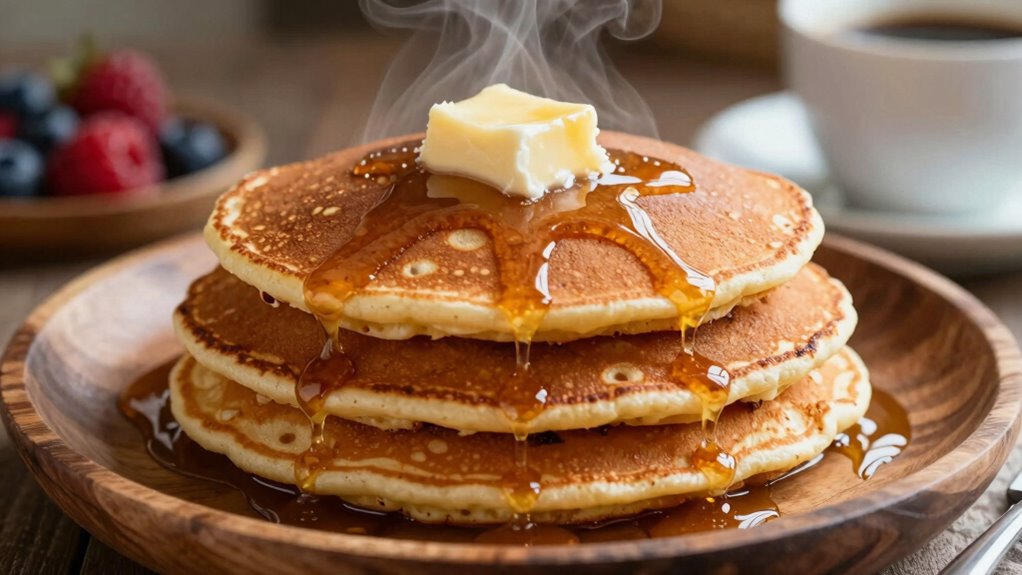
If your pancakes turn out flat, it’s likely due to using old or poor-quality flour, or cooking at the wrong temperature. Too hot or too cold pans prevent proper rise, and overmixing batter develops gluten, making them dense. Achieving fluffy pancakes involves selecting fresh ingredients, ensuring the pan is at the right heat, and mixing carefully. Master these basics, and you’ll reveal the secrets to weekend-worthy pancakes—keep exploring for more tips.
Key Takeaways
- Using old or low-quality flour can hinder gluten development, resulting in flat pancakes.
- Proper pan temperature ensures even cooking and sufficient rise, preventing pancakes from tasting flat.
- Overmixing batter destroys gluten structure, making pancakes dense and less fluffy.
- Insufficient leavening agents or improper ingredient ratios reduce the lift and fluffiness of pancakes.
- Adequate preheating and gentle cooking techniques promote steam buildup for light, weekend-magic pancakes.
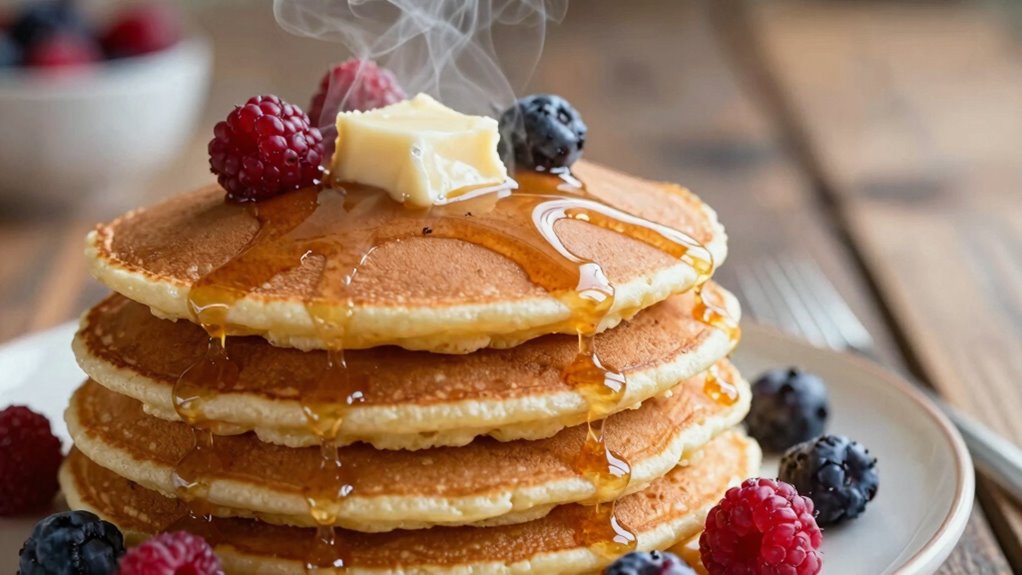
Have you ever wondered why some pancakes turn out fluffy and flavorful, while others end up flat and disappointing? The secret often lies in simple details that make all the difference. One key factor is grain quality. When you use high-quality flour, you’re providing your batter with better protein development, which helps create a lighter, more tender pancake. Cheaper or old flour can have inconsistent gluten formation, resulting in a denser, flatter pancake. Always opt for fresh, well-stored flour, and consider using a blend of all-purpose and a touch of baking powder for extra lift.
Another essential element is pan temperature. If the pan is too cold, the batter won’t cook evenly or rise properly, leaving you with flat, pale pancakes. Conversely, if it’s too hot, the outside burns before the inside has a chance to set, and your pancakes might turn out uneven or dense. The ideal pan temperature is medium to medium-low. You want a gentle sizzle when the batter hits the pan, signaling it’s hot enough to create steam and help the batter rise. A good trick is to sprinkle a few drops of water on the pan; if they dance and evaporate quickly, you’re at the right temperature.
Preheating your pan properly is a step many overlook, but it’s essential. Give it a few minutes before pouring your batter, and adjust your heat as needed. Once you pour the batter, avoid pressing down on it or flipping too early. Wait until you see bubbles forming and bursting on the surface, indicating that the batter has set and it’s time to flip. This patience allows the pancakes to develop structure and height, rather than spreading out flat. Incorporating proper mixing techniques can help prevent overdeveloping gluten, which leads to flat pancakes. Using the correct mixing methods ensures your batter remains light and airy rather than dense. Additionally, understanding gluten development can help you make better decisions about your flour and mixing techniques to improve your results. Furthermore, adjusting your ingredient ratios can also influence the texture and rise of your pancakes, making them more consistent.
In addition to grain quality and pan temperature, paying attention to your ingredients and mixing technique makes a significant difference. Overmixing can develop gluten too much, resulting in chewy, flat pancakes. Mix until just combined, leaving some lumps. Incorporating a little extra baking powder or baking soda, depending on your recipe, can also boost rise and fluffiness. Remember, the goal is to create an environment where steam can build up inside the batter, lifting the pancake high.
Ultimately, the right grain quality and carefully controlled pan temperature set the foundation for those weekend-worthy pancakes. When you master these details, you’ll consistently serve up pancakes that are fluffy, flavorful, and full of that irresistible weekend magic.

King Arthur 100% Organic All-Purpose Flour, Unbleached, 2 lb (Pack of 1) – Non-GMO Project Verified, No Preservatives
- Versatile Baking Ingredient: Suitable for all baking recipes
- 100% Organic Hard Red Wheat: Made from organic hard red winter and spring wheat
- Unbleached and Unenriched: Never bleached or bromated for purity
As an affiliate, we earn on qualifying purchases.
As an affiliate, we earn on qualifying purchases.
Frequently Asked Questions
Can the Type of Flour Affect Pancake Fluffiness?
Yes, the type of flour can affect pancake fluffiness. Using bread flour, which has higher gluten development, creates more structure and lift, making pancakes fluffier. Conversely, all-purpose or cake flour produces a softer, lighter crumb. Fresh ingredients matter too; fresh flour guarantees better gluten formation and consistent results. So, choosing the right flour and keeping ingredients fresh can help you achieve those perfect, weekend-magic pancakes every time.
Does Resting the Batter Improve Pancake Texture?
Resting your batter definitely improves pancake texture. It allows gluten development, which creates a better structure and fluffiness, and helps the flour fully hydrate. Plus, if you added sugar, resting gives it time to dissolve, resulting in a smoother batter. This process reduces bubbles and guarantees even rising. So, take a few minutes to rest your batter—your pancakes will be lighter, fluffier, and more delicious.
How Does Altitude Influence Pancake Rise?
You might notice altitude effects when baking pancakes, as higher elevations cause the air to expand faster, affecting pancake consistency. At altitude, the lower air pressure makes pancakes rise less and sometimes turn out denser or flatter. To counteract this, you can tweak your recipe by increasing flour, reducing sugar, or adding a bit more leavening. This way, your pancakes stay fluffy and delicious, no matter how high up you are.
Is It Necessary to Use Buttermilk for Fluffy Pancakes?
You don’t need buttermilk for fluffy pancakes, but it does add a delightful tang and helps create a tender crumb. If you want flavor variations, consider using milk with a splash of vinegar or lemon juice as a substitute. For topping choices, whipped cream, berries, or syrup enhance the experience. Ultimately, your pancake’s fluffiness depends on the leavening agents, but buttermilk certainly elevates the taste and texture.
What Role Do Eggs Play in Pancake Structure?
Eggs are essential for pancake structure because they add texture and stability. When you beat eggs, the yolk emulsifies the batter, creating a smooth, cohesive mixture that traps air. This air expands during cooking, giving your pancakes lift and fluffiness. Without eggs, pancakes might be dense and flat. So, eggs help achieve that tender, airy texture you love, making your pancakes irresistibly light and fluffy.
Conclusion
So, next time you flip pancakes, remember that the difference isn’t just the ingredients but the magic you bring to the batter. A flat pancake might seem like a missed opportunity, but a perfect one transforms a simple breakfast into a weekend celebration. It’s a reminder that even in the mundane, there’s room for mastery—and maybe a little bit of magic—if you pay attention and put your love into each flip.