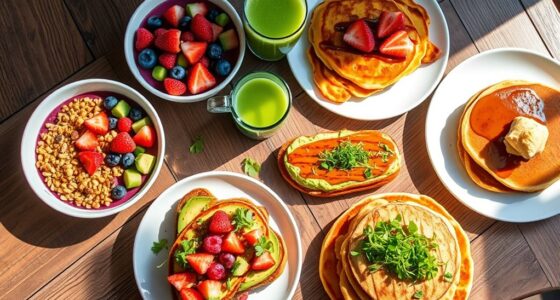

To batch-cook breakfast for the week, plan versatile, nutritious recipes you can make in bulk, like overnight oats or egg muffins. Prepare and store ingredients in airtight, labeled containers, using freezer-safe options for longer storage. Reheat foods easily in the microwave, keeping crispy items separate. Keep your storage organized and routines consistent to make mornings smoother and stress-free. Stay with us to discover more tips for efficient breakfast prep that saves time and boosts your mornings.

Get kitchen staples and gadgets delivered free with Prime
- Fast, free delivery on millions of items
- Prime Video, Amazon Music and more included
- Member-only deals all year
Key Takeaways
- Select versatile, reheatable recipes like overnight oats, egg muffins, or breakfast burritos for easy prep and variety.
- Prepare ingredients in bulk and assemble meals in airtight, labeled containers for quick grab-and-go mornings.
- Use freezer-safe containers and proper reheating techniques to maintain food quality and extend shelf life.
- Organize storage areas with clear containers and designated shelves to streamline access and routine maintenance.
- Plan menus that balance nutrition, reduce stress, and allow for efficient batch-cooking and meal rotation.
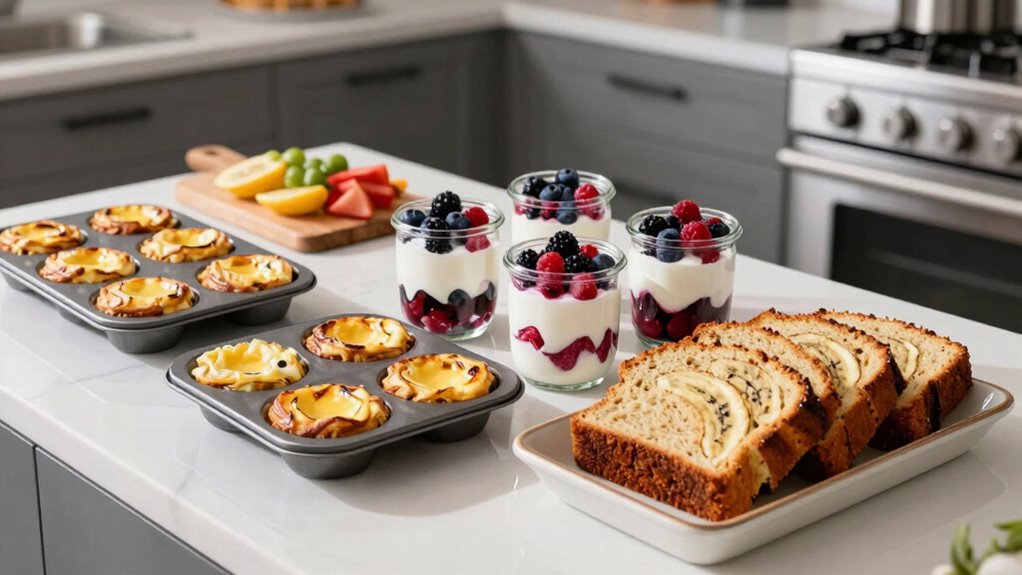
Mornings can be hectic, but batch-cooking breakfast for the week makes starting your day easier and more organized. When you prepare your meals ahead of time, you eliminate the scramble of figuring out what to eat and avoid the temptation of unhealthy last-minute options. To make this process smooth, it’s crucial to follow some effective meal prep tips. First, plan your menu carefully, choosing versatile recipes that store well and can be easily reheated or eaten cold. Think overnight oats, egg muffins, or breakfast burritos—these are all great options that save time and reduce morning stress.
Batch-cook versatile, easy-to-reheat breakfast options to simplify mornings and reduce stress.
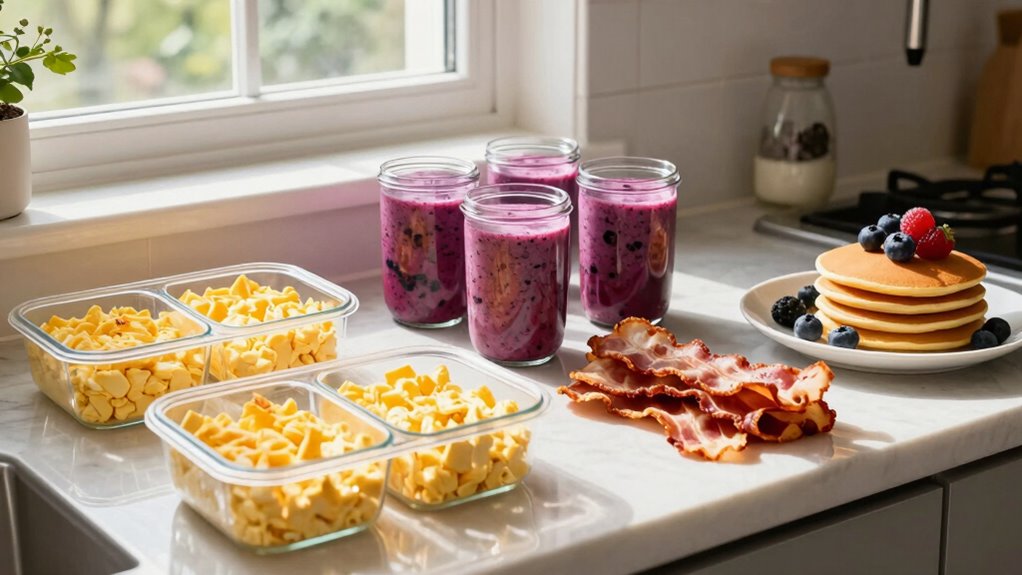
Next, invest in the right storage solutions. Airtight containers are your best friends—they keep your breakfasts fresh and prevent spills. Clear containers also help you see what’s inside at a glance, so you can grab what you need quickly. Use different sizes if you’re storing a variety of foods, from small portions of fruit to larger egg muffins or stacks of pancakes. Label your containers with dates to keep track of freshness and ensure you consume everything within safe timeframes. Freezer-safe containers are particularly useful if you want to prepare meals well in advance, allowing you to store breakfast for up to a month without sacrificing quality. Proper storage is essential for maintaining food quality and safety during extended storage. Incorporating food safety practices into your routine can further help prevent spoilage and ensure your meals stay fresh longer. Additionally, understanding proper food storage techniques can help you optimize shelf life and reduce waste.
When it comes to meal prep tips, consistency is key. Prepare ingredients in bulk—cook a large batch of eggs, roast some vegetables, or make a big pot of oatmeal—then portion them out into your containers. This way, you’re not cooking from scratch every morning, but still enjoying freshly prepared food. Be mindful of how you reheat your meals; some foods reheat better than others. For example, eggs reheat well in the microwave, but crispy elements like bacon might be better off cooked fresh or stored separately to maintain texture. Incorporating freezing techniques can also extend the freshness of your meals and help you plan further ahead.
Another important tip is to keep your storage area organized. Use stackable containers and dedicated shelves so you can quickly access your breakfast items without sifting through clutter. When you keep your meal prep space tidy, it encourages you to stick with your routine and minimizes waste.
Ultimately, the better way to batch-cook breakfast for the week involves a combination of smart meal prep tips and effective storage solutions. By planning ahead, investing in quality containers, and maintaining an organized space, you make your mornings smoother, healthier, and more manageable. Your future self will thank you every time you open the fridge to find a delicious, ready-to-eat breakfast waiting, saving you time and stress for the busy day ahead.
airtight food storage containers
As an affiliate, we earn on qualifying purchases.
As an affiliate, we earn on qualifying purchases.
Frequently Asked Questions
How Long Can Batch-Cooked Breakfast Items Be Stored Safely?
You can safely store batch-cooked breakfast items for up to four days in the fridge. To maximize freshness, follow meal prep strategies that include cooling foods quickly and storing them in airtight containers. Always use storage safety tips by labeling your meals and reheating them thoroughly before eating. If you want to keep them longer, consider freezing portions—just be sure to consume within three months for peak quality and safety.
What Are the Best Containers for Freezing Breakfast Meals?
Imagine your breakfast meals snug in sturdy containers, ready to face the freezer’s chill. Opt for high-quality, durable containers like BPA-free plastic or glass with airtight seals—they’re best for freezer safety and prevent leaks. These containers resist cracks and keep food fresh longer. Look for ones that are freezer-safe, stackable, and microwave-friendly, ensuring your breakfast stays delicious and intact through multiple weeks in your freezer.
How Can I Reheat Breakfast Dishes Without Sacrificing Taste?
To reheat breakfast dishes without sacrificing flavor, focus on proper reheating techniques to preserve taste and texture. Use a microwave at medium power, stirring halfway through to guarantee even heating. Alternatively, reheat in the oven or skillet for better flavor retention, covering the dish to retain moisture. Always add a splash of water or milk if needed, and avoid overcooking to keep the dish moist and flavorful.
Are There Any Breakfast Recipes That Freeze Well?
Think of your freezer as a treasure chest—many breakfast recipes can be stored and enjoyed later. Muffins, breakfast burritos, and quiches freeze exceptionally well, offering you variety options to start your day. Use ingredient substitutions like plant-based proteins or gluten-free options to suit your tastes. Just wrap them tightly, label, and reheat when hunger strikes. This way, you keep breakfast exciting and convenient all week long.
How Do I Customize Batch-Cooked Breakfasts for Dietary Restrictions?
You can customize batch-cooked breakfasts by swapping ingredients to meet dietary restrictions. For gluten-free options, use gluten-free grains like quinoa or oats and choose gluten-free bread or muffins. For vegan substitutions, replace eggs with flaxseed or chia seed meals and use plant-based milks and yogurts. Incorporate vegetables, nuts, and seeds to boost nutrition while ensuring your meals suit your dietary needs.
Conclusion
Now that you’ve mastered the art of batch-cooking breakfast, think of your week as a well-orchestrated symphony, each morning hitting all the right notes without a hitch. With your fridge stocked and your mornings streamlined, you hold the power to start each day with a nourishing, stress-free melody. Embrace this new rhythm, and watch as your mornings transform from chaos to a harmonious dance — all thanks to your smart, flavorful prep.
Halloween Picks
halloween
As an affiliate, we earn on qualifying purchases.