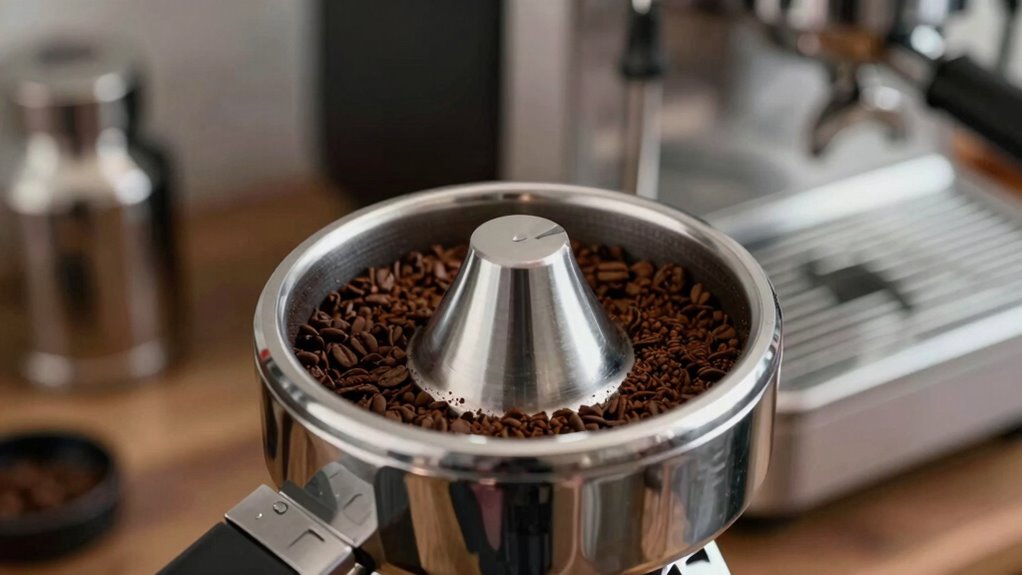

Choosing the right espresso grinder starts with understanding burr size. Larger burrs (around 65mm or more) produce more uniform grounds, which improve extraction, flavor, and consistency, especially for espresso. Smaller burrs are suitable for compact grinders and lighter brewing methods like drip or pour-over. The size affects grinding speed, ease of maintenance, and grind quality. If you want to learn about matching burr size to your brewing style, keep exploring how this impacts your coffee experience.
Key Takeaways
- Larger burrs (65mm+) produce more uniform grounds, ideal for consistent espresso extraction.
- Smaller burrs (around 50mm) are compact, suitable for home use and quick grinding.
- Burr size influences grinding speed, with larger burrs generally offering faster, more efficient performance.
- Proper maintenance, including cleaning and alignment, is essential regardless of burr size for optimal espresso quality.
- Match burr size to your brewing method and volume needs to ensure the best flavor and grinder longevity.
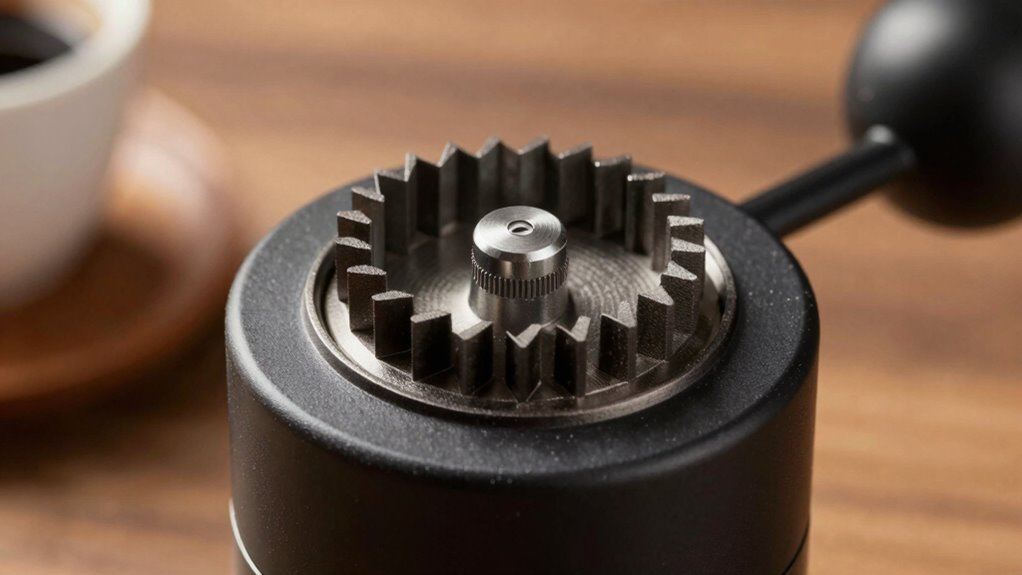
Understanding burr size is fundamental because it directly impacts the quality of your machining or grinding process. When it comes to coffee grinding, this factor influences everything from grind consistency to flavor extraction. Larger burrs tend to produce a more uniform grind, which is indispensable for a consistent brewing process. The size of the burrs determines how evenly the coffee grounds are ground, affecting extraction and taste. Smaller burrs might give you a finer grind but can produce uneven particles, leading to inconsistent extraction and flavor. Knowing how burr size affects grind consistency helps you choose the right grinder to meet your brewing needs, whether for espresso, drip coffee, or French press.
In addition to selecting the right burr size, understanding maintenance tips becomes critical for keeping your grinder in top shape. Regular cleaning ensures that coffee oils and residue don’t build up, which can clog the burrs and compromise grind consistency. Proper maintenance also helps prevent uneven wear on the burrs, maintaining a stable grind size over time. For instance, periodically removing and cleaning the burrs, using recommended cleaning brushes, and avoiding harsh chemicals will extend the lifespan of your grinder and keep your coffee tasting fresh. Paying attention to burr alignment is equally important; misaligned burrs can cause inconsistent particle sizes, reducing overall grind quality. Keep an eye on any unusual noises or changes in grind performance, as these may indicate the need for maintenance or part replacement.
Additionally, understanding burr size is essential because it influences the grinding speed and overall efficiency of your machine, impacting how quickly you can prepare your coffee. When selecting your grinder, consider how burr size aligns with your brewing method. Larger burrs, typically 65mm or more, excel at producing consistent grinds for espresso, where precision is key. Smaller burrs, around 50mm, are often found in compact grinders suitable for pour-over or drip coffee, where grind consistency remains important but speed and convenience matter too. Your choice should balance size, grind consistency, and ease of maintenance. Remember, the better you maintain your grinder, the longer it will perform at its best, providing you with reliable, uniform grounds for every brew. Ultimately, understanding burr size isn’t just about the initial selection — it involves ongoing care and attention to detail that ensures you get the most out of your grinder and enjoy consistently excellent coffee.
Frequently Asked Questions
How Does Burr Material Affect Coffee Flavor?
You’ll notice that burr material directly impacts flavor consistency in your coffee. For example, ceramic burrs tend to stay sharper longer, ensuring even grind size and preserving delicate flavors. Metal burrs, like stainless steel, are durable but may produce slightly uneven grinds over time, affecting flavor. Choosing the right burr material helps you achieve a consistent grind, which is essential for extracting the best flavor from your coffee beans.
Can a Larger Burr Size Cause Over-Extraction?
Imagine a larger burr size in your grinder. It impacts the grind consistency, but beware—this can increase over-extraction risks. As the burrs cut coarser or uneven particles, your espresso might taste bitter or harsh. While larger burrs often speed up grinding, they can also cause uneven extraction if not adjusted properly. So, yes, a bigger burr size can lead to over-extraction if you’re not careful with your grind settings.
Is a Burr Grinder More Durable Than a Blade Grinder?
A burr grinder is generally more durable than a blade grinder because it has sturdy, high-quality parts designed for consistent use, reducing noise and maintenance. Plus, many burr grinders offer better portability due to their compact size and quieter operation, making them easier to use anywhere. If you want a long-lasting, reliable grinder that minimizes noise and fits your lifestyle, a burr grinder is the smarter choice.
How Often Should I Calibrate My Burr Grinder?
Think of your burr grinder as a finely tuned instrument; you should calibrate it every few months or whenever you notice a change in grind consistency. Regular calibration ensures ideal burr alignment, maintaining consistent grind size. If your espresso shots start to taste off or the grind feels uneven, it’s time to check and recalibrate. Staying on top of this keeps your coffee flavorful and your grinder performing like new.
What Maintenance Is Required for Optimal Burr Performance?
To keep your burr grinder performing at its best, regularly clean the grinder to prevent buildup and guarantee consistent grounds. You should also replace the burrs when they become dull, typically every 1-2 years depending on usage. Regular grinder cleaning and timely burr replacement help maintain grind consistency, improve flavor, and extend your grinder’s lifespan. Don’t forget to follow your manufacturer’s instructions for specific maintenance routines.
Conclusion
Choosing the right burr size is like finding the perfect puzzle piece—you want it to fit just right for the best flavor. Larger burrs grind beans faster and more consistently, giving you a smoother espresso. Smaller burrs might be more precise but can slow you down. By understanding burr sizes, you can pick a grinder that suits your needs and makes every shot as satisfying as a perfectly brewed cup. Happy grinding!