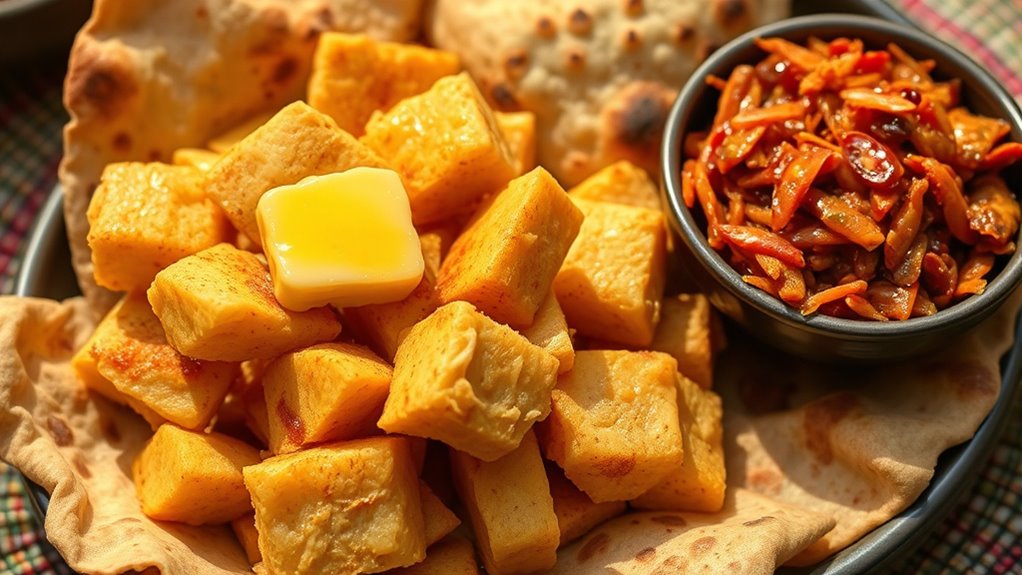

Ethiopian breakfast features dishes like chechebsa and firfir, highlighting a rich cultural heritage rooted in community and tradition. Chechebsa is made from torn, toasted kita bread cooked with spiced butter and berbere, while firfir combines shredded bread sautéed with spices, butter, and onions. These meals symbolize hospitality and resilience, often enjoyed during special gatherings. Stay with us to explore how these dishes reflect Ethiopia’s vibrant history and cultural pride.
Key Takeaways
- Chechebsa is made from torn flatbread cooked with spiced butter and berbere, symbolizing tradition and communal sharing.
- Firfir features shredded flatbread sautéed with spiced butter, onions, and chili, reflecting culinary artistry and family recipes.
- Both dishes hold cultural significance, often served during religious celebrations and family gatherings to honor heritage.
- They embody Ethiopia’s rich culinary legacy, connecting people to history, community, and cultural pride.
- These traditional breakfasts serve as living symbols of Ethiopia’s enduring cultural identity and hospitality.
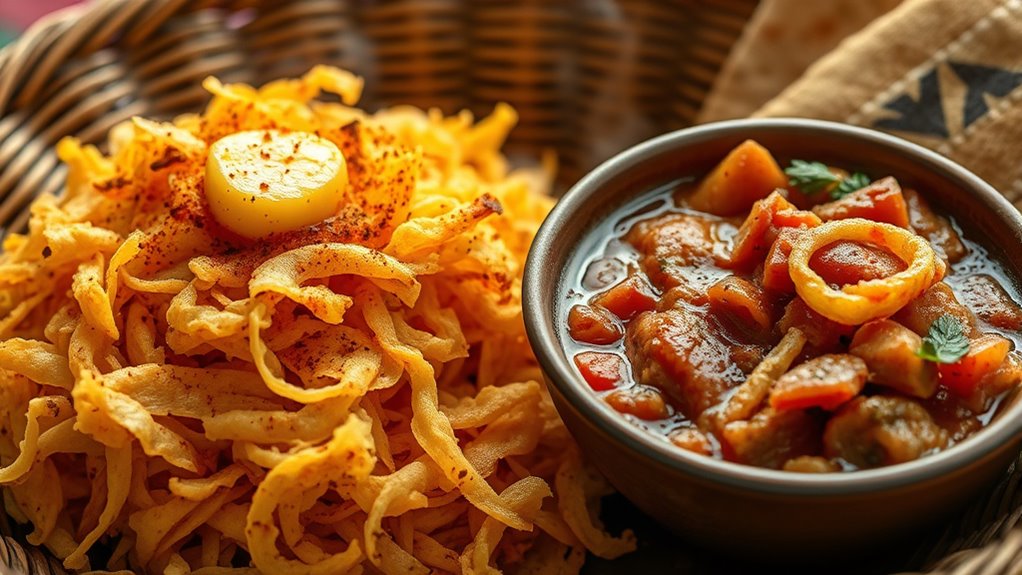
Have you ever wondered what makes Ethiopian breakfast so unique and flavorful? It’s not just the ingredients; it’s the rich traditions and cultural significance woven into every bite. Traditional recipes like Chechebsa and Firfir are more than simple dishes—they’re a reflection of Ethiopia’s history, community, and identity. When you sit down to enjoy these dishes, you’re participating in a centuries-old culinary heritage that connects families and communities through shared flavors and rituals.
Ethiopian breakfast reflects centuries of tradition, community, and cultural pride in every flavorful bite.
Chechebsa, also known as kita firfir, is made from flat, unleavened bread called kita, which is torn into pieces and cooked with spiced butter and berbere, a signature Ethiopian spice blend. The process of preparing Chechebsa isn’t just about making a hearty breakfast—it’s a communal activity often enjoyed during special occasions or mornings after religious fasting. The aroma of spiced butter mingling with the toasted bread signals comfort and warmth, invoking a sense of belonging. This dish’s deep roots in traditional recipes highlight its cultural significance; it’s more than sustenance—it’s a symbol of resilience and tradition passed down through generations.
Similarly, Firfir takes shredded flatbread and sautés it with spiced butter, onions, and sometimes chili, creating a savory, flavorful dish that can be enjoyed for breakfast or any time of the day. The preparation of Firfir is an act of preserving tradition, often made in homes using family recipes that have been handed down over decades. It reflects the Ethiopian approach to food—simple ingredients elevated through skillful seasoning and communal effort. The spices and cooking techniques are embedded with cultural meaning, representing hospitality and the importance of sharing meals with loved ones.
Both Chechebsa and Firfir carry cultural significance beyond their taste. They’re often served during religious celebrations, family gatherings, or as a way to start the day with a sense of community. Eating these dishes isn’t just about satisfying hunger; it’s a way to honor history and maintain cultural identity. When you enjoy these traditional recipes, you’re participating in a tradition that has persisted through centuries, reminding you of Ethiopia’s rich culinary and cultural legacy.
In essence, Ethiopian breakfast dishes like Chechebsa and Firfir are more than flavorful start-of-the-day options—they’re living symbols of cultural pride and history. They connect you to Ethiopia’s past, its community spirit, and its enduring culinary artistry. So next time you indulge in these dishes, remember that you’re tasting a piece of Ethiopia’s soul, crafted through generations of tradition and shared love for food.
Frequently Asked Questions
What Are the Traditional Beverages Served With Ethiopian Breakfast?
You’ll often enjoy a traditional Ethiopian coffee ceremony with your breakfast, where freshly brewed coffee is served in small cups, accompanied by popcorn or snacks. Honey wine, or Tej, is also popular, offering a sweet, honey-flavored drink that complements the savory dishes. These beverages add cultural richness and warmth to your meal, making your breakfast experience more authentic and memorable.
How Is Chechebsa Traditionally Prepared and Served?
You’re about to discover a breakfast so flavorful, it’ll blow your mind! Traditional preparation of chechebsa involves toasting shredded flatbread with berbere spice and spiced butter until crispy and fragrant. You serve it hot, often accompanied by honey or yogurt, following local customs. This dish is a celebration of Ethiopian heritage, and sharing it fosters a warm, communal atmosphere, making every bite a delightful cultural experience.
Can Firfir Be Made Vegan or Gluten-Free?
Absolutely, you can make firfir vegan or gluten-free. Use vegan substitutions like margarine or olive oil instead of butter, and choose gluten-free bread or injera to keep it gluten-free. You can also add vegetables like peppers or tomatoes for extra flavor. Just guarantee your ingredients suit your dietary needs, and you’ll enjoy a delicious, customized firfir that fits your lifestyle perfectly.
What Are the Regional Variations of Ethiopian Breakfast Dishes?
A wise man once said, “Variety is the spice of life,” and Ethiopian breakfast dishes reflect that beautifully. You’ll find regional spice profiles shaping dishes like chechebsa in the Oromia region with smoky, smoky flavors, and the Tigray region offering firfir with a fiery kick. Breakfast presentation styles also differ, from communal platters to individual servings, highlighting local customs and ingredients that make each region’s morning meal unique.
How Do You Store Leftover Chechebsa and Firfir?
You should store leftover chechebsa and firfir in airtight containers and refrigerate promptly. For refrigeration tips, guarantee they’re cooled to room temperature before sealing and placing in the fridge. When reheating, use a stovetop or microwave, adding a splash of water or broth to keep them moist. Reheat thoroughly until steaming hot, and consume within 1-2 days for the best taste and safety.
Conclusion
As you enjoy Ethiopian breakfast with chechebsa and firfir, you’ll find each bite as vibrant as a sunrise. The mingling spices and hearty textures create a symphony on your palate, waking up your senses like a morning chorus. This meal isn’t just food; it’s a warm embrace from Ethiopia’s rich culinary tradition. So, savor every mouthful and let the flavors linger, like a beautiful song that stays with you long after the last note fades away.