To create microfoam like a barista, start with fresh, cold milk from the fridge, as colder milk froths better. Heat it to around 140°F–150°F using a thermometer, and position your steaming wand just below the surface. Guide the milk in a whirlpool motion and stop before it gets too hot. Tap, swirl, and pour carefully to achieve smooth, velvety foam. Keep practicing these steps, and you’ll master microfoam without needing a pro’s help.
Key Takeaways
- Start with cold, fresh milk straight from the fridge for better microfoam stability.
- Use a thermometer to heat milk to 140°F–150°F (60°C–65°C) for optimal microfoam.
- Position the steaming wand just below the milk surface and introduce air gently to create microfoam.
- Tap the pitcher to remove large bubbles and swirl to achieve velvety, shiny microfoam.
- Practice pouring techniques, controlling height and flow, to craft latte art with your microfoam.
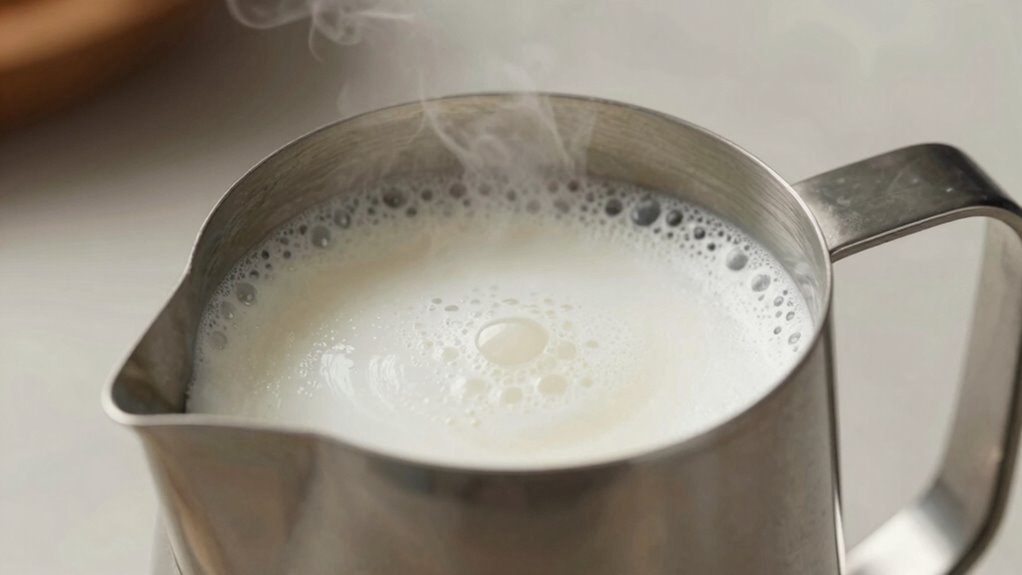
Ever wondered how to create perfectly frothy milk for your coffee? Mastering the art of milk frothing can elevate your coffee experience, especially when it comes to latte art. The key lies in understanding how to achieve the right milk temperature and how to manipulate the milk to produce microfoam that’s smooth, shiny, and ideal for pouring intricate designs. You don’t need to be a barista to do this; just a little practice and attention to detail can make a big difference.
Start with fresh, cold milk straight from the fridge. Cold milk is easier to froth because it produces more stable microfoam and gives you better control over the process. As you steam, your goal is to heat the milk to the right temperature—around 140°F to 150°F (60°C to 65°C). Using a thermometer helps, but with practice, you’ll get a feel for the right temperature by touch. When the milk is too hot, it loses its sweetness and froths poorly; too cold, and it won’t froth enough. The ideal temperature guarantees the milk is warm enough to create that velvety microfoam necessary for latte art.
Start with cold milk and aim for 140°F to 150°F for perfect microfoam.
Next, position your steaming wand just below the surface of the milk and turn it on. Start with a gentle, steady motion to introduce air into the milk—this is what makes the microfoam. You’ll hear a slight hissing sound, which is perfect. As the milk begins to expand and increase in volume, lower the wand further into the pitcher and tilt it slightly to create a whirlpool effect. This helps break down larger bubbles and produces a smooth, consistent microfoam. Keep an eye on your milk’s temperature and stop steaming as you approach the desired heat. Don’t overheat it—hot milk can scorch and ruin the texture.
Once steaming is complete, tap the pitcher gently on a counter and swirl the milk to eliminate any large bubbles. This step smooths out the microfoam, making it easier to pour for latte art. When pouring, hold the cup steady and pour from a height, then move closer as you create your design. The quality of your microfoam directly impacts your ability to make gorgeous latte art, so take your time to perfect the milk temperature and foam texture. Understanding the science of milk frothing can help you troubleshoot and improve your technique over time.
With patience and practice, you’ll find yourself creating velvety microfoam every time, making your coffee not only delicious but also visually stunning. The secret is in controlling the milk temperature and mastering the steaming technique—simple skills that turn everyday coffee into an art form.
Frequently Asked Questions
Can I Create Microfoam With Plant-Based Milk?
Yes, you can create microfoam with plant-based milk. Unlike dairy milk, plant-based options like soy, oat, or almond milk may require different frothing techniques but can still produce creamy microfoam. Compared to dairy milk, plant-based milks often have different protein and fat levels, affecting foam stability. Experiment with your chosen variety, adjust frothing time, and you’ll achieve smooth, velvety microfoam perfect for your coffee drinks.
How Do I Prevent Large Bubbles in the Milk?
To prevent large bubbles and improve milk texture, start by using fresh, cold milk and a clean frothing tool. Submerge the tip just below the surface and create a gentle, steady motion to introduce fine air bubbles. Keep the steam or frother at a consistent temperature to guarantee small, uniform bubble size. Proper technique results in smooth, velvety microfoam with a creamy texture, free of large, unwanted bubbles.
What’s the Best Temperature for Microfoam?
You should aim for a temperature of around 140-150°F when using your milk steamer for microfoam. Use the temperature control feature to monitor and maintain this range, avoiding overheating, which can ruin the texture and taste. When the milk reaches this temperature, it will be perfectly textured and sweet, making your coffee experience much better. Always keep an eye on the thermometer or the steamer’s indicator for ideal results.
Can I Froth Milk Without a Special Machine?
Think of manual frothing as a lively dance, where you twirl the milk with your hand or a simple tool. Yes, you can froth milk without a special machine using steam alternatives like a whisk, jar, or even a French press. Just heat the milk, then vigorously shake or whisk until it’s frothy and velvety. It’s a fun, hands-on way to craft microfoam anytime, anywhere.
How Do I Clean My Milk Frother Properly?
To clean your milk frother properly, start by unplugging it and rinsing the frothing jug immediately after use. Use warm water and a mild detergent to wash all parts thoroughly, paying attention to the frothing wand or spout. For milk frother maintenance, regularly descale if needed and wipe down the exterior with a damp cloth. Follow these cleaning tips to keep it in excellent condition and guarantee tasty, hygienic froth every time.
Conclusion
Now that you know the simple steps to create microfoam without a barista, you can elevate your home coffee game effortlessly. Did you know that properly frothed milk can enhance your espresso’s flavor by up to 20%? Mastering these techniques means you’ll enjoy café-quality drinks anytime, saving money and impressing friends. So, grab your milk and frother, and start practicing—you’re just a few steps away from barista-level perfection at home!