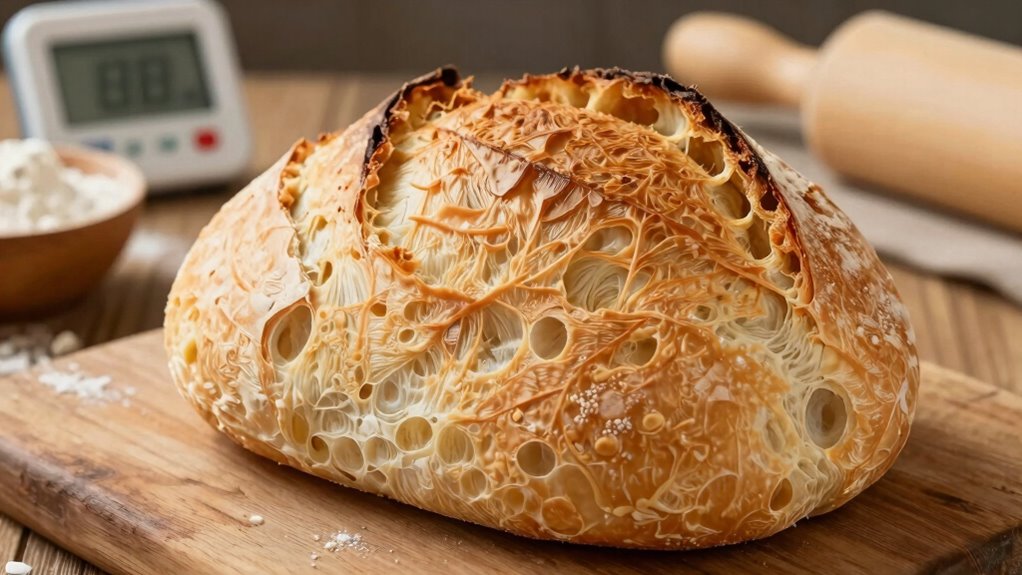

The quickest way to get fluffy bread is to control your proofing temperature. Keep your dough in a warm spot between 75°F and 85°F, like inside an oven with the light on or near a radiator. Use a thermometer to monitor the exact temperature and prevent over- or under-proofing. Proper heat activates yeast effectively, leading to better rising and a tender crumb. Stick with these tips, and you’ll discover more secrets for perfect bread today.
Key Takeaways
- Maintain a proofing temperature between 75°F and 85°F (24°C to 29°C) for optimal yeast activity.
- Use a warm spot like inside an oven with the light on or near a radiator to create a controlled environment.
- Monitor dough progress with a thermometer to ensure proper doubling and elasticity.
- Cold proof in the refrigerator to slow fermentation, develop flavor, and improve bread fluffiness.
- Avoid drafts and sudden temperature changes to ensure consistent proofing and a light, airy loaf.

Understanding the right proofing temperature is vital for perfect baked goods. When you get this step right, your bread rises beautifully, with a tender crumb and a pleasing texture. The temperature during proofing influences yeast activation, which is essential for fermentation. If it’s too cold, yeast activity slows down markedly, leading to a sluggish rise or even no rise at all. Conversely, if it’s too hot, you risk killing the yeast, resulting in flat, dense bread. The ideal proofing temperature typically falls between 75°F and 85°F (24°C to 29°C), creating the perfect environment for yeast to thrive and produce carbon dioxide, which causes the dough to expand. This temperature range also helps develop dough elasticity, allowing it to stretch and hold the gases produced during fermentation. Proper dough elasticity results in a light, airy loaf with a good crumb structure. Maintaining the optimal proofing temperature supports yeast fermentation and ensures consistent results. To control proofing temperature effectively, consider your environment. If your kitchen is cooler, you can create a warm proofing spot by placing your dough in an oven with just the light on or near a radiator. Alternatively, you can use a proofing box or a warm spot in your house, such as on top of a refrigerator or inside a turned-off oven with the light on. If your kitchen is warmer than the ideal range, you can slow down fermentation by refrigerating the dough for a cold proof. This not only helps control the rise but also enhances flavor development. Remember, yeast activation is sensitive to temperature changes, so maintaining a stable environment is key to consistent results. Monitoring the proofing temperature isn’t just about the environment—use a thermometer to guarantee accuracy. Touch alone can be unreliable, especially if you’re working in a drafty or fluctuating space. When the dough has doubled in size, it’s usually a sign that the yeast has been activated properly, and the dough has developed sufficient elasticity. This elasticity indicates that gluten has formed well, which is vital for trapping the gases and creating that fluffy texture you want. By controlling the proofing temperature, you’re fundamentally giving your yeast the ideal conditions to work efficiently, ensuring a better rise, improved dough elasticity, and a final loaf that’s both light and flavorful. Mastering this simple yet vital step makes a noticeable difference in your baking, saving you time and effort while consistently delivering bakery-quality results.
Frequently Asked Questions
Can I Proof Bread at Room Temperature if I Don’T Have a Proofing Box?
Yes, you can proof bread at room temperature if you don’t have a proofing box. Just create a warm, draft-free proofing environment by placing your dough in a lightly greased bowl and covering it with a damp cloth or plastic wrap. Maintaining a consistent room temperature helps dough fermentation and guarantees proper rise. Keep an eye on your dough, as temperature fluctuations can affect fermentation speed and final bread texture.
How Long Should I Proof Bread at Different Temperatures?
Think of proofing as a garden; temperature control is your sunshine. At 75°F, your dough needs about 1 to 2 hours for proper proofing. Cooler temperatures, like 65°F, extend this to 2–4 hours, while warmer temps, around 85°F, quicken it to 45 minutes. Keep an eye on proofing duration and adjust based on temperature, ensuring your bread rises perfectly every time.
Does Proofing Temperature Affect Bread Flavor?
Yes, proofing temperature affects bread flavor by influencing fermentation speed and flavor development. When you proof at warmer temperatures, fermentation speeds up, producing simpler flavors and potentially less depth. Cooler temperatures slow fermentation, allowing complex flavors to develop more fully. So, if you want richer, more nuanced bread, proof at a slightly lower temperature. Adjusting proofing temperature helps you control both the flavor and texture of your final loaf.
What Signs Indicate That Dough Is Proofed Correctly?
You’ll know your dough is proofed correctly when it has doubled in size and feels puffy—ironic, right? This signals ideal yeast activity and gluten development. Gently poke it; if the indentation slowly springs back, it’s ready. If it stays, your dough’s over-proofed. Proper proofing ensures a light, airy loaf, proofed just enough to balance gluten strength and yeast vigor—so don’t rush, or your bread might miss its fluffy destiny.
Is It Safe to Proof Dough in a Warm Oven?
Yes, proofing dough in a warm oven is safe if you manage the oven temperature carefully. Keep the oven slightly warm, around 75-85°F (24-29°C), to ensure proofing safety and prevent overheating that could kill the yeast. Use the oven light or a thermometer to monitor the temperature. This creates an ideal environment for your dough to rise without risking overproofing or damaging the yeast.
Conclusion
Now that you know the proofing temperature secrets, you might think it’s too complicated to try. But honestly, it’s simple and makes a huge difference in your bread’s fluffiness. Don’t let fear of messing up hold you back—just follow the right temperature, and you’ll achieve bakery-quality results at home. Give it a shot today, and enjoy perfectly risen, soft bread every time. Your taste buds will thank you for it!