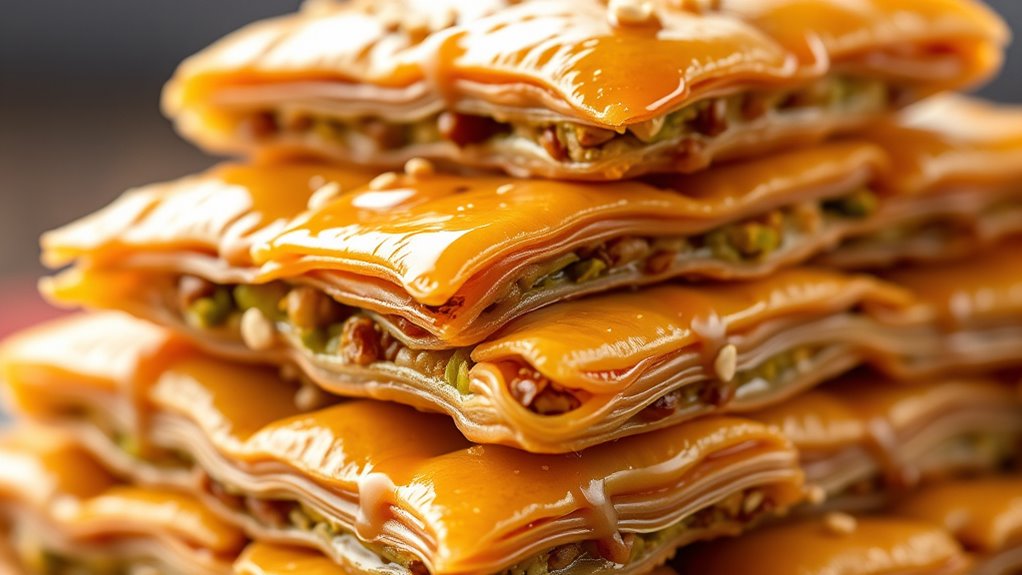

Middle Eastern baklava is a delicious, layered pastry filled with nuts like pistachios, walnuts, or almonds, depending on the region. You’ll notice its flaky, crispy texture from thin phyllo sheets brushed with butter, baked until golden, then soaked in warm honey or syrup for sweetness. This treat combines crunch, richness, and syrupy flavor in every bite. If you want to explore its traditional preparation and regional variations, there’s more to discover beneath the surface.
Key Takeaways
- Middle Eastern baklava typically features layers of phyllo dough filled with almonds or cashews.
- Honey or syrup is poured over hot pastry, soaking it for a sticky, sweet finish.
- The preparation involves layering butter-brushed phyllo sheets with finely chopped nuts.
- Flavored with rose or orange blossom water, reflecting regional taste preferences.
- It is a traditional dessert symbolizing cultural heritage and culinary craftsmanship.
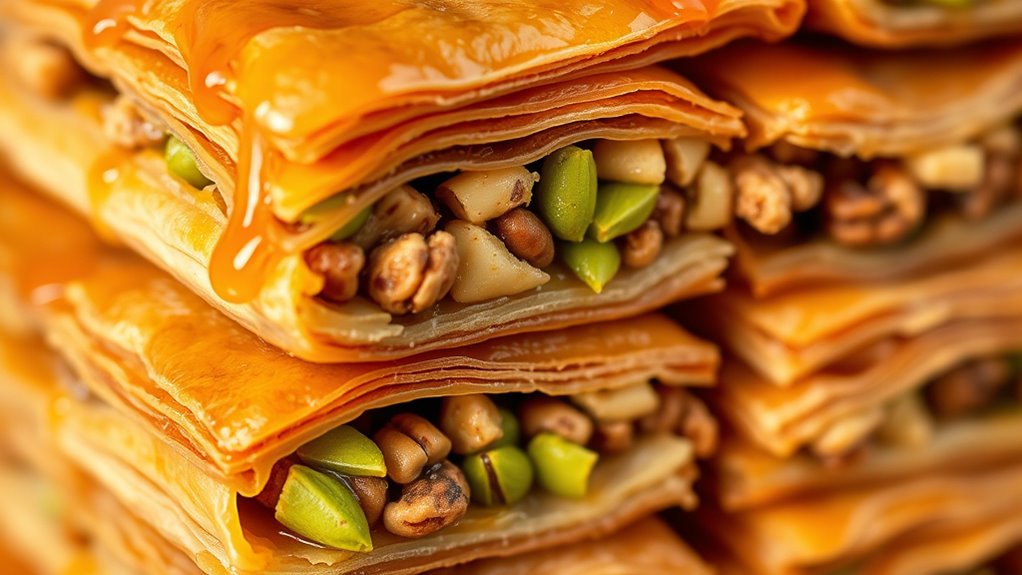
Have you ever wondered what makes baklava such a beloved dessert across the Middle East and the Mediterranean? The answer lies in its rich history, versatile ingredients, and the way it’s crafted. When you look at baklava, you’ll notice that regional variations play a significant role in shaping its unique flavors and textures. In Greece, for example, it often features walnuts and a hint of cinnamon, while in Turkey, pistachios are the star, layered between delicate phyllo sheets. Middle Eastern versions might incorporate almonds or cashews, sometimes flavored with rose or orange blossom water. These regional twists give baklava its distinct identity, reflecting local tastes and available ingredients. Despite these differences, the core appeal remains the same—a crispy, flaky pastry filled with nuts and drizzled with honey or syrup.
If you want to understand baklava deeply, you should pay attention to its traditional preparation. Making baklava isn’t just about assembling ingredients; it’s a craft passed down through generations. The process begins with finely chopping the nuts, mixing in spices if desired, and then layering thin sheets of phyllo dough in a baking dish. It’s essential to brush each sheet with melted butter or oil to achieve that perfect, crispy texture. As you build layers, you’ll notice that patience and precision are key—overlapping sheets evenly and ensuring each layer is coated well. Once assembled, baklava is baked until golden and crisp. The finishing touch involves pouring warm honey or syrup over the hot pastry, allowing it to soak in and create a sticky, sweet coating. This traditional preparation results in a dessert that’s both crispy and moist, with flavors that meld beautifully over time.
Understanding the regional variations and traditional methods enhances your appreciation for baklava. It’s not just a pastry; it’s a reflection of cultural heritage and culinary artistry. Every bite offers a taste of history, adapted to local flavors and customs. When you take the time to prepare baklava following traditional techniques, you honor those roots, creating a dessert that’s authentic and deeply satisfying. Whether you prefer the nut combination of your region or the aromatic syrup used, the essence remains the same—a layered pastry that combines crunch, sweetness, and nutty richness in every bite. So, next time you enjoy baklava, remember that it’s a perfect blend of regional influences and time-honored craft, making it a truly timeless treat.
Frequently Asked Questions
What Are the Traditional Variations of Baklava Across Middle Eastern Countries?
You’ll notice that traditional baklava varies across Middle Eastern countries, showcasing regional flavor profiles and ingredient substitutions. In Greece, it’s often honey-sweetened with walnuts, while Turkey favors pistachios and a syrup infused with lemon. Lebanon might include orange blossom water, and Iran sometimes adds saffron for a distinctive color and aroma. These variations reflect local tastes and ingredient availability, making each version uniquely delicious.
How Should Baklava Be Stored to Maintain Freshness?
To keep your baklava fresh, store it in an airtight container at room temperature for up to a week. For longer preservation, place it in the fridge, but be sure to cover it well to prevent it from drying out. Use proper storage tips like wrapping it tightly or using a sealed container to maintain freshness, ensuring each bite stays crispy and delicious. Avoid exposure to direct sunlight or humidity.
Can Baklava Be Made Vegan or Gluten-Free?
Yes, you can definitely make baklava vegan or gluten-free. Opt for vegan substitutes like coconut oil or vegan butter instead of traditional butter, and use maple syrup or agave nectar for honey. For gluten-free options, swap out wheat phyllo dough with gluten-free pastry sheets. This way, you create a safer, more satisfying treat that still satisfies your sweet tooth, showcasing clever culinary creativity.
What Are Common Nuts Used in Authentic Baklava Recipes?
You’ll find that common nuts in authentic baklava recipes are pistachios and walnuts, which offer rich, distinctive flavor profiles. If you prefer, you can substitute almonds for pistachios, providing a slightly different but delicious taste. Pistachios give a unique, slightly sweet flavor, while almonds add a mild, nutty aroma. Experimenting with these nuts allows you to customize your baklava to suit your flavor preferences while maintaining its traditional charm.
How Does Honey Quality Affect Baklava’s Flavor?
You might think all honey tastes the same, but honey purity and flavor intensity truly influence baklava’s taste. Using high-quality honey with a rich, pure profile enhances sweetness without overpowering, resulting in a more fragrant, balanced flavor. Poor-quality honey can make your baklava taste dull or overly sweet. So, investing in good honey ensures your dessert shines with vibrant, authentic flavor that elevates every bite.
Conclusion
Now that you know how to make baklava, you’ll appreciate its rich history and delicious layers even more. Did you know that Turkey is the world’s largest producer, creating over 400,000 tons annually? With its sweet, nutty flavor and flaky texture, baklava remains a beloved treat across the Middle East and beyond. Next time you enjoy a piece, remember you’re tasting a centuries-old tradition that continues to delight millions worldwide.