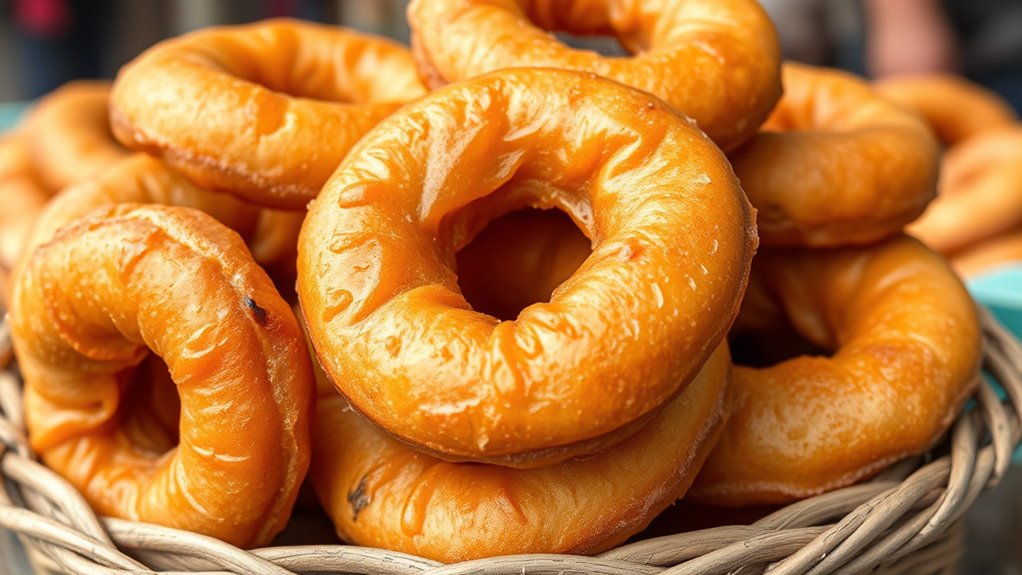

Peruvian picarones are traditional doughnuts made from sweet potatoes and squash, symbolizing community and cultural heritage. You’ll find their vibrant color and natural sweetness come from carefully selected ingredients that are mashed, fermented, and fried to perfection. Typically served with chancaca syrup, they connect you to Peru’s rich culinary history. Each bite reflects ancestral recipes passed down through generations. To discover the unique process and cultural significance behind these delightful treats, keep exploring further.
Key Takeaways
- Picarones are traditional Peruvian doughnuts made from mashed sweet potatoes and squash, reflecting cultural heritage.
- The dough ferments with yeast, creating a light, airy texture and rich flavor before frying.
- They are deep-fried to a golden-brown, crispy exterior with a soft interior, often prepared during festivals and family gatherings.
- Typically served with chancaca syrup, a sweet sauce made from raw sugar, cinnamon, and orange peel.
- Eating picarones connects Peruvians to their history, community, and culinary traditions across generations.

Peruvian picarones are delicious fried doughnuts that showcase Peru’s rich culinary heritage. When you bite into these treats, you’re experiencing more than just a sweet snack—you’re tasting a piece of history rooted in tradition. Picarones hold a special place in Peruvian culture, often enjoyed during festivals, family gatherings, and street celebrations. Their cultural significance goes beyond mere flavor; they symbolize community, tradition, and the preservation of ancestral recipes. As you savor a warm picarón, you connect with generations of Peruvians who have passed down this beloved recipe, maintaining its authenticity through time.
Peruvian picarones symbolize community, tradition, and the preservation of ancestral recipes.
The traditional recipes for picarones highlight the ingenuity of Peruvian cuisine. You’ll find that the dough is made from a mixture of sweet potatoes and squash, which give the dough its natural sweetness and vibrant color. These ingredients are carefully selected—often orange-fleshed sweet potatoes and various types of squash—to ensure the dough has the perfect balance of flavor and texture. When you prepare them at home, you’re participating in a time-honored culinary process that’s been refined over centuries. The ingredients are mashed, combined with a touch of yeast, and left to ferment, which gives the dough a light, airy quality once fried. This fermentation process is a core element of the traditional recipe, creating the signature crispy exterior and soft interior that define authentic picarones. Additionally, the fermentation process draws on ancient techniques that have been passed down through generations, reflecting the influence of seed-based diets on traditional foods.
Frying the dough is an art in itself. You heat the oil to just the right temperature, allowing the picarones to develop a golden-brown crust without absorbing too much oil. As you cook them, the aroma of caramelizing sweet potatoes and squash fills the air, enticing anyone nearby. Once fried, they’re traditionally served drizzled with chancaca syrup—a thick, sweet sauce made from raw sugar, cinnamon, and orange peel—that complements the natural sweetness of the dough perfectly. Some variations include a dusting of powdered sugar or a squeeze of fresh lemon, but the classic chancaca syrup remains the most popular.
Eating picarones isn’t just about satisfying your sweet tooth; it’s about connecting with Peruvian culture and appreciating the traditional recipes that have been handed down through generations. Each bite reminds you of Peru’s rich history and the community spirit that keeps these recipes alive. By embracing this culinary tradition, you’re participating in a cultural practice that celebrates Peru’s diverse ingredients, time-tested techniques, and the joy of sharing a sweet moment with loved ones.
Frequently Asked Questions
What Is the History Behind Picarones in Peruvian Culture?
You’ll find that picarones have deep roots in Peruvian culture, blending Andean culinary influences with Colonial era recipes. Originally, indigenous peoples used local ingredients like sweet potato and squash, which were adapted by Spanish colonizers into fried doughnuts. Over time, picarones became a festive treat, symbolizing Peru’s rich history of cultural fusion and culinary innovation, and they remain a beloved dessert today.
How Are Picarones Traditionally Served and Garnished?
Imagine a warm, golden sun rising over a plate of picarones. You’ll find them traditionally served with a drizzle of chancaca syrup, which adds a sweet, fragrant touch. Common garnishes include a sprinkle of cinnamon or powdered sugar, enhancing their rich flavor. You can also enjoy them with fresh fruit or a side of chancaca syrup for dipping, turning each bite into a delightful burst of Peruvian tradition.
Can Picarones Be Made Gluten-Free?
Yes, you can make picarones gluten-free by using gluten-free flour like rice, tapioca, or almond flour. Swap out traditional flour for these alternatives to keep the dough light and crispy. You might also want to experiment with alternative sweeteners such as honey or agave syrup to enhance flavor. Just verify your ingredients are gluten-free and mix well to achieve the right consistency for frying.
What Are the Regional Variations of Picarones in Peru?
Think of regional variations of picarones like different app stores for your favorite device. In Peru, you’ll find variations influenced by local ingredients and cultural influences. In the Lima region, they often include local squash, while in Arequipa, sweet potato takes center stage. Each area adds its own twist, blending indigenous ingredients with Spanish and African influences, creating unique flavors and textures that reflect local traditions.
How Long Do Picarones Stay Fresh After Cooking?
You can enjoy your picarones for up to 2 days after cooking if stored properly. Store them in an airtight container at room temperature for the first day, but for longer freshness, refrigerate them. To keep them crispy, reheat in an oven or toaster oven rather than the microwave. Follow these refrigeration tips to extend their storage duration and maintain their delicious texture and flavor.
Conclusion
As you savor the warm, crispy picarones, you experience a tradition rooted in simplicity and history. These doughnuts might be just a treat, but they carry the rich flavors of Peruvian culture and the humble ingredients of sweet potatoes and squash. It’s surprising how something so straightforward can bring such joy, reminding you that sometimes, the most delightful moments come from the most unassuming treats. Enjoy each bite—where history and flavor meet.