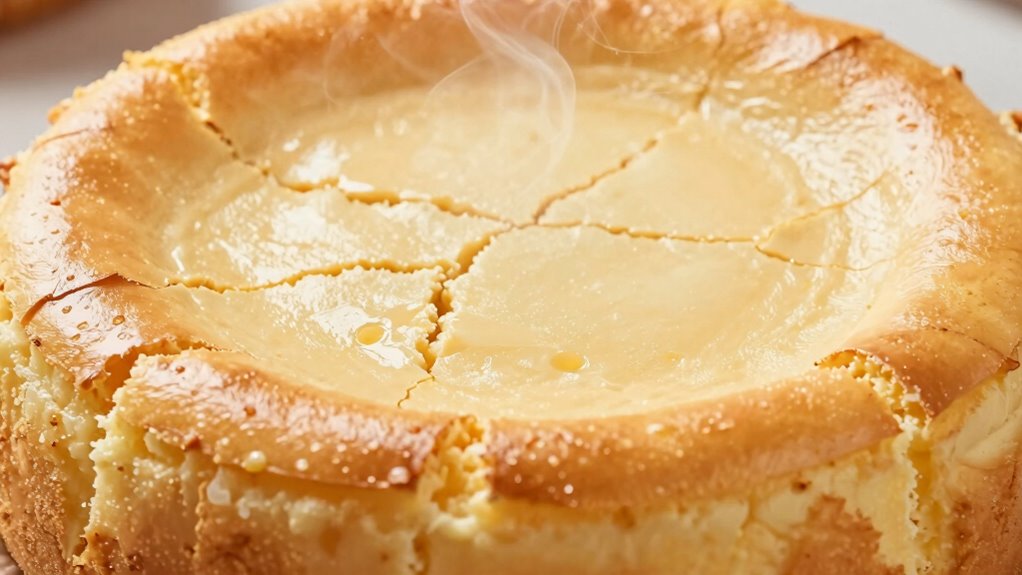

Using a water bath while baking your cheesecake helps prevent cracks by ensuring gentle, even heat around the pan. It acts as a thermal buffer, stabilizing temperature and reducing the risk of surface cracks caused by heat unevenness. The water surrounds the entire pan, promoting a smooth, crack-free top. Properly controlling the oven temperature and cooling gradually further minimizes cracks, making your cheesecake look perfect. Want to discover how to master this technique effortlessly? Keep exploring for simple tips.
Key Takeaways
- Using a water bath provides gentle, even heat, reducing stress on the cheesecake surface and preventing cracks.
- Proper water level (halfway up the pan) ensures consistent heat transfer and minimizes surface fissures.
- Baking at moderate temperatures (around 325°F) with a water bath slows down cooking, avoiding rapid expansion and cracks.
- Gradual cooling in the water bath helps prevent surface contraction and cracks during the cooling process.
- Combining water bath use with precise temperature control results in a smooth, crack-free cheesecake finish.
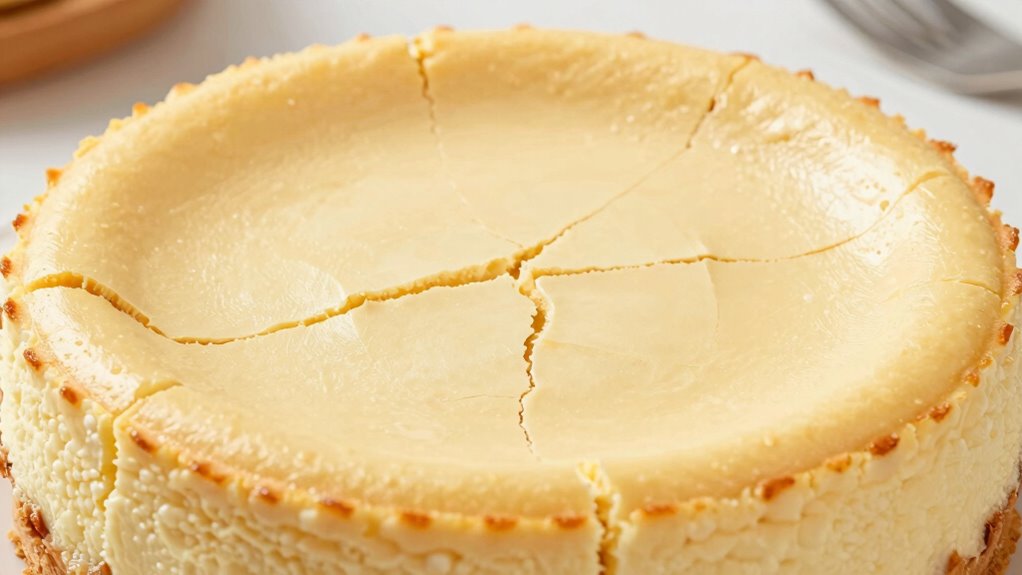
Few desserts can match the creamy richness of a perfectly baked cheesecake, but one common frustration is cracking on the surface. That unsightly crack can ruin the look and make you wonder if your cheesecake is a failure. Fortunately, understanding how to control the baking environment can help you prevent those unwanted cracks. Two key factors in achieving a smooth top are the water bath and proper baking temperature. When you use a water bath, you create a gentle, even heat around your cheesecake, which minimizes the risk of uneven baking and reduces the likelihood of cracks forming. The water bath acts as a thermal buffer, maintaining a consistent temperature and preventing the edges from baking too quickly while the center is still setting. This method is especially effective if you’re baking at higher temperatures or want a very creamy, dense texture.
Getting the water bath right involves carefully placing your cheesecake in a larger pan filled with hot water that comes up about halfway up the sides of your springform pan. Make sure the water is hot, not cold, to start, because cold water can cause temperature shocks that lead to cracking. As your cheesecake bakes, the water gently transfers heat, ensuring the entire dessert cooks uniformly. This even heat distribution is essential to prevent the surface from rising too fast and cracking. Additionally, the thermal regulation provided by the water bath helps maintain a stable baking environment, further reducing the risk of surface fissures.
The baking temperature itself also plays a crucial role. Baking at too high a temperature causes rapid expansion of the cheesecake’s surface before the interior has set, which often results in cracks. Conversely, baking at a lower, controlled temperature allows the cheesecake to cook slowly and evenly. Most bakers recommend an oven temperature around 325°F (160°C). This moderate heat helps the mixture set gradually, reducing stress on the surface and preventing cracks from forming. Remember, even a slight increase in temperature can cause the edges to puff up prematurely and then deflate, creating fissures.
Additionally, after baking, it’s important to turn off the oven and let the cheesecake cool gradually. Rapid cooling causes contraction, which can also crack the surface. Using a water bath combined with precise baking temperature control provides a gentle, even environment that supports a smooth, crack-free finish. With patience and attention to these details, you’ll be able to bake a cheesecake that’s not only delicious but also visually stunning, free of cracks.
Frequently Asked Questions
How Does Oven Temperature Affect Cheesecake Cracking?
Oven temperature directly impacts cheesecake cracking, as too high a temperature causes the filling to expand rapidly and crack. To prevent cracking, you should bake at a lower, consistent temperature, ensuring gentle heat. Maintaining a stable oven temperature helps with cracking prevention, so avoid sudden temperature changes. Using a water bath also helps regulate heat, reducing the risk of cracks and ensuring a smooth, creamy cheesecake.
Can Using Different Types of Water Baths Prevent Cracks?
Think of your water bath as a gentle guardian for your cheesecake; different materials like aluminum or glass can create a softer, more even hug, preventing cracks. To succeed, keep the water level consistent, covering the batter’s sides to prevent uneven baking. Using the right water bath material guarantees gentle heat transfer, like a calming wave, helping your cheesecake stay smooth and crack-free, making every slice a masterpiece.
Does the Cheesecake’s Cooling Process Influence Crack Formation?
Yes, your cooling process influences crack formation. Using proper cooling techniques helps stabilize the cheesecake’s temperature gradually, preventing sudden shifts that cause cracks. Avoid rushing the cooling; instead, let it cool slowly at room temperature before refrigerating. Temperature stabilization during this phase minimizes stress on the batter, reducing cracks. By controlling how quickly your cheesecake cools, you keep its surface smooth and crack-free.
Are There Specific Cheesecake Recipes More Prone to Cracking?
Yes, certain cheesecake recipes are more prone to cracking, especially those with significant texture variation or a thin crust. Recipes with high moisture content or delicate batters tend to crack more easily during cooling or baking. To prevent this, choose recipes with balanced ingredients and a slightly thicker crust, which provides stability. Properly controlling oven temperature and water bath use also helps minimize cracks and maintain a smooth, even surface.
How Does Ingredient Quality Impact Crack Development?
Higher quality ingredients with consistent ingredient quality help prevent cracks by ensuring even baking and smoother batter. When your ingredients are fresh and well-measured, they create a stable structure that resists cracking. Additionally, ingredient quality influences the flavor, making your cheesecake richer and more balanced. Poor-quality ingredients can cause uneven texture and baking issues, increasing crack risk. So, choose fresh, high-quality ingredients for a crack-free, delicious cheesecake.
Conclusion
Don’t let disappointing cracks derail your dessert dreams. With a little water bath wisdom and mindful mastery, you’ll melt away mistakes and master the art of a flawless finish. Remember, patience and precision prevent pesky splits and cracks. So, stay steady, savor the science, and serve up stunning, smooth cheesecakes every time. Perfectly prepared, proudly presented—your flawless finish awaits. Bake boldly, and let beautiful, blemish-free cheesecakes become your signature sweet success!