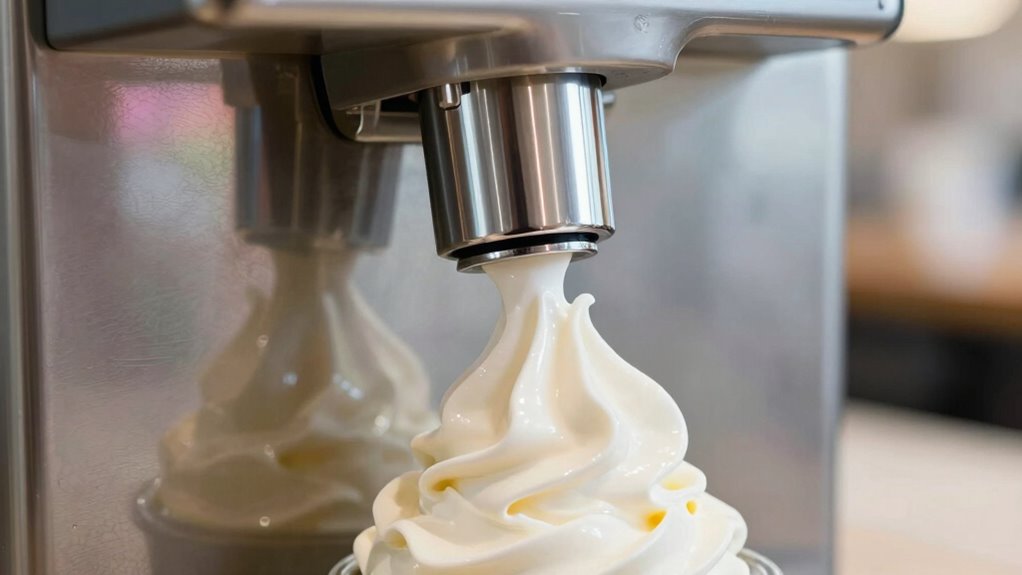

Soft serve machines feel different from ice cream makers because they produce a lighter, creamier, and more airy texture that melts quickly on your tongue. They serve it at a slightly warmer temperature and are designed for fast, consistent output, often in commercial settings. Ice cream makers, on the other hand, create a firmer, scoopable product with more control over ingredients. Keep exploring to discover why these differences impact flavor, texture, and convenience even more.

Get kitchen staples and gadgets delivered free — and shop member deals
- Fast, free delivery on millions of items
- Access to Prime Big Deal Days deals on October 6–7
- Prime Video, Amazon Music and more included
Key Takeaways
- Soft serve machines produce a lighter, creamier, and airy texture that melts quickly, unlike the firmer ice cream from traditional makers.
- They operate at warmer temperatures, resulting in a smoother, less solid product compared to the colder, scoopable ice cream.
- The continuous agitation and specialized design of soft serve machines create a consistently smooth and uniform texture.
- Ice cream makers produce denser, more solid ice cream with a different mouthfeel due to their colder temperature and slower process.
- Soft serve machines are designed for speed and volume, emphasizing immediacy and consistency over the traditional, handcrafted texture of ice cream.
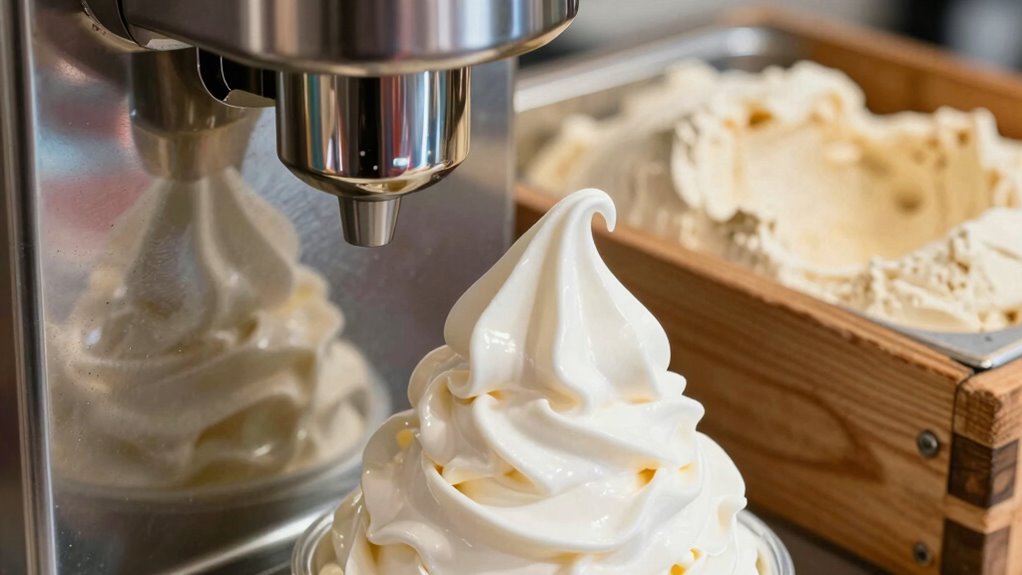
When choosing between soft serve machines and ice cream makers, understanding their differences can help you decide which one best fits your needs. One of the main reasons soft serve machines feel so different from traditional ice cream makers is the texture and flavor consistency they deliver. Soft serve machines are designed to produce a smooth, airy product that’s served immediately, often at a slightly warmer temperature than typical ice cream. This results in a lighter, creamier texture that melts quickly on your tongue. Ice cream makers, by contrast, churn and freeze the mixture into a firmer, more solid form, which requires scooping and often needs time to soften before serving. The difference in texture is noticeable from the first bite, and it’s driven by the machine’s design and the ingredients used. Additionally, soft serve machines are often used in commercial settings due to their ability to produce large quantities quickly and consistently.
Soft serve machines create a smooth, airy, quick-to-serve treat, while ice cream makers produce firmer, traditional ice cream with more control.
Another key reason these machines feel so different comes down to machine maintenance. Soft serve machines are built with complex mechanisms that keep the product at the right consistency and temperature, which means they require regular cleaning and maintenance to prevent bacterial growth and ensure flavor integrity. If neglected, they can develop buildup or unwanted flavors, making the final product inconsistent. Ice cream makers are generally simpler in design, often requiring just a few parts to be cleaned after each use. They don’t need continuous operation or refrigeration, which means less ongoing maintenance. However, they do require proper cleaning and sometimes re-chilling the bowl before each use to guarantee the ice cream freezes evenly. Proper machine cleaning is essential, as it directly impacts the safety and quality of your final product, and neglect can lead to contamination or spoilage.
The difference in flavor consistency between these machines is also noticeable. Soft serve machines are calibrated to deliver a uniform, smooth product every time, often with added stabilizers to maintain that consistency over long periods of use. This means you get a reliably creamy texture, no matter how many servings you make. Ice cream makers give you more control over ingredients, allowing for richer or more varied flavors, but they demand a precise process to achieve the same consistency. If you’re after quick, uniform servings with minimal fuss, soft serve machines excel at providing that experience—assuming you keep up with their machine maintenance. On the other hand, if you prefer crafting your own recipes and don’t mind the longer process, traditional ice cream makers give you the flexibility to experiment and produce a traditional ice cream experience. Moreover, the ingredient control offered by ice cream makers allows for customization that soft serve machines typically cannot match.
In essence, soft serve machines feel different because they’re designed for immediate, consistent servings with a specific texture, which depends heavily on proper machine maintenance. Ice cream makers, while simpler, offer more control and a different experience, emphasizing the process and final product’s versatility. Choosing between the two depends on your priorities: speed, convenience, and consistency versus control, variety, and traditional craftsmanship. Additionally, understanding the production capacity of each machine can help you select the best option for your needs, whether for personal use or a commercial setting.
As an affiliate, we earn on qualifying purchases.
Frequently Asked Questions
Can Soft Serve Machines Make Frozen Yogurt or Sorbet?
Yes, soft serve machines can make frozen yogurt and sorbet flavors. You just need the right mix of ingredients and the machine’s settings adjusted for different textures. Soft serve machines are versatile, allowing you to produce creamy frozen yogurt or invigoratingly fruity sorbets. Experiment with various flavors by adding fruit purees or yogurt to create a wide range of delicious treats, all with the same machine.
How Long Does It Take to Clean a Soft Serve Machine?
Cleaning a soft serve machine usually takes about 30 minutes if you follow proper sanitation procedures. You’ll spend that time running cleaning routines, disassembling parts, and thoroughly sanitizing every nook and cranny—because nothing says “delicious treat” like battling sticky residue and stubborn dairy buildup. It’s a tedious but essential task, ensuring your machine stays hygienic and your customers stay happy. Remember, cleanliness isn’t just a routine—it’s a sanity saver.
Are Soft Serve Machines Suitable for Home Use?
Yes, soft serve machines are suitable for home use, especially if you enjoy flavor customization. They’re portable enough to fit in a kitchen or small space and let you create various ice cream textures and flavors. However, consider the size and maintenance needs. If you love experimenting with toppings and flavors, a soft serve machine can be a fun addition to your home, giving you fresh treats anytime.
What Maintenance Is Required for Ice Cream Makers?
You might be surprised how simple maintenance is for ice cream makers. Regular cleaning routines are essential to prevent bacteria buildup and guarantee quality, especially after each use. Additionally, paying attention to mechanical durability by inspecting and lubricating moving parts keeps your machine running smoothly. By staying consistent with these tasks, you’ll extend its lifespan and enjoy delicious ice cream without unexpected breakdowns, making your investment worthwhile.
Do Soft Serve Machines Use Different Ingredients Than Traditional Ice Cream?
Soft serve machines use different ingredients than traditional ice cream, mainly because they include more air and a different mix of stabilizers and emulsifiers. These ingredient differences create a lighter, creamier texture and allow for unique flavor variations that aren’t possible with standard ice cream. You’ll notice that soft serve is less dense and more pliable, making it ideal for quick serving and creating playful, smooth textures that appeal to a wide range of tastes.
Conclusion
Imagine standing in front of a soft serve machine, its swirl of creamy goodness beckoning. You’ve probably felt the thrill of that perfect cone, almost like catching a fleeting moment of joy. Unlike traditional ice cream makers, which require patience, soft serve machines deliver instant gratification—a reminder that sometimes, life’s sweetest moments come quickly and effortlessly. Embrace the difference; it’s what makes each treat special, like a brief, delicious spark in your day.
Halloween Picks
halloween
As an affiliate, we earn on qualifying purchases.