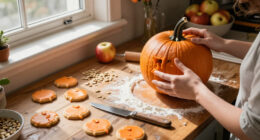

To use spices better in cakes, cookies, and puddings, start by creating balanced blends, combining milder spices with bolder ones carefully. Bloom or infuse spices in hot liquids before mixing to deepen flavor and guarantee even distribution. Measure precisely and add spices at the right stage of baking for maximum aroma. Proper storage keeps spices fresh and potent. Keep in mind that experimenting within these methods will reveal richer, more aromatic baked goods—there’s more to discover as you go.

Get kitchen staples and gadgets delivered free with Prime
- Fast, free delivery on millions of items
- Prime Video, Amazon Music and more included
- Member-only deals all year
Key Takeaways
- Properly measure and gradually add spices to avoid overpowering flavors.
- Bloom spices in hot liquids or fats before mixing to deepen aroma and flavor.
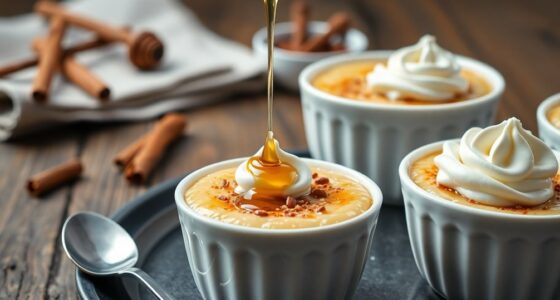
- Infuse liquids with spices for even distribution in puddings and custards.
- Balance spice strengths by combining mild and bold spices carefully.
- Store spices in airtight containers away from light to preserve potency and freshness.
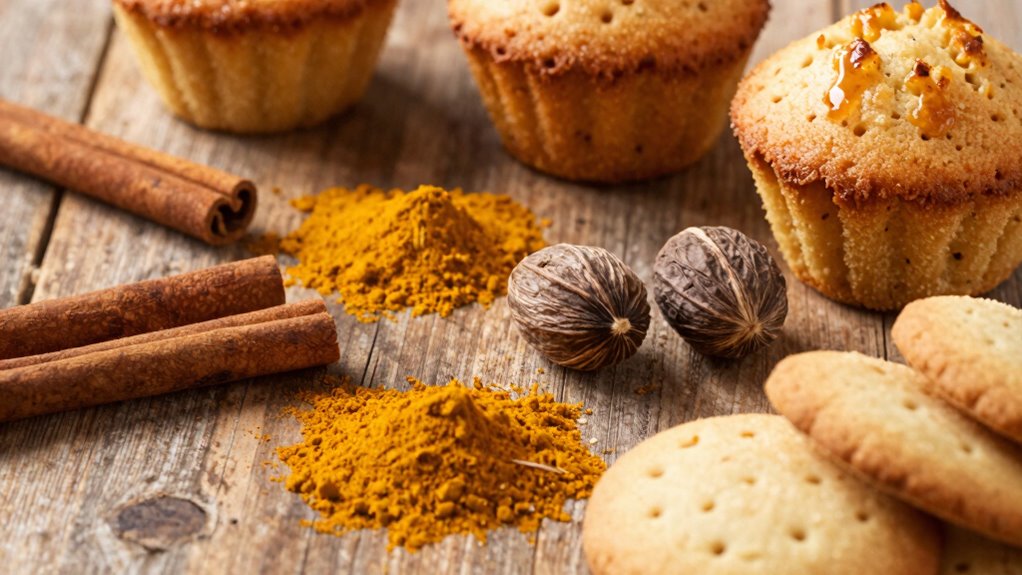
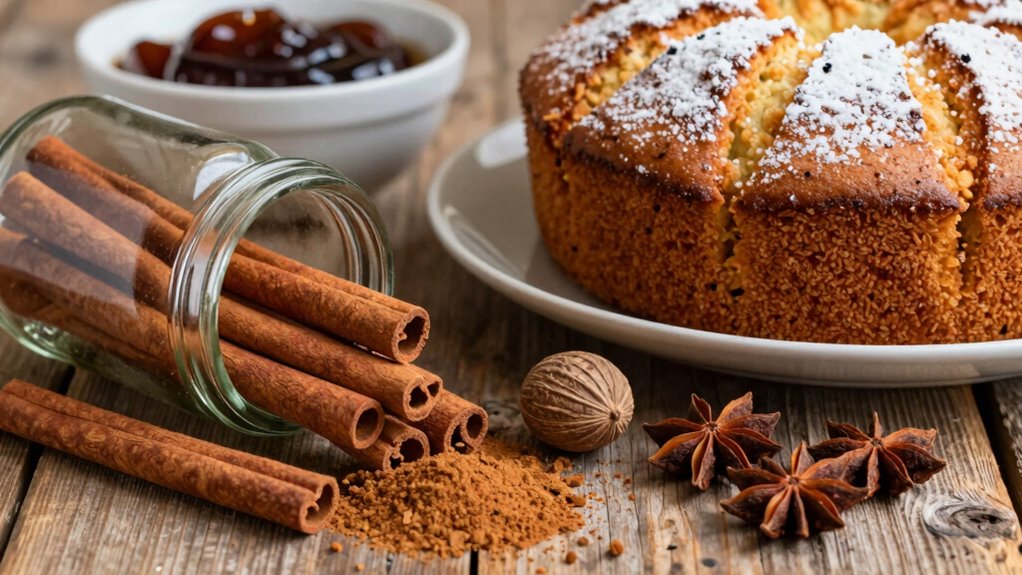
Adding spices to cakes, cookies, and puddings can instantly elevate their flavor, but knowing the best way to incorporate them makes all the difference. The key is in how you blend and add your spices to maximize flavor enhancement without overpowering the dish. Spice blending, in particular, plays a vital role. Instead of using single spices, consider creating your own custom blends tailored to each recipe. For example, a touch of cinnamon, nutmeg, and ginger can transform a simple sponge cake into a warm, aromatic treat. When blending spices, think about balancing their strengths. Use milder spices like cardamom or allspice sparingly, and reserve bolder flavors like cloves or star anise for small amounts. This careful synergy allows you to develop depth without overwhelming the palate. Proper Spice blending ensures a harmonious flavor profile in your baked goods. Timing also makes a significant difference. You want to add your spices at the right stage of your baking process. For cakes and cookies, a common mistake is adding spices straight into the batter without pre-mixing or blooming them first. Blooming involves briefly heating spices in a little hot liquid or fat, which releases their essential oils and deepens their flavor. This process enhances the overall flavor profile, ensuring your baked goods are richly aromatic rather than bland or muted. Infusing liquids with spices before mixing is another effective method to evenly distribute and maximize flavor. For puddings and custards, consider infusing the milk or cream with spices before combining it with other ingredients. This step ensures even distribution and maximizes flavor enhancement. Measuring your spices accurately is another critical aspect. Too much can overpower, while too little might go unnoticed. Use measuring spoons or a scale to keep your spice ratios consistent, especially when experimenting with new blends. Once you’ve achieved a balanced blend, incorporate it gradually, tasting as you go. This way, you maintain control over the flavor profile and can adjust if necessary. Storing your spices properly also impacts their potency. Keep them in airtight containers away from light and heat, which can degrade their flavor over time. Fresh, well-stored spices will deliver the best flavor and aroma, ensuring every baked good you make benefits from their full potential.
As an affiliate, we earn on qualifying purchases.
Frequently Asked Questions
How Do I Store Spices to Maintain Their Flavor Longer?
To maintain your spices’ flavor longer, store them in a cool, dark, and dry place, away from sunlight and heat sources. Use airtight containers to prevent exposure to air, which can degrade spices faster. Keep whole spices intact until you’re ready to use them, as they retain flavor better than ground ones. Regularly check for freshness, and replace spices when their aroma diminishes to guarantee maximum flavor preservation.
Can I Substitute Ground Spices With Fresh Herbs in Baking?
You can substitute fresh herbs for ground spices in baking, but keep in mind the flavor profile differences. Fresh herbs offer a bright, vibrant taste, while ground spices tend to be more concentrated and aromatic. Use roughly three times more fresh herbs than dried spices, and add them early in baking to allow flavors to develop fully. Adjust quantities carefully to balance the flavors and avoid overpowering your baked goods.
What’s the Best Way to Measure Spices Accurately?
To measure spices accurately, you should use precise spice scoops or measuring spoons designed for dry ingredients. Follow standard spice measurement techniques: level off the spice with a flat edge to avoid over-measuring, and always use the same tools for consistency. For small quantities, a digital scale can provide even greater precision. This way, your baked goods will turn out perfectly spiced every time.
Do Spices Affect Baking Times or Textures?
Spices can subtly affect baking times and textures, mainly due to their potency. When you use fresh, potent spices, they might enhance flavors without altering baking duration markedly. However, stronger spices can sometimes impact texture, making baked goods feel more moist or dense. To avoid surprises, measure spices carefully, and consider their potency, adjusting baking times if you notice subtle changes in your baked items’ texture or consistency.
Are There Any Spices That Shouldn’T Be Used in Sweet Baked Goods?
Some spices, like cumin, curry powder, and turmeric, are better left out of sweet baked goods—they’re like oil and water in dessert pairings. While savory spice pairings can add depth, avoid using strong, savory spices or uncommon spice alternatives like paprika or chili powder, as they can overpower delicate sweetness. Stick to warm, sweet spices like cinnamon, nutmeg, and cardamom for a harmonious flavor that enhances your treats.
Conclusion
Think of spices as tiny, magical keys in your baking toolbox. When you use them wisely, they reveal hidden flavors and turn simple treats into memorable delights. Just like a skilled locksmith, you hold the power to transform your cakes, cookies, and puddings into a symphony of aroma and taste. Embrace their potential, and watch your baked goods become the treasured treasures of your kitchen, inviting everyone to indulge in their irresistible charm.
NFL season / tailgating Picks
team gear
As an affiliate, we earn on qualifying purchases.