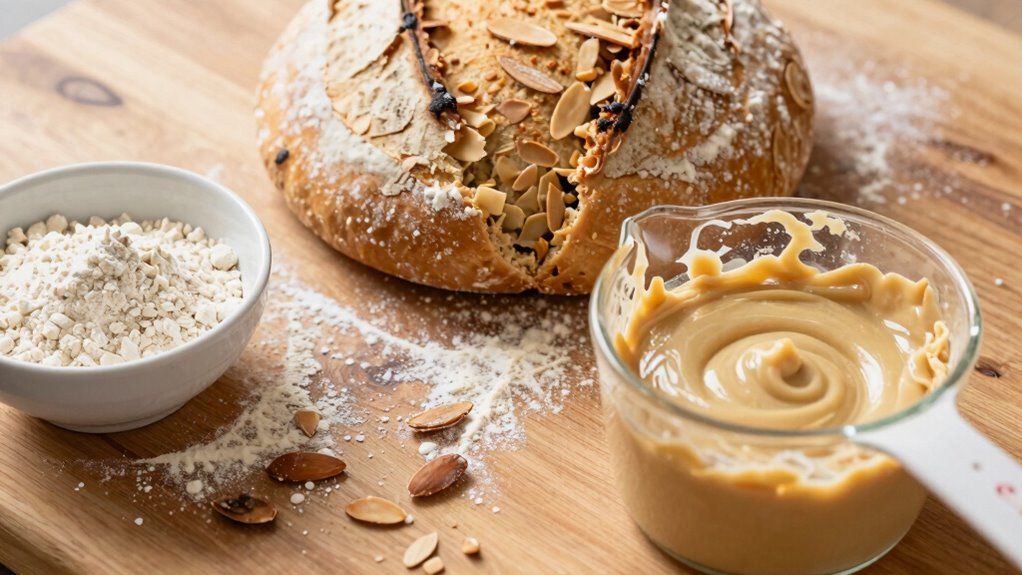

Almond flour often falls short in low-carb baking because it lacks gluten, which gives structure and makes baked goods rise light and airy. It also retains less moisture and contains more fat, leading to dense, greasy textures if used alone. To fix this, you can blend almond flour with coconut flour, flaxseed meal, or add extra binders and liquids. Mastering these tweaks will help you produce better results—more tips to come if you continue exploring.
Key Takeaways
- Almond flour lacks gluten and has higher fat content, causing dense or crumbly baked goods if used alone.
- Properly blending almond flour with coconut flour or flaxseed meal improves moisture and binding.
- Adjust baking times and temperatures, as almond flour browns faster and requires careful monitoring.
- Using suitable sugar substitutes affects moisture and browning; small recipe adjustments are essential.
- Understanding ingredient interactions helps fix texture issues and creates low-carb baked goods similar to traditional treats.
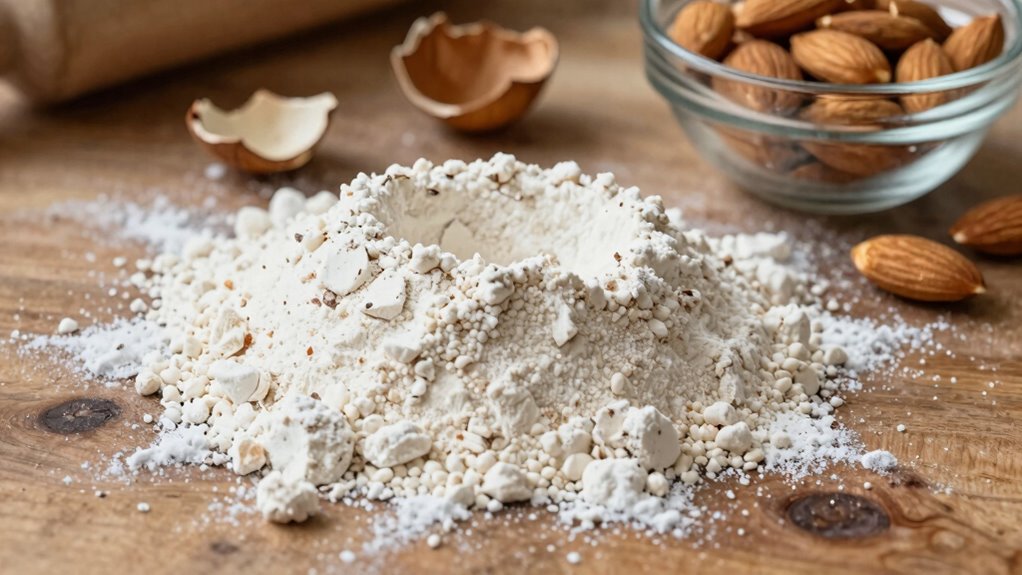
Are you interested in enjoying baked goods without compromising your low-carb lifestyle? If so, you’ve probably explored using almond flour as a go-to gluten substitute because it’s low in carbs and packed with healthy fats. However, many bakers find that almond flour often doesn’t deliver the expected results. It can lead to dense, crumbly, or greasy baked goods that don’t have the light, airy texture you’re aiming for. The main reason? Almond flour’s unique composition doesn’t behave exactly like wheat flour, especially in recipes that rely on gluten for structure. To improve your baking outcomes, you need to understand how to work with almond flour, along with alternative sugar substitutes and other gluten-free options.
One common mistake is using almond flour as a one-to-one replacement for wheat flour. Unlike regular flour, almond flour contains more fat and less starch, which affects moisture retention and binding. When you don’t adjust your recipe, baked goods tend to fall apart or turn out overly dense. To fix this, consider blending almond flour with other gluten substitutes like coconut flour or flaxseed meal. Coconut flour, for example, absorbs more moisture, so you’ll need to add extra eggs or liquids. Flaxseed meal acts as a binder, helping to create structure. Combining these ingredients allows you to customize texture and prevent common issues like crumbliness.
Almond flour isn’t a one-to-one wheat flour substitute; blending with coconut or flaxseed improves texture and structure.
Another critical aspect is choosing the right sugar alternatives. Traditional sugar not only sweetens but also contributes to browning and moisture retention. When using sugar substitutes, opt for natural options like stevia, monk fruit, or erythritol, which are low in carbs and don’t spike blood sugar. These alternatives can impact the texture and moisture of your baked goods, so start with small amounts and adjust as needed. Using the proper sugar substitute ensures your treats stay sweet without adding unwanted carbs or calories. Plus, many sugar alternatives blend well with gluten substitutes, helping your baked goods mimic the taste and appearance of traditional recipes.
In addition to adjusting ingredients, pay attention to baking times and temperatures. Almond flour-based baked goods tend to brown faster and may require lower temperatures or shorter baking times. Keep an eye on your oven and use toothpicks or cake testers to prevent overbaking. Incorporating these tips, along with experimenting with different gluten substitutes and sugar alternatives, can dramatically improve your results. With practice, you’ll learn how to fine-tune your recipes, creating low-carb baked goods that are just as delicious and satisfying as their traditional counterparts. The key is understanding how each ingredient interacts and adjusting your approach accordingly, so you can bake with confidence and enjoy treats without sacrificing your low-carb goals. Additionally, understanding the composition of almond flour can help you better predict its behavior in various recipes.
Frequently Asked Questions
Can I Substitute Almond Flour With Coconut Flour in Recipes?
You can substitute coconut flour for almond flour, but keep in mind the nut substitution requires adjustments. Coconut flour absorbs more liquid, so use less—about 1/4 cup of coconut flour for every 1 cup of almond flour. Also, increase eggs or liquids to balance the texture. Comparing the flours, coconut is more absorbent and has a different taste, so your recipe may change in consistency and flavor.
How Does Almond Flour Affect the Texture of Baked Goods?
Almond flour gives baked goods a tender, moist texture thanks to its moisture retention properties. It creates a light, crumbly structure that’s slightly denser than traditional flour. You’ll notice a richer flavor and improved crumb structure, making your treats more satisfying. When used correctly, almond flour enhances the overall texture, preventing dryness and adding a subtle nuttiness that elevates your baking results.
Are There Alternative Nuts to Almond Flour for Low-Carb Baking?
Think of nut options as your culinary allies, much like Robin to Batman. You can swap almond flour with hazelnut, walnut, or macadamia nut flour, which work well in low-carb baking. Nut blends are also great for achieving the right texture and flavor. Just remember, each nut has unique moisture content and fat levels, so adjust your recipes accordingly to get the best results.
What Are Common Mistakes When Using Almond Flour?
You often make mistakes with almond flour by not measuring accurately or using the wrong ingredient substitution, which can affect your baked goods’ texture. Remember to adjust baking techniques, like increasing moisture or adding binding agents, to compensate. Avoid overmixing, as almond flour is delicate. Properly understanding these common pitfalls helps you produce consistent, delicious low-carb baked treats.
How Do I Improve Almond Flour’s Binding Properties?
To improve almond flour’s binding properties, you should add eggs or flaxseed meal, which help with binding issues. You can also incorporate a small amount of xanthan gum or psyllium husk to enhance moisture retention and structure. These adjustments make your baked goods hold together better, especially in recipes that tend to fall apart. Experimenting with these ingredients guarantees your low-carb treats stay moist and cohesive.
Conclusion
So, next time almond flour doesn’t give you the results you want, remember that it’s not just about swapping ingredients. The theory that almond flour always fails because it’s too dense isn’t entirely true—sometimes it’s about adjusting your recipe or technique. With a little experimentation, you can master low-carb baking. Don’t give up; understanding how almond flour behaves will help you create delicious, successful treats every time. Keep baking and enjoy the journey!