Holistic Ayurvedic cooking helps you balance your doshas by choosing mindful foods and herbal spice blends tailored to your unique constitution. By focusing on harmony, you support better digestion, reduce inflammation, and promote overall well-being. Incorporating herbs like turmeric or cumin and eating with full awareness enhances your body’s natural healing abilities. Embracing this approach transforms mealtime into a nourishing ritual, and exploring how these practices work together can lead to greater vigor.
Key Takeaways
- Holistic Ayurvedic cooking aims to balance Vata, Pitta, and Kapha doshas through mindful food choices and herbal spice blends.
- Using tailored herbs and spices stimulates digestion, reduces inflammation, and restores harmony within the body’s systems.
- Mindful eating enhances awareness of flavors, textures, and bodily responses, supporting proper digestion and dosha balancing.
- Incorporating specific herbs during meal preparation aligns foods with individual doshic needs for optimal health.
- Combining conscious food choices with mindful eating nurtures overall vitality, mental clarity, and spiritual well-being.
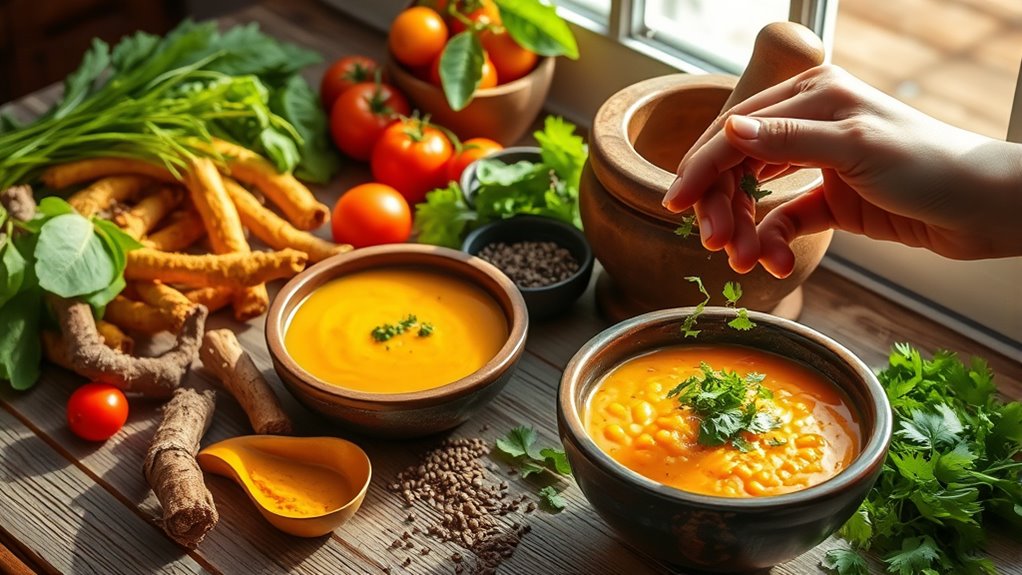
Holistic Ayurvedic cooking emphasizes balancing the body, mind, and spirit through mindful food choices. When you approach your meals with awareness, you begin to see how the right combination of ingredients can harmonize your doshas—Vata, Pitta, and Kapha—and support overall well-being. One effective way to achieve this balance is by incorporating herbal spice blends into your cooking. These blends aren’t just flavorful; they’re tailored to your unique constitution, helping to stimulate digestion, reduce inflammation, and restore harmony within your system. For example, a warm, aromatic mix of cumin, coriander, fennel, and turmeric can soothe Pitta imbalances and promote a sense of calm. By selecting herbs and spices thoughtfully, you’re not only enhancing flavor but also aligning your meals with your body’s needs.
Mindful eating plays a *crucial* role in this process. It involves paying full attention to your food—its taste, texture, aroma, and how it makes you feel. When you eat mindfully, you slow down and truly savor each bite, which improves digestion and helps you recognize true hunger versus emotional cravings. This heightened awareness allows you to choose foods that support your dosha and avoid those that may cause imbalance. For instance, if you notice that spicy or oily foods upset your digestion, you can adjust your intake accordingly. Mindful eating also encourages gratitude for your food, fostering a deeper connection with the nourishment it provides, which in turn supports your body’s natural healing processes. Incorporating content relevance into your meals can further enhance your understanding of how different foods impact your doshas.
Incorporating herbal spice blends into your meals and practicing mindful eating go hand-in-hand. As you prepare your food, focus on selecting herbs that align with your dosha, blending them with intention. During meals, take time to chew slowly, observe the flavors, and notice how your body responds. This approach transforms eating from a mundane task into a nourishing ritual that cultivates balance and *vitality*. Over time, you’ll become more attuned to your body’s signals, making it easier to choose foods that nurture your mind, body, and spirit. By consciously integrating herbal spice blends and mindfulness into your culinary routine, you support a holistic lifestyle rooted in awareness and harmony, essential principles of Ayurvedic wisdom.
Frequently Asked Questions
How Can I Identify My Dominant Dosha Accurately?
To identify your dominant dosha, start with a thorough dosha assessment, which often involves evaluating your physical traits, emotional tendencies, and energy levels. Pay close attention to symptom recognition—note recurring patterns like digestion issues, sleep quality, or skin concerns. By observing these signs and completing an assessment quiz or consulting an Ayurvedic practitioner, you can accurately determine your dosha and understand how to balance it effectively.
Are There Specific Foods to Avoid for Each Dosha?
While gentle guidance suggests avoiding foods that trigger your food allergies or spice sensitivities, specific foods to steer clear of depend on your dosha. For Vata, limit dry, cold foods; for Pitta, reduce spicy, acidic items; and for Kapha, cut back on heavy, oily dishes. Listening to your body’s signals helps, ensuring you avoid discomfort and maintain balance. Always consider individual sensitivities when customizing your diet.
Can Ayurvedic Cooking Help With Chronic Health Conditions?
Yes, Ayurvedic cooking can help with chronic health conditions by utilizing medicinal herbs and detoxification techniques. You actively incorporate specific herbs that target your imbalances, supporting your body’s natural healing processes. Through mindful preparation and eating habits, you can reduce inflammation, improve digestion, and boost immunity. Consistently applying these principles helps manage symptoms and promotes overall wellness, making Ayurvedic cooking a valuable complementary approach for chronic health issues.
How Often Should I Adjust My Diet Based on Seasons?
You should adjust your diet seasonally, ideally every few months, to support your body’s changing needs. Incorporate a seasonal detox to clear accumulated toxins and adapt your meals to the weather and doshic shifts. While consistency in your overall dietary habits is important, small adjustments help balance your doshas and prevent imbalances. Listen to your body and modify your foods to stay aligned with the seasons for peak health.
Is Ayurvedic Cooking Suitable for Children and Elderly?
Yes, Ayurvedic cooking suits children and the elderly by offering child-friendly recipes and elderly nourishment strategies that cater to their unique needs. You can adapt spices, textures, and ingredients to guarantee safety, ease of digestion, and enjoyment. By focusing on nourishing, gentle, and balanced meals, you support their health and vitality. This approach helps you create meals that are both delicious and beneficial, fostering overall well-being for all ages.
Conclusion
Remember, you are what you eat. By embracing holistic Ayurvedic cooking, you can balance your doshas and nurture your body naturally. As the saying goes, “You are what you eat,” so choose foods that harmonize with your unique constitution. When you mindfully prepare and enjoy your meals, you’re not just nourishing your body but also fostering overall well-being. Start today, and let food be your medicine on the journey to vibrant health.