To make safe bone broth at home, source high-quality, organic bones from trusted suppliers and rinse them thoroughly before cooking. Keep ingredients chilled until you’re ready, and simmer gently—avoid boiling—to prevent cloudiness. Store the broth in airtight containers in the fridge for up to five days or freeze for longer storage, ensuring it’s cooled before sealing. Always check for off smells or mold before consuming, and follow proper reheating practices. For more tips, keep exploring these essential safety and storage rules.
Key Takeaways
- Always use high-quality, fresh bones and ingredients, and rinse thoroughly before cooking to ensure safety and broth clarity.
- Keep broth at a gentle simmer and remove foam early to prevent bacterial growth and improve safety.
- Cool broth completely before storing in airtight containers, leaving space for expansion to prevent spoilage.
- Store broth in the refrigerator for up to five days or freeze for up to six months, reheating thoroughly before use.
- Regularly check for off smells, discoloration, or mold; discard broth immediately if spoilage signs appear.
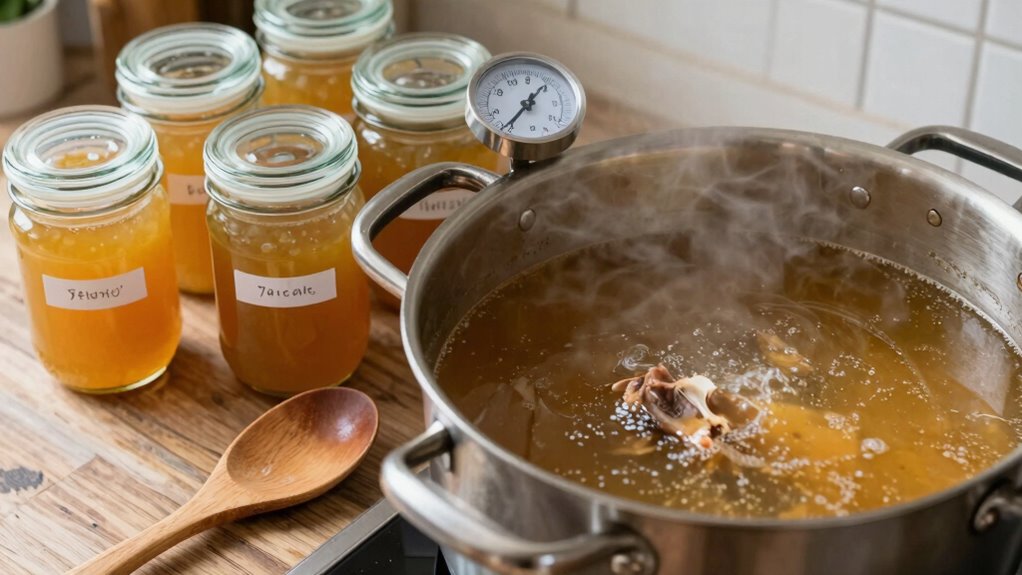
Making bone broth at home is a simple and cost-effective way to boost your nutrition and add rich flavor to your meals. When you’re starting out, it’s helpful to keep a few cooking tips in mind to ensure your broth turns out delicious and safe. First, focus on ingredient sourcing. Use high-quality bones from grass-fed or organic sources whenever possible, as these will yield a more nutrient-dense broth free from unwanted chemicals. You can source bones from local butchers, farmers’ markets, or trusted grocery stores. Look for marrow bones, knuckles, and joints, as they contain the collagen and minerals that make bone broth so healthful. Gathering fresh, quality ingredients is the foundation for a nutritious broth, so don’t compromise on this step.
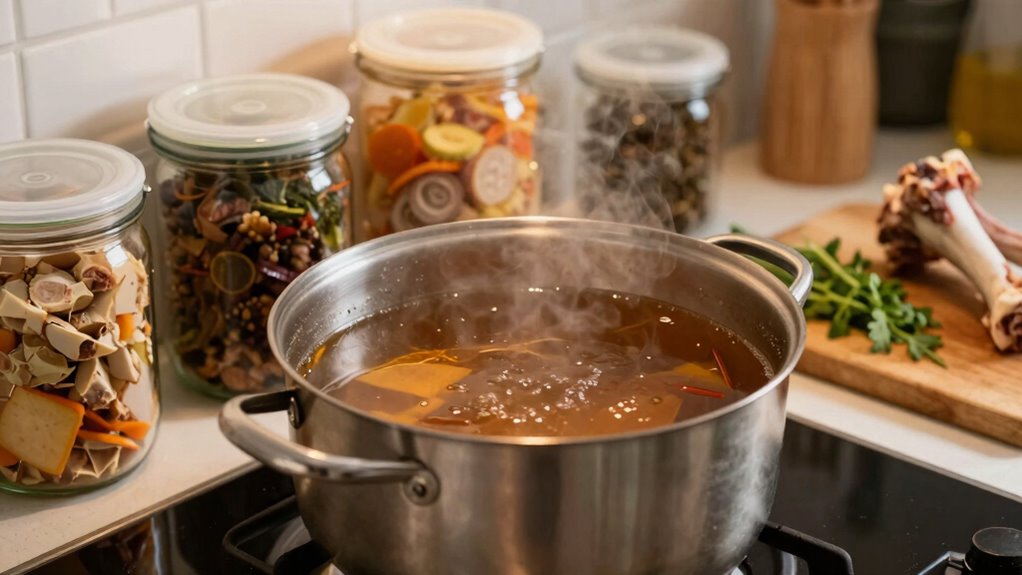
As you prepare to cook, remember that proper handling of ingredients is essential for safety. Rinse bones thoroughly to remove any dirt or residual blood, and keep everything refrigerated until you’re ready to start cooking. When simmering, ensure your pot is large enough to accommodate all ingredients comfortably, allowing the flavors to meld without overcrowding. Keep the heat at a gentle simmer, not a rolling boil, to prevent cloudiness and keep the broth clear. Skim off any foam or impurities that rise to the surface during the first hour of cooking; this improves both the safety and clarity of your broth. Use a fine mesh strainer or cheesecloth when straining to remove small bone fragments and residue, which can be a choking hazard if ingested.
Storing your homemade bone broth correctly is just as important as making it safely. Once cooled, transfer the broth into airtight containers or glass jars, leaving some space at the top to allow for expansion. Store in the refrigerator for up to five days, or freeze for longer preservation—up to six months if properly sealed. When reheating, always bring the broth to a boil to eliminate any bacteria that could have grown during storage. If you notice any off smells, discoloration, or mold, discard the broth immediately. Following these safety and storage rules ensures your homemade bone broth remains nutritious, flavorful, and safe to enjoy over time. By paying attention to ingredient sourcing, cooking tips, and proper storage, you can confidently make bone broth at home that’s both healthy and delicious.
Frequently Asked Questions
How Long Can Homemade Bone Broth Be Stored Safely?
You can store homemade bone broth safely for up to 4 to 6 days in the refrigerator. Use airtight storage containers to maintain freshness and prevent contamination. For longer storage, freeze the broth in freezer-safe containers, where it can last up to 6 months. Always check for signs of spoilage before consuming, such as sour smell or mold. Proper storage makes certain your broth stays fresh and safe to enjoy.
Can I Freeze Bone Broth in Glass Containers?
Yes, you can freeze bone broth in glass containers, but beware—glass freezing can cause dramatic expansion, like a volcano ready to erupt. To guarantee container safety, use tempered or freezer-safe glass, leave ample headspace, and avoid overfilling. This prevents cracking or shattering. Always let the broth cool before sealing and freezing to keep your glass containers intact and your broth safe for future use.
What Are Signs of Spoiled Bone Broth?
You can tell if bone broth is spoiled by checking for signs of spoilage like a sour smell, off taste, or slimy texture. Detecting mold is key—look for fuzzy, discolored spots on the surface or sides of your container. If you notice any of these signs, especially mold or an unusual odor, it’s safest to discard the broth. Always trust your senses to keep your food safe.
Is It Safe to Reheat Bone Broth Multiple Times?
Ever wondered if reheating broth multiple times affects its safety? Reheating safety is vital, and repeatedly doing so can compromise broth quality, increasing the risk of bacterial growth. It’s best to reheat only what you need and avoid multiple reheats. If the broth smells off or shows signs of spoilage, discard it. For safety, always reheat to a rolling boil and consume promptly.
How Do I Prevent Spoilage During Storage?
To prevent spoilage during storage, you should cool your bone broth quickly and store it in airtight containers. Use fermentation methods like adding a splash of vinegar or probiotics to help preserve flavor and inhibit bacteria growth. Keep the broth refrigerated at or below 40°F, and consume within 3-4 days. Proper sealing and temperature control are key to maintaining flavor preservation and ensuring your broth stays safe to enjoy.
Conclusion
Making bone broth at home isn’t just a kitchen task — it’s a culinary adventure that can transform your health and flavor your meals for days. By following safety and storage rules, you guarantee every sip is as nourishing and safe as a fortress. Skip these steps, and you risk turning your kitchen into a battleground of bacteria. So, handle your broth with care, and enjoy the golden elixir that’s as essential as life itself — because your health deserves nothing less.