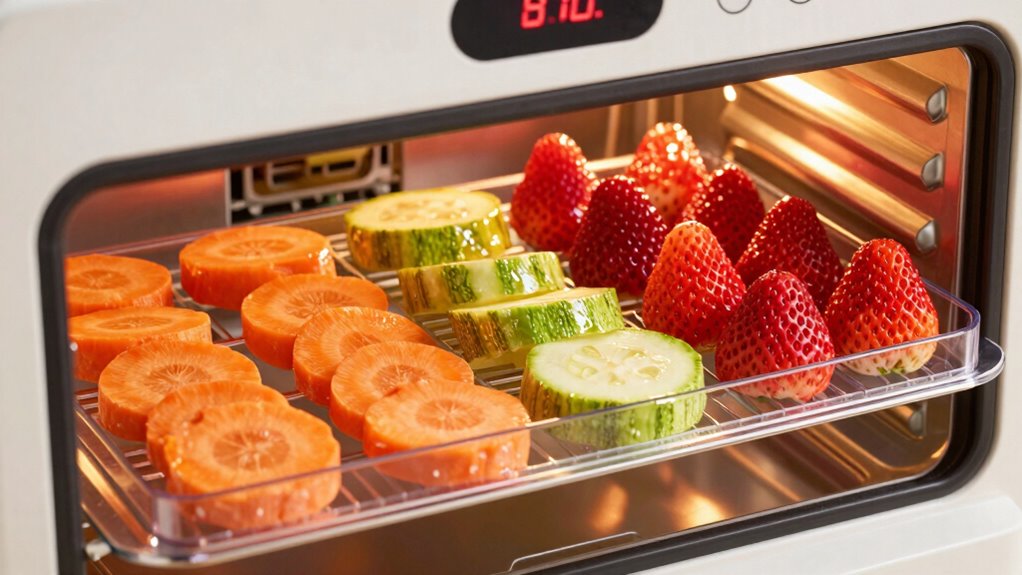
When dehydrating fruits, keep the temperature between 135°F and 145°F to preserve flavor and nutrients without cooking them, and slice thin for even drying. For vegetables, aim for 125°F to 135°F to maintain color and texture. When making jerky, start at 160°F to kill bacteria, then lower to 145°F for even drying. Proper temperature control is essential for safe, enjoyable results—continue to explore how to perfect your dehydration process.
Key Takeaways
- Maintain 135°F to 145°F (57°C–63°C) for drying fruits to preserve sweetness and nutrients.
- Use 125°F to 135°F (52°C–57°C) for vegetables to retain color, texture, and nutritional value.
- Start jerky dehydration at 160°F (71°C) to eliminate bacteria, then reduce to 145°F (63°C) for even drying.
- Proper temperature control prevents uneven drying, nutrient loss, and preserves food quality.
- Thinner slices dry faster and more evenly within recommended temperature ranges for optimal results.

Have you ever wondered how to preserve fruits, vegetables, or herbs for longer storage? Food preservation is essential if you want to enjoy your harvest months after picking. One effective method is dehydration, which removes moisture to inhibit bacterial growth and spoilage. Mastering dehydration techniques allows you to create flavorful snacks, store seasonal produce, and even make homemade jerky. The key to success lies in understanding the right temperature settings for different foods, ensuring they dry properly without losing taste or nutrients. Proper temperature control is vital for maintaining food quality and safety during dehydration. When dehydrating fruits, you want to set your dehydrator to a temperature between 135°F and 145°F (57°C–63°C). This range is ideal because it gently removes moisture while preserving the fruit’s natural sugars, flavor, and nutrients. Thinner slices, such as apple rings or mango strips, dry faster and more evenly at these temperatures. Keep in mind that higher temperatures can lead to uneven drying or a cooked texture, so sticking to the recommended range is best. Proper food preservation through dehydration ensures your dried fruits stay chewy and sweet without becoming overly tough or brittle. Vegetables require slightly different treatment. Most vegetables are dehydrated at about 125°F to 135°F (52°C–57°C). This lower temperature helps maintain their color, texture, and nutritional value. For example, green beans or carrots should be sliced uniformly and dried until crispy but not burnt. If you apply too much heat, you risk losing vital nutrients and end up with a less appetizing product. The dehydration techniques for vegetables also include blanching beforehand, which helps preserve their color and flavor. Once dried, store them in airtight containers to maximize shelf life and retain their quality. Making jerky involves a different approach. To produce tender, safe-to-eat jerky, you should dry it at a slightly higher temperature—around 160°F (71°C)—initially to kill bacteria and parasites. Afterward, you can lower the temperature to 145°F (63°C) for the remainder of the drying process. This ensures the meat is evenly dried while maintaining safety standards. Proper dehydration techniques here involve marinating the meat beforehand, slicing it uniformly, and monitoring moisture levels regularly. The goal is to achieve a chewy, flavorful jerky that resists spoilage during storage. Understanding these temperature guidelines for dehydration is crucial for food preservation success. Whether drying fruits, vegetables, or jerky, maintaining the right temperature ensures your dried foods retain their best qualities and last longer. With proper technique and attention to detail, dehydration becomes a reliable way to enjoy your favorite produce year-round.

Magic Mill Pro Food Dehydrator Machine | Powerful 600W Rear Fan Even-Drying System | 7 Full-Size Stainless Steel Trays | 95°-176° Temperature Control, 48H Timer, Keep Warm + Auto Shutoff | ETL Listed
FULL-STAINLESS BUILD, INSIDE & OUT | Built the way a premium dehydrator should be—stainless steel exterior + stainless...
As an affiliate, we earn on qualifying purchases.
Frequently Asked Questions
Can I Dehydrate All Types of Fruits and Vegetables?
You can dehydrate most fruit selection and vegetable varieties, but some may require specific prep or treatment. For fruits, choose ripe, firm options like apples, berries, or peaches, and cut them evenly. For vegetables, opt for hearty types like carrots, green beans, or peppers. Avoid overly watery or high-moisture produce that might not dehydrate evenly. Always guarantee proper cleaning and slicing to achieve the best results.
How Do I Prevent Browning During Dehydration?
To prevent browning during dehydration, you should focus on color preservation and oxidation prevention. Dip your sliced fruits or vegetables in a solution of lemon juice or ascorbic acid before drying, as these acids help inhibit oxidation. Make sure to evenly coat the pieces, and spread them in a single layer to ensure proper air circulation. This approach keeps your produce looking fresh and vibrant after dehydration.
What Are the Best Storage Methods After Dehydrating?
Think of storage like locking your treasures away. After dehydrating, you should use vacuum sealing or airtight containers to keep your dried foods fresh and prevent moisture from sneaking in. Store them in a cool, dark, and dry place to extend their shelf life. These methods preserve flavor and texture, ensuring your tasty treats stay delicious until you’re ready to enjoy them. Proper storage truly makes your dehydration efforts worth it.
Can Dehydration Kill All Bacteria and Pathogens?
Dehydration doesn’t kill all bacteria and pathogens, especially bacterial spores that resist heat. While dehydration reduces moisture, it mainly inhibits growth rather than sterilizes. To guarantee safety, you should use proper temperature controls, like heating foods to specific levels before dehydrating, and store them correctly. This way, you minimize the risk of surviving bacteria or spores that could cause illness later.
How Long Do Dehydrated Foods Last?
Dehydrated foods typically last between 6 months to a year if stored properly, but their shelf life depends on preservation techniques and storage conditions. To maximize freshness, keep them in airtight containers in a cool, dark place. Proper dehydration reduces moisture, slowing bacterial growth and spoilage. Regularly check for signs of moisture or mold, and consider vacuum sealing for extended preservation, ensuring your dehydrated foods stay safe and tasty longer.

COSORI Food Dehydrator, Bigger Than 7 Trays with Large 6.5 ft² Drying Space, Stainless Steel Trays, 600W Faster Drying, 165°F Dehydrated Dryer for Jerky, Dog Treats, Herbs, Meat, Fruit, Yogurt, Silver
𝗕𝗜𝗚𝗚𝗘𝗥 𝗧𝗛𝗔𝗡 𝟳 𝗧𝗥𝗔𝗬𝗦: With 6 stainless steel trays providing 6.5 ft² of drying space, this dehydrator is...
As an affiliate, we earn on qualifying purchases.
Conclusion
Now that you know the proper temperatures for dehydrating fruit, veggies, and jerky, you’re ready to start your drying adventures. Remember, “a stitch in time saves nine”—by paying attention to the right temps, you’ll preserve flavors and nutrients perfectly. Keep experimenting and adjusting as needed, and soon dehydrating will become second nature. Happy drying!
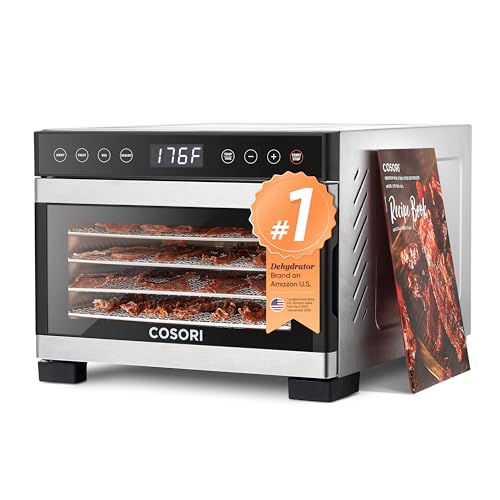
COSORI Food Dehydrator for Jerky, 176°F Temperature Control, 5 Stainless Steel Trays with 5.1 ft² Drying Space, 4 Presets, 48H Timer, for Dog Treats, Meat, Fruit, Veggies, Snacks, Bright-Silver
𝟭𝟳𝟲 °𝗙 𝗠𝗔𝗫 𝗧𝗘𝗠𝗣𝗘𝗥𝗔𝗧𝗨𝗥𝗘: Adjust the dehydrator between 95-176°F in 1°F increments. Higher temps ensure safer beef jerky....
As an affiliate, we earn on qualifying purchases.
Amazon Product B09GFVL7QX
As an affiliate, we earn on qualifying purchases.