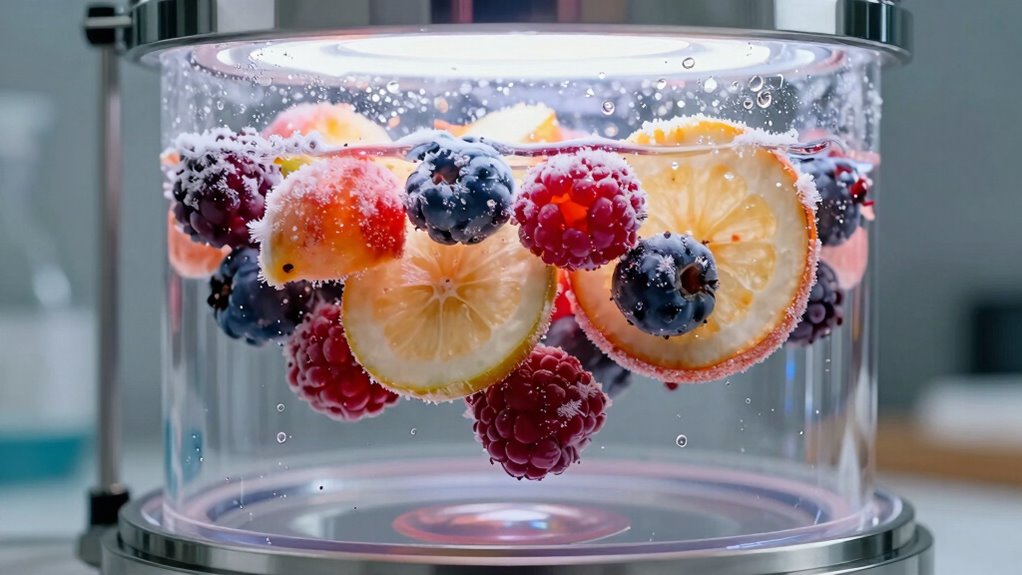

Home freeze-drying preserves most nutrients, like vitamins, minerals, and antioxidants, while extending your foods’ shelf life and making them lightweight and easy to store. It works well for fruits, vegetables, and cooked meals but isn’t suitable for high-fat items like cheese or oily fish, which can go rancid. Texture and flavor may change, and some delicate nutrients can still degrade if not done properly. Continuing further reveals how to get the most out of your freeze-dried foods.
Get ready for Prime Big Deal Days — try Prime free
Exclusive member deals on October 6–7, plus fast free delivery. Cancel anytime.
As an affiliate, we earn on qualifying purchases.
Key Takeaways
- Home freeze-drying effectively preserves most vitamins, minerals, and antioxidants, maintaining nutritional value better than dehydration or canning.
- It retains heat-sensitive nutrients like vitamin C, provided the process is well-controlled and storage conditions are proper.
- High-fat foods, oily items, and soft or high-moisture foods are not suitable for home freeze-drying due to spoilage risks and uneven drying.
- Proper equipment, including a dedicated freeze-dryer, is essential for successful preservation and maintaining food quality.
- Post-processing storage with appropriate packaging ensures long-term nutrient retention and prevents spoilage or moisture reabsorption.
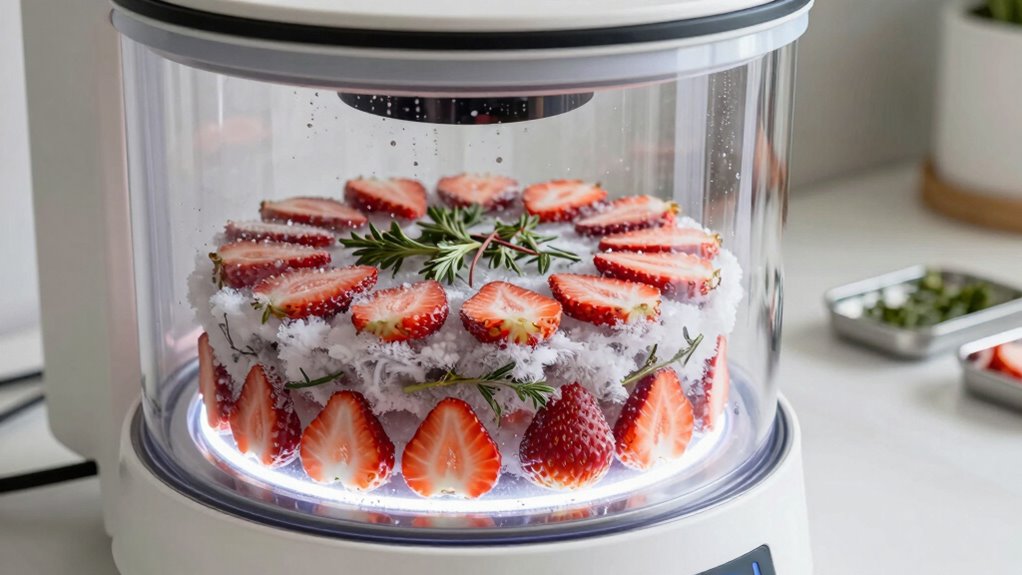
Have you ever wondered if you can freeze-dry food at home? The idea of preserving your favorite fruits, vegetables, or even herbs for months or years is appealing, but it’s important to understand what freeze-drying can actually do for your food. One of the main benefits is shelf life extension. When you freeze-dry items properly, they become lightweight, compact, and resistant to spoilage, allowing you to store them for extended periods without refrigeration. This makes it ideal for emergency preparedness, camping trips, or simply reducing food waste. However, it’s equally vital to realize that not all foods are suitable for freeze-drying, and some nutrients may be affected during the process.
In terms of nutrient retention, freeze-drying is generally excellent at preserving most vitamins and minerals compared to other preservation methods like canning or dehydrating. Because the process involves removing water under low temperatures and vacuum pressure, it minimizes the degradation of heat-sensitive nutrients such as vitamin C and certain antioxidants. As a result, your freeze-dried foods often retain much of their original nutritional value, making them a healthy choice for long-term storage. But keep in mind, some delicate nutrients can still diminish if the process isn’t carefully controlled or if the food is stored improperly afterward.
Despite its advantages, freeze-drying at home isn’t a magic solution that preserves everything perfectly. For example, foods with high fat content, like some cheeses or oily fish, don’t freeze-dry well because fats can go rancid or spoil during storage. Similarly, foods with high moisture content or soft textures may not freeze-dry evenly or may lose their structural integrity, becoming crumbly or mushy. You also need specialized equipment—namely a home freeze-dryer—which can be an investment but is necessary to achieve the low temperatures and vacuum conditions required for proper freeze-drying. Without it, attempting to replicate commercial results at home becomes very difficult and often ineffective. Additionally, the choice of proper packaging materials can greatly influence the storage life and quality of your freeze-dried foods.
As an affiliate, we earn on qualifying purchases.
Frequently Asked Questions
Can Freeze-Dried Foods Be Rehydrated for Cooking?
Yes, you can rehydrate freeze-dried foods for cooking. Use rehydration techniques like soaking in water or broth until they regain moisture. This process helps preserve flavor retention, making the foods taste fresh and delicious. Be sure to adjust the soaking time based on the food’s thickness and type. Rehydrating properly guarantees your dishes maintain their original taste and texture, making freeze-dried ingredients a versatile addition to your cooking.
How Long Does Homemade Freeze-Drying Take?
The freeze-drying procedure at home generally takes between 24 to 48 hours, depending on the food’s size and moisture content. During the drying period, your freezer-dryer eliminates moisture through sublimation, transforming ice directly into vapor. You’ll need patience, as thicker or denser foods may require extra time. Keep an eye on the process, and guarantee your machine maintains the right temperature and vacuum levels for ideal results.
Is Special Equipment Required for Home Freeze-Drying?
You do need some special equipment for home freeze-drying, but it’s not as complex as commercial setups. A home freeze dryer typically requires a vacuum chamber, a pump, and a freezer. While these aren’t cheap or small, they’re essential for removing moisture effectively. Without the right equipment, your home freeze-drying process won’t work properly, so investing in quality gear guarantees better preservation and results.
What Nutrients Are Preserved During Freeze-Drying?
Ironically, freeze-drying’s secret weapon is nutrient retention—yes, even vitamins, which you’d think would vanish with all that freezing. It preserves most of your food’s vitamin stability, especially water-soluble ones like C and B vitamins. This process also maintains minerals and antioxidants, so when you freeze-dry at home, you’re arguably preserving nutrients better than some traditional methods. Just don’t expect it to save every nutrient perfectly.
Are There Safety Concerns With DIY Freeze-Drying?
Yes, there are safety concerns with DIY freeze-drying. You need to prioritize food safety by thoroughly sanitizing your equipment and ensuring proper storage to prevent contamination. Additionally, equipment safety is essential; using reliable, well-maintained devices reduces the risk of malfunctions or accidents. Always follow manufacturer instructions and safety guidelines, and avoid shortcuts, to keep your homemade freeze-drying process safe and effective.
Conclusion
Freeze-drying at home is like capturing a moment frozen in time—preserving flavors and nutrients with care. But remember, it’s not magic; some delicate textures and fresh juiciness might slip away like whispers in the wind. Think of it as your culinary time capsule, holding onto the essence of your bounty while letting go of the fleeting freshness. With patience and practice, you’ll master this art, turning ordinary food into lasting treasures that stand still like frozen poetry.
Fall Picks
fall essentials
As an affiliate, we earn on qualifying purchases.