

To cook for gut-friendly variety without overcomplicating it, simply incorporate accessible probiotic-rich foods like yogurt, kefir, sauerkraut, and miso into your daily meals. Pair these with fiber-packed fruits, vegetables, nuts, and seeds to nourish your gut bacteria. Keep things simple by adding fermented veggies to sandwiches or stir-fries and experimenting gradually. Staying consistent and enjoying the process helps build variety effortlessly, and if you stick with it, you’ll discover even more ways to support your gut health.

Get kitchen staples and gadgets delivered free with Prime
- Fast, free delivery on millions of items
- Prime Video, Amazon Music and more included
- Member-only deals all year
Key Takeaways
- Incorporate simple, fermented foods like yogurt, sauerkraut, or miso into familiar dishes for easy variety.
- Use fiber-rich ingredients such as fruits, vegetables, nuts, and seeds to nourish gut bacteria.
- Gradually add probiotic-rich ingredients to meals to build a balanced, gut-friendly diet over time.
- Keep fermentation methods straightforward, like submerging vegetables in brine, to avoid overcomplication.
- Focus on flavor and enjoyment to make gut-friendly foods a regular, pleasurable part of your routine.
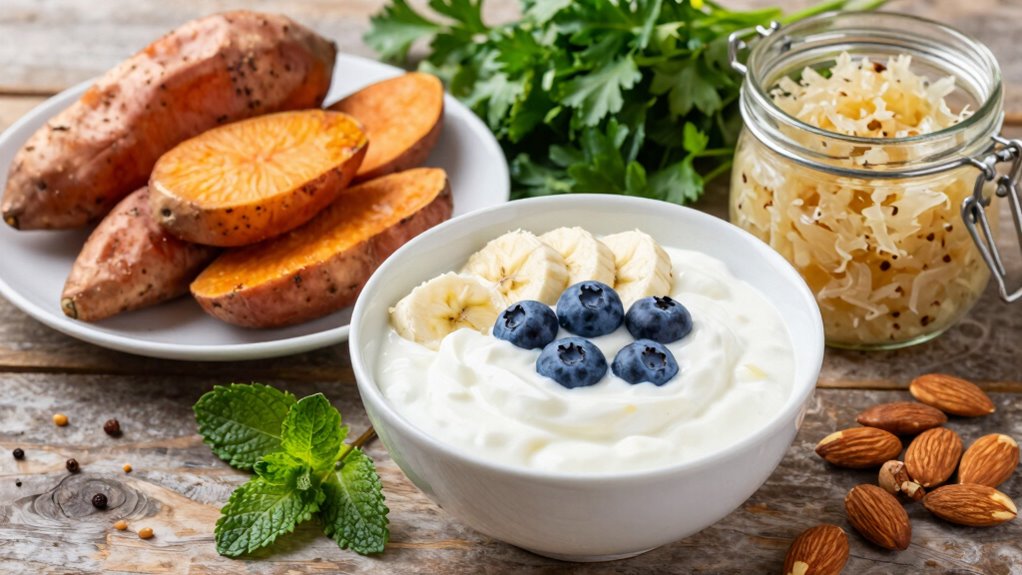
Eating for gut health doesn’t mean sacrificing flavor or variety. Instead, you can incorporate simple strategies that boost your gut flora while keeping your meals exciting. One effective way is to explore fermentation techniques. Fermentation not only preserves food but also transforms it into a probiotic-rich ingredient, which directly benefits your gut. You might try making your own sauerkraut, kimchi, or yogurt at home. These processes are straightforward once you understand the basics—submerging vegetables or dairy in a salty brine or starter culture and letting them ferment at room temperature. The result? Tangy, flavorful foods packed with beneficial bacteria that can improve digestion and strengthen your immune system.
Using probiotic-rich ingredients is another key to a gut-friendly diet. Incorporate foods like kefir, miso, tempeh, and fermented vegetables into your daily meals. These ingredients are versatile and can be added to salads, soups, or sandwiches, making them easy to include without overhauling your usual routine. For example, spoon a dollop of sauerkraut onto your sandwich or stir some miso into your broth. By doing so, you’re not only enhancing taste but also supporting a healthy gut microbiome. Keep in mind, the goal isn’t to replace all your foods but to add a few probiotic-rich options regularly.
Balancing these fermented and probiotic ingredients with whole, fiber-rich foods is essential. High-fiber fruits, vegetables, nuts, and seeds serve as prebiotics, nourishing the good bacteria introduced through fermentation. Think of your meals as a symbiotic relationship—fermented foods supply the probiotics, while fiber provides the nourishment they need to thrive. Incorporating fermentation techniques can be simple and rewarding, helping you build a gut-healthy diet gradually. Additionally, understanding the importance of gut microbiome diversity encourages you to explore a variety of fermented foods, which can enhance the overall benefits for your digestive health.
You don’t have to become a fermentation expert overnight. Start small—try fermenting a batch of vegetables or adding a spoonful of yogurt to your breakfast. Over time, you’ll discover what tastes and textures you enjoy most. The key is to keep it simple, integrate these ingredients naturally into your meals, and enjoy the variety they bring. With a few easy fermentation techniques and probiotic-rich ingredients, you can make gut health a delicious, effortless part of your everyday cooking. It’s all about creating a balance that sustains your digestive health while satisfying your palate.
As an affiliate, we earn on qualifying purchases.
Frequently Asked Questions
Can Gut-Friendly Foods Still Include Grains and Legumes?
Yes, gut-friendly foods can include grains and legumes. Opt for gluten-free grains like rice, quinoa, or millet, which are gentle on your gut. Instead of traditional legumes, try legume alternatives like lentils or split peas, which are often easier to digest. Incorporate these into your meals gradually to see how your digestive system responds, helping you enjoy variety without upsetting your gut.
Are Fermented Foods Necessary for a Gut-Friendly Diet?
Fermented foods aren’t strictly necessary for a gut-friendly diet, but they offer excellent probiotic sources and fermentation benefits that can boost your gut health. Including options like yogurt, kefir, sauerkraut, or kimchi can diversify your gut microbiome without overcomplicating your meals. Focus on a variety of whole, fiber-rich foods alongside fermented items to support digestion and overall gut wellness effortlessly.
How Can I Introduce Variety Without Triggering Sensitivities?
To introduce variety without triggering sensitivities, start with small portions of easily tolerated foods, gradually increasing as your gut adjusts. Focus on flavor diversity by using herbs and mild spices, and balance textures with a mix of soft and crunchy ingredients. Pay attention to how your body responds, and avoid common triggers. This approach helps you enjoy a diverse, gut-friendly diet without overwhelming your system.
What Are Quick, Gut-Friendly Snacks?
You’re in luck—quick, gut-friendly snacks are within reach. Start with simple snack prep like rice cakes topped with mashed avocado or a handful of almonds. Make ingredient swaps, such as Greek yogurt instead of dairy-based options, to keep your gut happy. Keep it straightforward, and remember, a little goes a long way. These snacks are easy to assemble and perfect for satisfying cravings without overcomplicating your gut health.
Should I Avoid All Dairy to Maintain Gut Health?
You don’t need to avoid all dairy to maintain gut health. If you’re lactose intolerant, try dairy alternatives like almond, coconut, or oat milk, which are gentler on your gut. For those without intolerance, moderate consumption of dairy can be fine, but paying attention to how your body reacts is key. Incorporate a variety of gut-friendly foods and opt for dairy alternatives if you notice any digestive discomfort.
Conclusion
So, next time you’re tempted to toss a bland, gut-friendly dish onto the table, remember—simplicity doesn’t have to mean boring. With a splash of spice or a twist of fresh herbs, you can make your gut happy and your taste buds dance. Ironically, keeping it straightforward might just turn your kitchen into a flavor-filled sanctuary, proving that the best gut-friendly meals are often the ones that surprise you with their delightful simplicity.
Halloween Picks
halloween
As an affiliate, we earn on qualifying purchases.