

To think about healthy carbs at home, focus on choosing nutrient-dense, low-GI options like whole grains, legumes, and vegetables that provide steady energy and more vitamins and fiber. Planning meals and batch-cooking these carbs makes it easier to avoid processed foods and blood sugar spikes. Prioritize quality over quantity and stay aware of how different foods impact your health. Keep exploring these strategies, and you’ll discover more ways to make smarter carbohydrate choices every day.
Key Takeaways
- Prioritize nutrient-dense, low-GI carbohydrates like whole grains, legumes, and vegetables for sustained energy and better health.
- Plan and prepare meals in advance to ensure access to healthy carbs and reduce reliance on processed options.
- Focus on carbohydrate quality by choosing foods rich in vitamins, minerals, and fiber, while minimizing high-GI processed foods.
- Incorporate a variety of wholesome carbs to enhance meal satisfaction and prevent dietary boredom.
- Use awareness of GI and nutrient density to make smarter, more balanced carbohydrate choices at home.
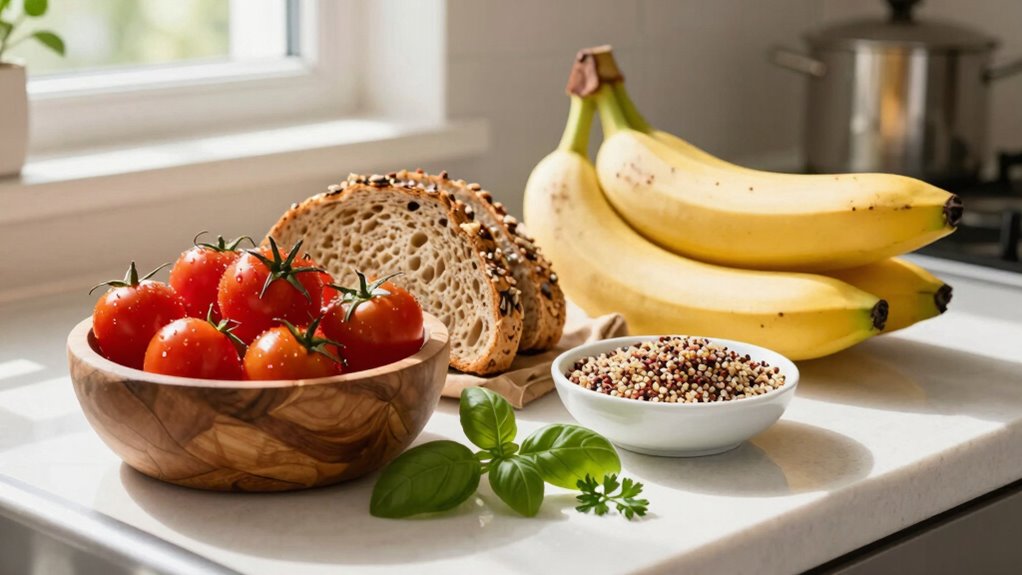
Eating healthy carbs at home is easier than you might think, especially when you choose nutrient-dense options. Instead of viewing carbs as the enemy, think of them as an essential part of your diet that can fuel your day and support overall health. The key is understanding how to select and prepare these carbs wisely. Meal prep becomes your best friend here, allowing you to control ingredients, portions, and cooking methods. When you plan your meals ahead of time, you can incorporate a variety of healthy carbohydrate sources that keep your blood sugar stable and your energy levels consistent.
Healthy carbs at home are simple with meal prep and smart choices for steady energy and overall wellness.
One of the most important aspects to contemplate is the glycemic index (GI), which measures how quickly carbohydrate-containing foods raise blood sugar. Foods with a high GI, like white bread or sugary snacks, cause rapid spikes and crashes in blood sugar levels, leaving you feeling sluggish and hungry sooner. Conversely, low-GI foods such as whole grains, legumes, and most vegetables digest more slowly, providing sustained energy and helping you avoid those unwanted cravings. By focusing on low to moderate-GI carbs, you can enjoy your meals without the rollercoaster effect on your blood sugar. Incorporating glycemic index awareness into your meal choices can further enhance your health and energy management.
Meal prepping allows you to make intentional choices. For instance, batch cooking brown rice, quinoa, or whole wheat pasta gives you ready-to-eat options that are both nutritious and satisfying. You can also prepare a variety of roasted vegetables, beans, and lean proteins to create balanced meals that are rich in fiber, vitamins, and minerals. Incorporating these into your weekly routine reduces the temptation to opt for processed, high-GI foods when you’re hungry and pressed for time. Plus, when you cook your carbs in advance, you gain better portion control, which is vital for maintaining a healthy weight and blood sugar levels. Additionally, understanding the importance of nutrient-dense foods can help you make smarter choices that support your overall health. Incorporating meal planning strategies can further streamline your efforts and ensure you stay on track with your health goals.
Understanding the glycemic index guides you to select the right carbs for your lifestyle. It’s not about avoiding all carbs but choosing the ones that support your well-being. Knowing how to incorporate healthy carbs effectively can make a significant difference in your overall health. Being aware of carbohydrate quality can help you prioritize foods that provide maximum nutrients with minimal blood sugar impact. By focusing on nutrient-dense, low-GI options and making meal prep a habit, you set yourself up for success. You’ll find that healthy carbs don’t have to be complicated or boring; they can be a delicious, satisfying part of every meal. With a little planning and knowledge, you can enjoy a variety of wholesome carbs at home that nourish your body and keep you energized throughout the day.
As an affiliate, we earn on qualifying purchases.
Frequently Asked Questions
How Do Portion Sizes Affect Healthy Carb Choices?
Portion sizes directly impact your healthy carb choices by helping you manage intake and avoid overeating. Practicing portion control guarantees you stick to appropriate serving sizes, which can prevent blood sugar spikes and support weight management. By paying attention to serving sizes on labels and using measuring tools, you make smarter, balanced carb choices. This way, you enjoy the benefits of healthy carbs without the risk of excess, promoting better overall health.
Are Organic Carbs Always Healthier Than Non-Organic?
Are organic carbs always healthier? Not necessarily. Organic farming reduces pesticide residues and supports sustainable practices, which can be better for the environment and potentially your health. However, some organic foods still contain natural pesticide residues, and their nutritional value isn’t automatically superior. So, while organic carbs often offer fewer chemical additives, it’s essential to take into account overall quality and balance in your diet rather than assuming organic is always the best choice.
Can Healthy Carbs Improve Mental Clarity and Focus?
Healthy carbs can definitely improve your mental clarity and focus. When you eat these carbs, they help stabilize your blood sugar levels, preventing dips that cause foggy thinking. Stable blood sugar supports better cognitive function, so you stay alert and sharp throughout the day. Choosing complex, fiber-rich carbs guarantees a steady energy supply, helping you maintain mental clarity and focus when you need it most.
How Do Cooking Methods Influence Carb Healthiness?
Did you know that cooking techniques can considerably impact carbohydrate preservation? When you boil or steam vegetables, you often retain more nutrients and healthy carbs than frying or roasting. Choosing gentle cooking methods helps maintain the fiber and complex carbs that support steady energy levels. So, by opting for steaming or boiling, you guarantee your carbs stay nutritious and beneficial for your health.
What Are Common Hidden Sources of Unhealthy Carbs?
You should watch out for hidden sugars in many processed foods, like flavored yogurts, cereals, and sauces, which can secretly increase your carb intake. Processed grains, found in white bread, pastries, and many snack foods, also contain refined carbs that quickly spike blood sugar levels. By reading labels carefully and choosing whole, unprocessed options, you can avoid these hidden sources of unhealthy carbs and improve your overall diet.
Conclusion
So, the next time you’re preparing a meal, remember that healthy carbs aren’t just about what you put in your plate—they’re about creating a balanced, nourishing environment for your body. It’s funny how a simple switch can turn an ordinary meal into a moment of wellness. When you choose smarter carbs, you’re not just fueling your day—you’re building a healthier life, one thoughtful bite at a time. Sometimes, the smallest change makes the biggest difference.