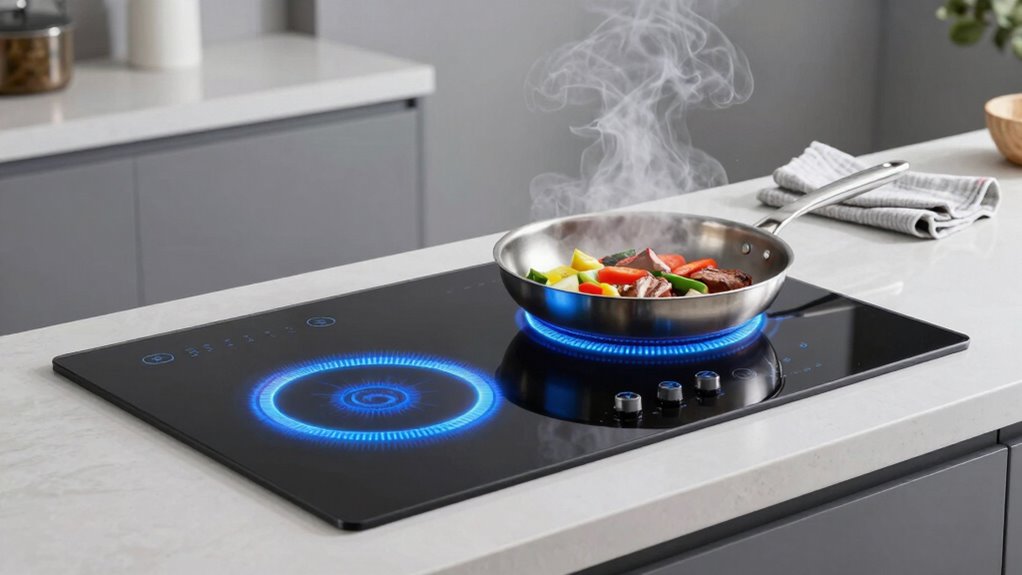

Induction cooking speeds up dinner preparation by heating your food faster and more precisely, so you spend less time waiting and more time enjoying your meal. Its quick response means you can control temp better and avoid overcooking. Plus, the cooktop stays cool, making cleanup much easier with spills wiped away easily. This efficient method reduces mess and saves time, transforming your dinner routine. Keep exploring to discover how induction can further simplify your kitchen tasks.

Get kitchen staples and gadgets delivered free with Prime
- Fast, free delivery on millions of items
- Prime Video, Amazon Music and more included
- Member-only deals all year
Key Takeaways
- Faster heating allows dinner to be prepared more quickly, reducing overall cooking time.
- Precise temperature control prevents overcooking, ensuring meals are ready on time.
- Rapid surface cooling simplifies cleanup by preventing baked-on spills.
- Reduced heat loss minimizes messes and makes wiping spills easier.
- Efficient energy use shortens cooking durations and supports a cleaner kitchen environment.
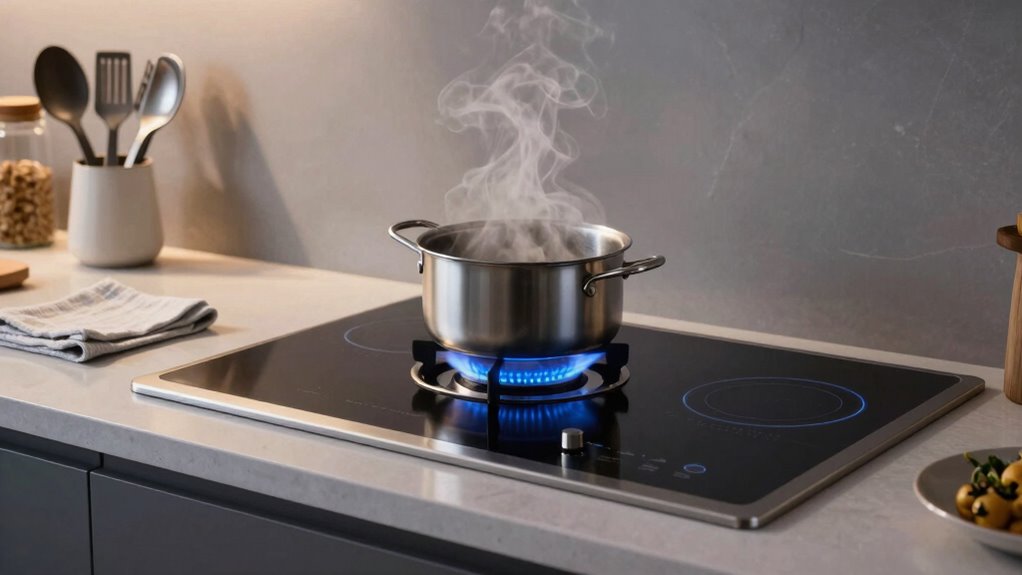
Induction cooking has become increasingly popular because it offers faster, more efficient heating than traditional stovetops. This efficiency isn’t just about speed; it also means you use less energy overall. Unlike gas or electric coils, induction heats cookware directly through electromagnetic fields, so there’s minimal heat loss. As a result, your kitchen stays cooler, and you can cook more precisely, saving both time and energy. Many induction cooktops come equipped with advanced safety features, such as automatic shut-off if no cookware is detected or if the surface gets too hot. These safety measures give you peace of mind, especially if you have kids around or tend to get distracted while cooking.
Induction cooking heats quickly and safely, using less energy with advanced features for peace of mind.
Because induction heats so quickly and accurately, your dinner preparation becomes more streamlined. You spend less time waiting for water to boil or a sauce to simmer, which means you can plan your meal timeline more effectively. This precise control often reduces the risk of overcooking or burning food, preventing messes that take extra effort to clean. When you’re finished cooking, the surface cools down rapidly, making it safer to wipe clean without worrying about residual heat. The safety features built into induction stoves also help prevent accidental burns or fires, giving you confidence during busy dinner times. Additionally, since induction cooking is considered a more energy-efficient method, it helps reduce your overall power consumption, benefiting both your household and the environment. The quick response time of induction also allows for better temperature control, which enhances cooking accuracy. In addition, the electromagnetic fields used in induction cooking are a safe and targeted technology that minimizes heat loss and maximizes efficiency.
The quicker cleanup process is one of induction’s biggest advantages. Since the cooktop surface doesn’t stay hot, spills don’t bake onto the surface, making wiping up much easier. You can often clean spills immediately without worrying about hard-to-remove stains. Additionally, because induction zones are smooth and flat, they’re easier to wipe down than traditional burners with grates or coils that trap grime. This means less scrubbing and more time enjoying your evening. The combination of energy efficiency, safety features, and easy cleanup transforms your dinner routine, making it more convenient and less stressful.
All these benefits mean you can focus more on enjoying your meal and less on the aftermath. The fast heating, precise control, and quick cleanup help you stay organized and efficient in the kitchen. Plus, knowing that your stove has built-in safety features reassures you that your home is safer while you cook. In addition, the electromagnetic fields used in induction cooking are a key aspect of energy efficiency, which helps reduce overall power consumption. In the end, induction cooking isn’t just about faster meals; it’s about creating a more streamlined, safer, and cleaner cooking experience that fits seamlessly into your busy life.
induction cooktop with safety features
As an affiliate, we earn on qualifying purchases.
As an affiliate, we earn on qualifying purchases.
Frequently Asked Questions
Does Induction Cooking Require Special Cookware?
Yes, induction cooking requires special cookware, specifically those with good cooking vessel compatibility. You need cookware made from ferromagnetic materials like cast iron or certain stainless steels. Non-magnetic materials such as aluminum, copper, or glass won’t work unless they have a magnetic base. Ensuring your cookware meets these material requirements helps induction cooktops heat efficiently and safely, making your meal prep smoother and more precise.
How Does Induction Impact Energy Consumption?
Induction cooking considerably reduces your energy consumption by offering high energy efficiency. For example, a family switching to induction saved enough on power bills to justify the investment within months. Unlike traditional methods, induction heats cookware directly, minimizing wasted heat. This targeted heating decreases overall power consumption, making it an eco-friendly choice that speeds up cooking times and cuts down on energy waste.
Are There Safety Concerns With Induction Cooktops?
Yes, there are safety concerns with induction cooktops, but they are manageable if you follow safety protocols. The cooktop surface heats only when a compatible pan is placed on it, reducing accidental burns. However, the surface can still become hot, so you should avoid touching it immediately after use. Keep children away, use appropriate cookware, and always follow safety guidelines to minimize risks and enjoy the benefits of induction cooking safely.
Can Induction Cooking Be Used for Baking?
Induction cooking can be used for baking, but it’s not quite like using a traditional oven. Think of induction as a lightning-fast cooktop; it heats quickly but isn’t designed for baking directly. You’ll need oven-compatible cookware or an induction-compatible oven for baking. While induction baking offers precise temperature control, it’s best paired with a compatible oven to achieve perfect baked goods without the usual oven setup.
How Do I Maintain and Clean Induction Cooktops Properly?
To maintain and clean your induction cooktop properly, regularly wipe it with a soft, damp cloth after use to prevent residue buildup. Use gentle cleaning techniques, like a non-abrasive cleaner, to avoid scratching the surface. For stubborn stains, apply a specialized cooktop cleaner and gently scrub with a microfiber cloth. Routine cooktop maintenance keeps your surface shiny, guarantees efficient cooking, and prolongs the lifespan of your induction cooktop.
Conclusion
As you finish cooking, the kitchen transforms—the once chaotic stove now silent, surfaces gleaming. You realize induction’s quick heat means dinner is ready sooner, but those same rapid cool-downs leave you with a surprise: fewer messes and easier cleanup. Imagine the next evening’s meal, prepared swiftly, with a spotless space awaiting. Induction cooking doesn’t just change when you eat—it reshapes how you experience every moment in your kitchen, quietly promising more time for what truly matters.
NFL season / tailgating Picks
team gear
As an affiliate, we earn on qualifying purchases.