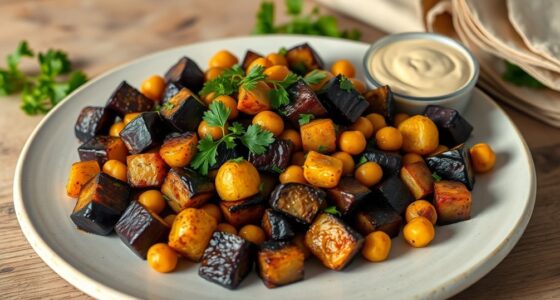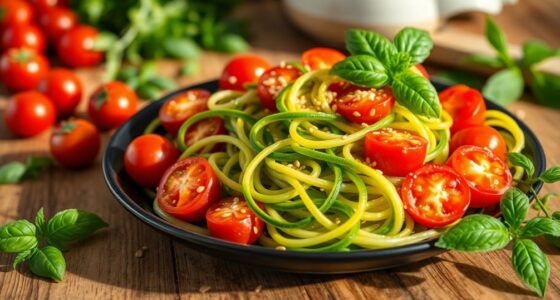

You might not realize it, but texture greatly impacts how much you enjoy healthy foods and stick with them. Engaging textures make meals more satisfying and help boost flavor perception, encouraging you to savor every bite. Techniques like roasting or steaming can transform dull ingredients into appealing dishes, making healthy eating more pleasurable. If you want to discover how different textures can elevate your nutrition habits, keep exploring these essential tips and tricks.

Get kitchen staples and gadgets delivered free with Prime
- Fast, free delivery on millions of items
- Prime Video, Amazon Music and more included
- Member-only deals all year
Key Takeaways
- Texture enhances flavor perception, making healthy foods more enjoyable and encouraging sustained healthy eating habits.
- Engaging textures create a satisfying mouthfeel that increases meal satisfaction and reduces cravings for less nutritious options.
- Proper cooking techniques can transform healthy ingredients, improving their texture and making them more appealing.
- Good texture supports mindful eating, helping individuals appreciate and stick to nutritious food choices.
- Focusing on texture in healthy meals boosts overall enjoyment, motivating consistent healthy eating routines.

Have you ever noticed how the texture of your food can make a healthy meal more enjoyable? It’s not just about the taste — the way food feels in your mouth can dramatically influence your overall eating experience. Texture adds a layer of complexity that keeps you engaged and satisfied, making healthy choices more appealing. When you focus on the texture, you’re not just improving how your food feels; you’re also amplifying flavor enhancement. A crispy vegetable, for example, releases more aroma and taste when it’s fresh and properly cooked, which makes each bite more flavorful. That’s where smart cooking techniques come into play. Techniques like roasting, steaming, or sautéing can transform dull ingredients into exciting textures that invite you to savor every bite. For example, lightly roasting sweet potatoes gives them a tender, caramelized exterior, adding depth to their flavor, while steaming greens maintains their bright, crisp texture. These techniques aren’t just about health; they’re about creating a more pleasurable eating experience. When food feels good, you’re more likely to enjoy it and stick with healthy habits. Incorporating texture-focused cooking techniques can help you develop meals that are both nutritious and satisfying. Additionally, paying attention to food preparation methods can further enhance the overall texture and flavor profile of your dishes. Recognizing how different cooking techniques influence texture can guide you in making smarter, healthier choices in the kitchen, supporting a more biodiverse diet that benefits both your health and the environment. Exploring culinary techniques can also inspire you to experiment with new textures and flavors, keeping your healthy eating routine fresh and exciting.
healthy food texture enhancing tools
As an affiliate, we earn on qualifying purchases.
As an affiliate, we earn on qualifying purchases.
Frequently Asked Questions
How Does Texture Influence Food Cravings and Overeating?
Texture influences your cravings and overeating because satisfying mouthfeel can make healthy foods more appealing. When you experience texture enhancement, foods feel more enjoyable, reducing the urge to seek less healthy options. If your healthy meals have a satisfying mouthfeel, you’re more likely to feel full and satisfied, preventing overeating. This connection shows how important texture is in creating enjoyable, nutritious meals that curb cravings naturally.
Can Texture Alter the Perceived Healthiness of a Food?
Imagine texture perception as a silent storyteller shaping your food choices. It can make a healthy dish feel indulgent or a treat seem bland. Your food mouthfeel influences how you perceive its healthiness; a creamy, satisfying texture often signals richness, while a rough or watery feel might suggest simplicity. So, yes, texture truly alters the perceived healthiness, guiding your mind and taste buds with subtle, powerful cues.
Are There Cultural Differences in Texture Preferences for Healthy Foods?
Yes, cultural preferences greatly influence texture choices in healthy foods. In some cultures, crispy or crunchy textures symbolize freshness and energy, making them more appealing. In others, soft, smooth textures are preferred, linked to comfort and tradition. Texture symbolism shapes your expectations and enjoyment, affecting how you perceive the healthiness of foods. Recognizing these cultural differences helps you appreciate diverse healthy eating habits and adapt recipes to suit various preferences.
How Does Texture Impact Nutrient Absorption?
Your mouthfeel influence is monumental—texture modification can make or break nutrient absorption. When food feels gritty or slimy, your digestion slows down, and nutrients aren’t absorbed efficiently. By enhancing texture, you optimize your body’s ability to access essential nutrients. Don’t underestimate how crucial mouthfeel is; a smooth, appealing texture can release maximum absorption, transforming your healthy eating into a powerhouse of nourishment.
What Role Does Texture Play in Food Sensory Satisfaction?
Texture plays a vital role in your food sensory satisfaction by engaging your sensory memory and highlighting texture contrast. When you experience varied textures, like crunchy and smooth, it makes eating more enjoyable and memorable. This contrast keeps your palate excited and prevents boredom. By paying attention to texture, you enhance your overall eating experience, making healthy foods more appealing and satisfying, encouraging better nutrition habits naturally.
Conclusion
So, next time you choose a healthy meal, consider the texture—it’s more than just a crunch or creaminess. Texture influences how much you enjoy your food, which can impact your overall eating habits and health. Don’t you think that paying attention to these little details could make a big difference in sticking to your wellness goals? After all, isn’t enjoying what you eat just as important as what’s on your plate?
NFL season / tailgating Picks
team gear
As an affiliate, we earn on qualifying purchases.