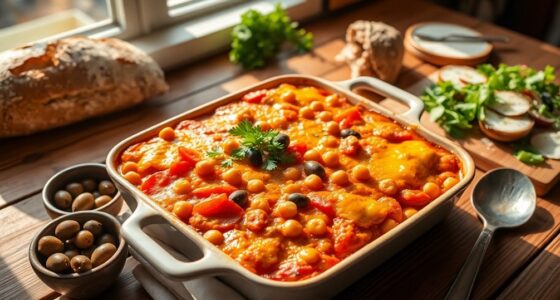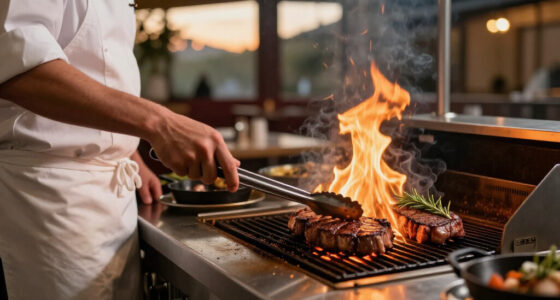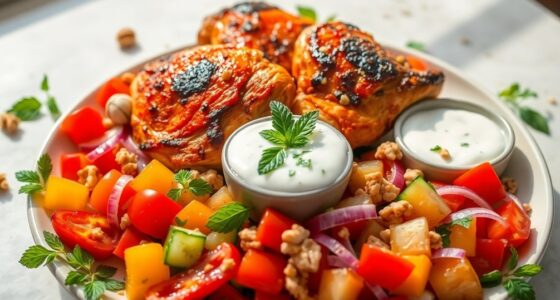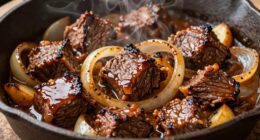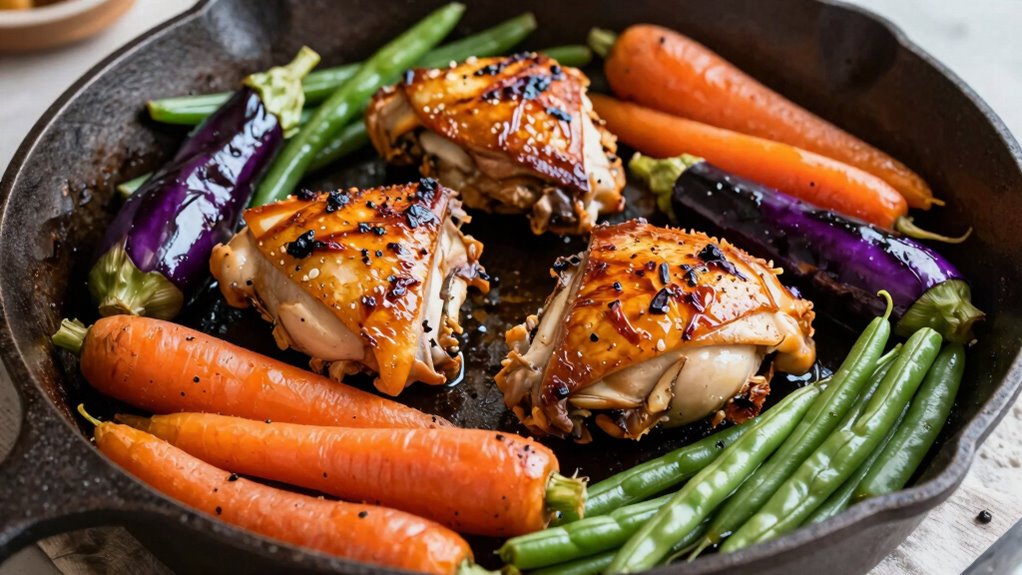

When you stop crowding your tray, ingredients have more space to brown and caramelize, boosting flavor and texture. Overcrowding traps moisture, causing steaming instead of roasting, which dulls flavors and prevents crispy, caramelized surfaces. Spreading out your ingredients allows for better heat circulation, even cooking, and faster results. Plus, it’s easier to monitor progress and make adjustments. Keep this in mind, and you’ll discover how to create more flavorful, perfectly roasted one-pan dinners every time.

Get kitchen staples and gadgets delivered free with Prime
- Fast, free delivery on millions of items
- Prime Video, Amazon Music and more included
- Member-only deals all year
Key Takeaways
- Proper spacing allows ingredients to caramelize and develop richer flavors through effective browning.
- Less crowding ensures even heat distribution, preventing sogginess and uneven cooking.
- Spreading out ingredients speeds up cooking and reduces the need for stirring or flipping.
- It facilitates better monitoring and quick adjustments for consistent doneness.
- Clean-up becomes easier, and there’s more flexibility to add or adjust ingredients during roasting.
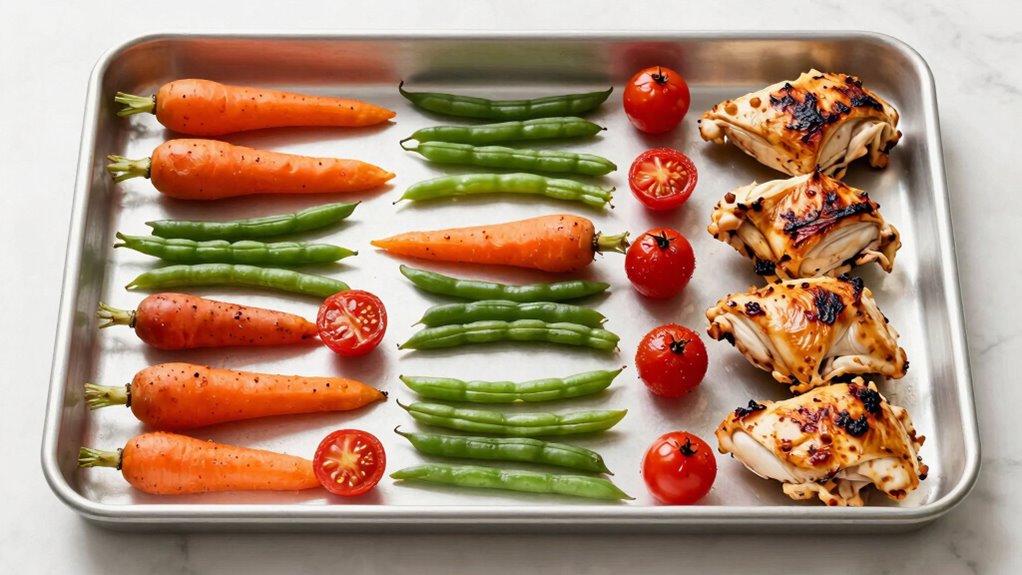
When ingredients are too crowded, they tend to steam rather than roast, which dulls their natural flavors. For example, if vegetables are packed tightly, they release moisture that gets trapped, preventing them from crisping up and intensifying their taste. When you spread them out, they caramelize more effectively, developing rich, complex flavors through the Maillard reaction. The same goes for proteins like chicken or fish—when spaced properly, they sear beautifully, creating a savory crust that adds depth to every bite. This space allows each ingredient to develop its own character rather than blending into a bland, steamed mess. Additionally, leaving space on your tray helps promote even heat distribution, ensuring each item cooks uniformly. Cooking efficiency also benefits from this approach. When ingredients aren’t overcrowded, they cook faster because heat reaches each piece more directly. You won’t have to spend extra time stirring or flipping, which can be disruptive and inefficient. Plus, it’s easier to monitor the progress and make adjustments if needed. For instance, if you notice that some items are browning faster than others, you can easily remove or rotate them without disturbing the entire tray. This control means less guesswork and more consistent results. Moreover, spreading out your ingredients makes cleanup easier and quicker, as there’s less residue sticking to the tray. It also provides more flexibility—you can adjust quantities or add ingredients midway through roasting without overcrowding the pan again. Furthermore, giving ingredients space enhances heat circulation, which is crucial for achieving optimal browning and flavor development. Proper airflow not only improves browning but also helps prevent uneven cooking and sogginess. To maximize these benefits, arranging ingredients with some space between them encourages better moisture evaporation, resulting in a crisper, more flavorful outcome. Ultimately, giving your ingredients room to breathe on the baking sheet ensures your weeknight dinners are not only faster to prepare but also tastier. Less crowding leads to better caramelization, more thorough cooking, and richer flavors, making your one-pan dinner a true success.
As an affiliate, we earn on qualifying purchases.
Frequently Asked Questions
How Does Crowding Affect Cooking Times in One-Pan Dinners?
Crowding your tray mainly affects cooking times because ingredient spacing gets compromised, causing uneven heat distribution. When you pack ingredients too tightly, they steam instead of roast, extending cooking times and risking undercooked spots. Proper tray arrangement allows heat to circulate evenly, ensuring quicker, more consistent results. So, giving ingredients space not only speeds up cooking but also improves flavor and texture in your one-pan dinners.
Can Crowding Cause Uneven Cooking or Browning?
Crowding your pan can cause uneven cooking or browning, as studies show that overcrowded pans drop temperature by up to 50%. When you pack too much food in, items steam instead of sear, ruining food presentation. To prevent this, give your ingredients space and use cleaning tips like soaking the pan afterward to keep it pristine. Proper spacing ensures even cooking and a more appealing, delicious dish every time.
What Are the Best Vegetables for One-Pan Dinners?
You should choose vegetables with sturdy textures, like carrots, potatoes, and Brussels sprouts, for one-pan dinners. These hold their shape and don’t turn mushy. Also, select colorful vegetables such as bell peppers and green beans, which retain their vibrant hues even after roasting. By avoiding crowding, you allow vegetables to cook evenly, preserving their textures and color, making your dish both tasty and visually appealing.
How Do I Prevent Ingredients From Sticking Together?
To prevent ingredients from sticking together, guarantee proper pan space optimization by spreading ingredients evenly. Don’t overcrowd the pan; give each piece enough room to cook properly. Use enough oil or cooking spray to create a barrier, which aids in ingredient separation. Stir occasionally, especially during the first few minutes, to prevent sticking. Maintaining proper heat and avoiding overcrowding helps ingredients cook evenly and stay separate, resulting in a better one-pan dinner.
Does Crowding Impact the Flavor of the Dish?
Crowding your tray can dilute the flavor, making dishes taste blander because juices and aromas don’t concentrate properly. It also causes ingredients to stick together, hindering ingredient separation, which affects how flavors develop during cooking. When you give ingredients space, they cook evenly, retain their individual flavors, and prevent flavor dilution. So, avoid overcrowding to boost the dish’s overall taste and guarantee each ingredient shines.
Conclusion
When you stop crowding your tray, you open a culinary universe where flavors dance freely and textures reach their true potential. Overcrowding turns your dinner into a soggy, flavorless chaos, but giving each ingredient space elevates your meal to an art form. Trust me, once you embrace the power of less, you’ll wonder how you ever settled for anything less than perfection. Your one-pan dinners will never be the same—prepare for a revolution on your plate!
Fall Picks
fall essentials
As an affiliate, we earn on qualifying purchases.