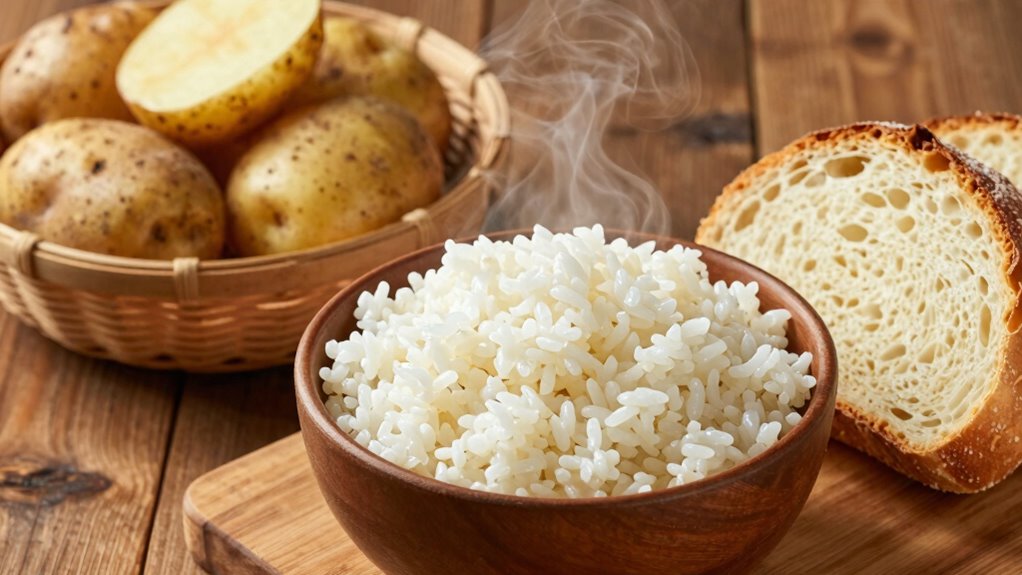

Rice, bread, or potatoes are key to a balanced dinner because they supply essential nutrients like fiber, vitamins, and minerals that support your energy, immune system, and digestive health. They also connect you to cultural traditions and add variety to your meals. Incorporating these staples helps you create nourishing, satisfying dishes that promote overall well-being. If you’re curious how they fit into a healthy diet and sustain cultural identity, there’s more to discover below.

Get kitchen staples and gadgets delivered free with Prime
- Fast, free delivery on millions of items
- Prime Video, Amazon Music and more included
- Member-only deals all year
Key Takeaways
- They provide essential carbohydrates for sustained energy and support brain and muscle function.
- Serve as nutrient-rich bases, offering fiber, vitamins, and minerals like potassium and vitamin C.
- Enhance meal versatility by pairing with proteins, vegetables, and healthy fats for balanced nutrition.
- Promote satiety, reducing unhealthy snacking and supporting digestive health through fiber content.
- Maintain cultural traditions and social bonds, enriching meals with cultural and historical significance.

Many people think that carbs like rice, bread, and potatoes are outdated or unnecessary in a balanced dinner, but that’s not quite true. These foods hold deep cultural significance in many societies, serving as staples that connect people to their heritage. Whether it’s a bowl of jasmine rice in Southeast Asia, crusty bread in Europe, or boiled potatoes in Eastern Europe, these carbs aren’t just sources of energy—they symbolize tradition, community, and history. Removing them from your diet risks losing that cultural connection, which can be essential for maintaining a sense of identity and belonging. Plus, these foods aren’t just about tradition; they also contribute to nutrient diversity. They contain essential nutrients like fiber, vitamins, and minerals that are sometimes less abundant in other food groups.
Carbohydrates like rice, bread, and potatoes connect us to culture, tradition, and vital nutrients for balanced living.
When you include rice, bread, or potatoes in your meal, you’re not just filling your stomach—you’re adding a variety of nutrients that support overall health. For instance, whole grain bread and brown rice provide complex carbohydrates that deliver sustained energy and help regulate blood sugar levels. Potatoes, especially when eaten with their skins, pack a punch of vitamin C, potassium, and fiber, which support immune function and digestive health. These carbs serve as a base for a balanced dinner because they’re versatile and pair well with proteins, vegetables, and healthy fats, allowing you to craft meals that are both satisfying and nutritious. Incorporating these foods also encourages Nutrient diversity, which is essential for a well-rounded diet. This diversity helps your body access a broader spectrum of nutrients necessary for optimal functioning. Relying solely on protein or vegetables can leave gaps in your nutritional intake, but carbs like rice, bread, and potatoes fill those gaps with key nutrients. For example, they supply energy for your brain and muscles, especially important if you’re active or need mental focus. Their fiber content promotes healthy digestion and helps keep you full longer, reducing the temptation for unhealthy snacking. Additionally, including these foods can support sustainable eating practices by reducing food waste, as many of these staples are produced locally and have a longer shelf life. When you view these carbs as part of a balanced meal, you’re not just eating for fuel—you’re embracing a rich array of nutrients that support your body’s functions and overall well-being. Understanding the cultural importance of these foods can deepen your appreciation for diverse culinary traditions and promote a more mindful approach to your diet. Moreover, recognizing the long shelf life of these staples encourages more sustainable and economical food choices, reducing waste and supporting local economies.
Ultimately, carbs like rice, bread, and potatoes still matter because they connect you culturally and nutritionally. They’re more than just energy sources—they’re integral to traditions, social bonds, and a diverse, healthy diet. Incorporating them thoughtfully in your dinner ensures that you enjoy the benefits of nutrient diversity while honoring the cultural significance that makes these foods so meaningful across the world.
Frequently Asked Questions
Can Rice, Bread, or Potatoes Cause Weight Gain?
Yes, rice, bread, or potatoes can cause weight gain if you consume them in excess. They influence carbohydrate metabolism and have a higher glycemic impact, which can spike blood sugar and insulin levels, leading to increased fat storage. To avoid weight gain, enjoy these foods in moderation, balance them with protein and fiber, and pay attention to portion sizes. This way, you can enjoy their nutritional benefits without disrupting your weight management goals.
Are These Foods Suitable for Gluten-Free Diets?
Like a tailor choosing fabric, you can find gluten-free grains and bread alternatives that suit your diet. These foods are suitable for gluten-free diets, as they don’t contain wheat, barley, or rye. Think of cauliflower rice, gluten-free bread, and sweet potatoes as your reliable options, offering variety and nutrition without gluten. Always check labels to verify products are truly gluten-free, helping you enjoy balanced meals confidently.
How Do Portion Sizes Affect Nutritional Balance?
Portion sizes play a vital role in maintaining nutritional balance. By practicing portion control, you prevent overeating and guarantee you’re getting the right mix of carbohydrates, proteins, and fats. Eating too much of rice, bread, or potatoes can lead to excess calories, while too little might cause nutrient gaps. Adjust your portions based on your activity level and dietary needs to keep your meal balanced and energizing.
Can They Be Incorporated Into Low-Carb Diets?
Think of your diet as a garden needing variety. While rice, bread, or potatoes seem like the colorful flowers, low-carb alternatives are the sturdy shrubs. You can incorporate these carbs carefully, but be aware of nutritional trade-offs—some low-carb options may lack fiber or vitamins. Balancing your garden means choosing wisely, blending these options to create a vibrant, healthy meal that suits your low-carb goals.
Are There Health Benefits to Whole Grain Varieties?
Yes, there are health benefits to whole grain varieties. Whole grains provide more fiber, vitamins, and minerals compared to refined options. They also have a lower glycemic impact, helping to stabilize blood sugar levels. Incorporating whole grains into your meals can improve digestion, support heart health, and promote sustained energy. Choosing whole grain rice, bread, or potatoes makes your balanced dinner more nutritious and beneficial for long-term health.
Conclusion
So, next time you sit down to eat, remember that rice, bread, or potatoes are like the steady drumbeat in your dinner symphony—they anchor your meal with energy and tradition. They’re the reliable foundation that supports the vibrant flavors and nutritious highlights of your plate. Embrace these humble staples as your culinary compass, guiding you toward a balanced, satisfying feast. After all, sometimes the simplest ingredients are the most essential melodies in your daily harmony.
Halloween Picks
halloween
As an affiliate, we earn on qualifying purchases.