

Sustainable seafood dinners highlight the benefits of choosing foraged fish and coastal recipes that support healthy oceans and marine ecosystems. By harvesting fish responsibly from local waters and opting for responsibly managed fisheries, you help preserve wild stocks and reduce environmental impact. Coastal cooking emphasizes seasonal, local-based ingredients, ensuring freshness and sustainability. Continue exploring these practices to discover how you can enjoy delicious, eco-friendly meals that contribute to ocean health and resilience.
Key Takeaways
- Foraging fish responsibly involves understanding local regulations, seasonal patterns, and sustainable harvesting practices to protect marine ecosystems.
- Coastal cooking with foraged fish supports local economies and reduces carbon footprint by sourcing seafood directly from nearby waters.
- Selecting sustainably caught or foraged seafood ensures the preservation of wild fish populations and promotes long-term ocean health.
- Combining foraged fish with eco-friendly ingredients in recipes enhances the sustainability and flavor of seafood dinners.
- Supporting fisheries with responsible management and sustainability certifications helps maintain resilient marine ecosystems and healthy fish stocks.
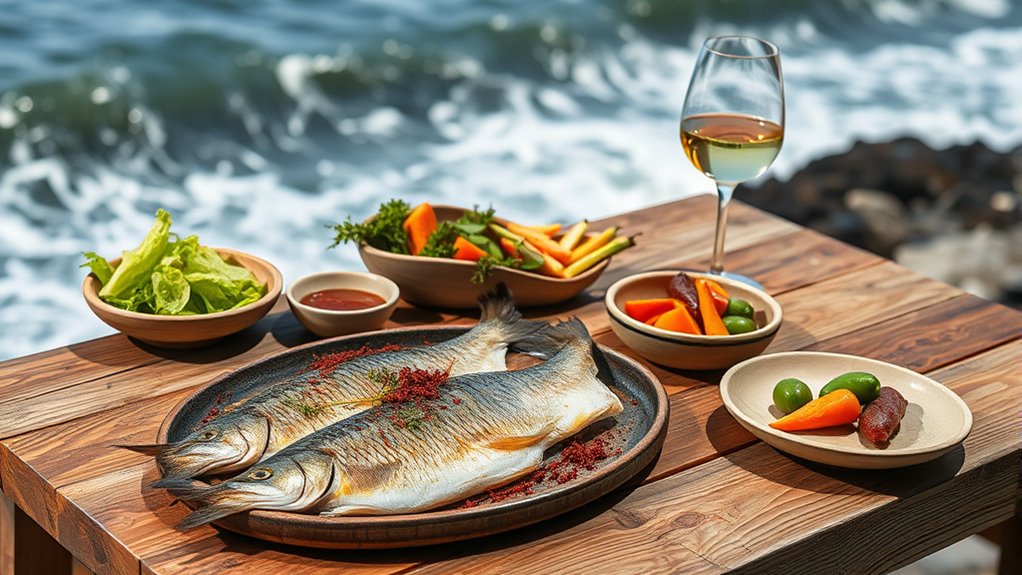
Eating sustainable seafood is one of the easiest ways to enjoy delicious meals while supporting ocean health. When you choose seafood that’s responsibly sourced, you’re helping to preserve marine ecosystems for future generations. One key aspect of this is understanding how aquaculture practices impact the environment. Sustainable aquaculture involves carefully managed fish farms that minimize habitat damage, reduce pollution, and avoid overharvesting wild fish populations. By supporting farms that follow responsible aquaculture practices, you can enjoy seafood without contributing to the depletion of wild stocks or harming delicate ocean habitats.
Choose responsibly farmed seafood to protect marine habitats and support sustainable ocean ecosystems.
Fish population management plays a critical role in maintaining healthy oceans. Overfishing can quickly deplete local fish stocks, making it harder for populations to recover. Responsible fishery management involves setting catch limits based on scientific data, protecting spawning grounds, and implementing seasonal closures to allow stocks to replenish. When you select seafood from sources that prioritize fish population management, you’re ensuring that the fish you eat are part of a sustainable cycle, rather than a depleted resource. This conscious choice helps keep the balance in marine ecosystems and supports the long-term viability of seafood industries.
In coastal cooking, you can embrace the bounty of local waters by foraging for fish and shellfish, but it’s essential to do so responsibly. Foraged fish, when harvested sustainably, offers a fresh, flavorful addition to your dinner table. It requires knowledge of local regulations and seasonal patterns to avoid overharvesting and ensure the species remain abundant. Learning about local foraging rules can help you identify the best times and places to gather fish, while also respecting the environment. When you combine foraging with an understanding of aquaculture practices and fish population management, you’re making choices that bolster the health of marine ecosystems and promote sustainable seafood consumption.
Additionally, understanding the importance of active management in fisheries can further ensure your seafood choices support ecological balance. Ultimately, enjoying sustainable seafood dinners means being an informed consumer. Whether you’re buying from reputable markets that prioritize sustainability certifications, supporting local fisheries that follow responsible practices, or foraging wisely in coastal waters, your choices have a meaningful impact. By understanding how aquaculture practices and fish population management work together to protect ocean resources, you can make smarter decisions that benefit both your palate and the planet. Every sustainable seafood meal you prepare helps foster a healthier ocean and supports the resilience of marine life for generations to come.
Frequently Asked Questions
How Can I Identify Edible Foraged Fish Safely?
To identify edible foraged fish safely, focus on fish identification by studying reliable guides and consulting local experts. Always verify key features like shape, color, and fin placement. Practice sustainable harvesting by avoiding protected species and overfished areas. When in doubt, don’t eat unfamiliar fish. Taking these precautions guarantees you enjoy foraged fish safely while supporting healthy marine ecosystems.
What Are the Best Coastal Locations for Sustainable Seafood?
You should explore coastal areas dedicated to marine conservation, such as protected bays and estuaries, which promote sustainable seafood practices. These locations support rich coastal biodiversity, ensuring healthy fish populations. Look for regions with responsible fishing policies and local initiatives that prioritize conservation efforts. By choosing these spots, you help preserve marine ecosystems and enjoy fresh, sustainable seafood while minimizing environmental impact.
Are Foraged Fish More Nutritious Than Store-Bought Options?
Foraged fish often provide superior nutritional benefits compared to store-bought options because you can target fresh, local catches at peak season, preserving nutrients. Your foraging techniques, like knowing the right spots and timing, help guarantee you harvest healthy fish. This freshness and local sourcing can mean more omega-3s, vitamins, and minerals, making foraged fish a more nutritious choice when you’re mindful of sustainable and healthy eating practices.
How Do I Responsibly Harvest Seafood Without Harming Ecosystems?
You can responsibly harvest seafood by practicing bycatch reduction techniques and focusing on habitat preservation. Skip destructive methods like trawling, and instead, target seasonal, local catches that don’t harm ecosystems. Think of yourself as a eco-warrior, not a reckless pirate—leave enough fish for future generations. Respecting regulations and learning sustainable practices guarantees your seafood adventure doesn’t turn into ecological chaos, so the ocean stays healthy and thriving for all.
What Tools Are Essential for Foraging Coastal Fish?
You’ll need essential tools like a good quality fishing rod, net, and a measuring device to guarantee you stay within fishing regulations. Always check local rules before foraging, and keep your equipment well-maintained for safety and efficiency. A fishing license might be required, and cleaning tools help preserve your catch’s quality. Proper tools and adherence to regulations help you harvest responsibly while protecting coastal ecosystems.
Conclusion
By choosing sustainable seafood, you’re helping protect our oceans—did you know that over 90% of the world’s fish stocks are now fully exploited or overfished? Every dinner you enjoy, especially when you opt for foraged or responsibly sourced fish, makes a difference. Coastal cooking not only brings fresh flavors to your plate but also supports marine conservation efforts. So, next time you dine, remember your choices can help preserve these precious ecosystems for generations to come.