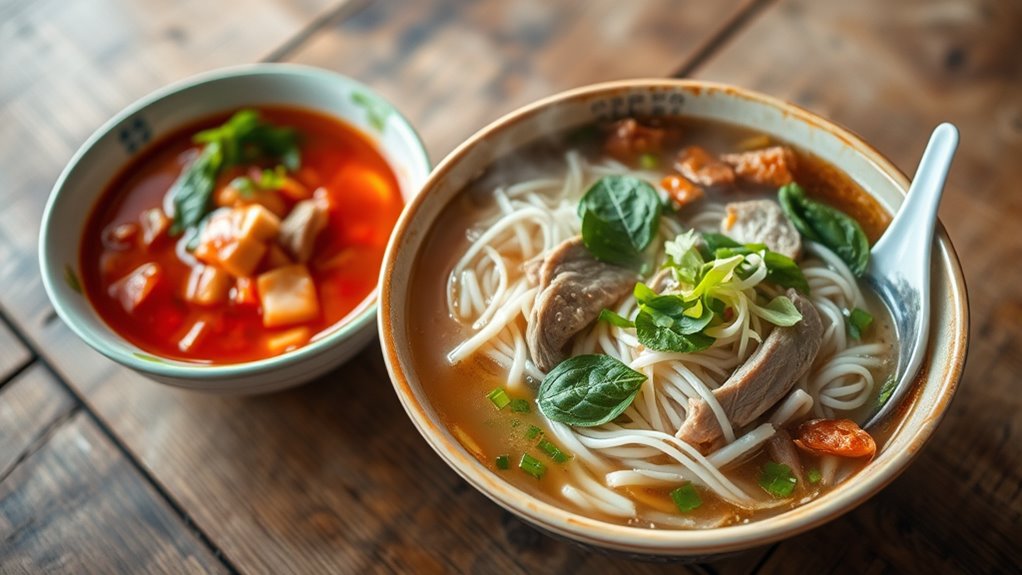
Vietnamese Pho and Bun Bo Hue are broth-based dinners that showcase regional flavors and culinary traditions. Pho features a clear, aromatic beef broth infused with spices, herbs, and slow-simmered bones, highlighting Northern subtlety or Southern boldness. Bun Bo Hue offers a deeper, spicier pork broth flavored with lemongrass and shrimp paste, reflecting central Vietnam’s robust style. Exploring these differences reveals the rich diversity of Vietnam’s cuisine and the importance of broth in shaping each dish’s personality.
Key Takeaways
- Both Pho and Bun Bo Hue are iconic Vietnamese broth-based dishes with regional variations in flavor and ingredients.
- Pho features a clear, aromatic broth made from beef bones, charred onions, ginger, and spices like cinnamon and star anise.
- Bun Bo Hue has a richer, spicier broth built from pork bones, lemongrass, fermented shrimp paste, and chili oil.
- Regional differences influence broth clarity, richness, spice level, and ingredient choices, reflecting Vietnam’s diverse culinary landscape.
- These dishes exemplify Vietnam’s rich culinary heritage, showcasing how regional ingredients and techniques shape flavor profiles.

Have you ever wondered what makes Vietnamese Pho and Bun Bo Hue so beloved around the world? It’s the rich, flavorful broths that serve as the heart of these dishes. The broth is more than just a base; it’s a symphony of flavors derived from carefully selected soup ingredients, simmered for hours to extract every ounce of aroma and depth. The ingredients vary depending on regional variations, which influence not only the flavor profile but also the choice of herbs, spices, and meats. These differences make each bowl unique, offering a glimpse into Vietnam’s diverse culinary landscape.
Vietnamese Pho and Bun Bo Hue owe their magic to rich, simmered broths that reflect regional flavors and ingredients.
When preparing Pho, you start with a clear yet complex broth, traditionally made from beef bones, charred onions, ginger, and spices like cinnamon, star anise, and cloves. These ingredients are simmered slowly, allowing the flavors to meld into a fragrant, aromatic liquid that forms the foundation of the dish. The soup ingredients are essential because they determine the overall taste—whether it’s a lighter, more delicate broth or a richer, more intense one. Variations across regions influence these choices; for example, Northern Vietnam’s Pho tends to have a clearer, more subtle broth, emphasizing the natural flavors of the beef and herbs, while Southern versions often incorporate sweeter, bolder notes through added sugar or more spices.
Bun Bo Hue, on the other hand, features a broth that’s more robust and spicy. Its soup ingredients include pork bones, lemongrass, shrimp paste, and chili oil, creating a distinctive, fiery flavor. The regional variations in Bun Bo Hue can be seen in the spice levels and the types of meat used—some areas favor pork, while others add beef. The broth is usually simmered longer to develop a deep, smoky taste, and the addition of fermented shrimp paste gives it a characteristic umami punch. These regional differences make Bun Bo Hue a dynamic dish that can range from mildly spicy to intensely fiery, depending on local preferences.
Both Pho and Bun Bo Hue showcase how regional variations influence the choice of soup ingredients, shaping their flavors and character. These differences reflect Vietnam’s cultural diversity and the local ingredients available in each area. Whether you prefer the delicate clarity of Northern Pho or the bold spiciness of Central Vietnam’s Bun Bo Hue, understanding the regional variations and soup ingredients helps you appreciate the complexity behind each bowl. It’s this interplay of ingredients and regional influence that makes these dishes so enthralling and universally loved.
Frequently Asked Questions
What Are the Key Differences in Ingredients Between Pho and Bun Bo Hue?
You’ll notice that pho uses a clear, fragrant broth with herb variations like basil, cilantro, and Thai chili, while bun bo hue features a spicier, deeper broth with more complex herbs like lemongrass and shrimp paste. Meat types also differ: pho typically includes thin slices of beef, whereas bun bo hue often incorporates beef shank, pork, and sometimes congealed pig’s blood. These differences give each dish its distinct flavor profile.
How Long Does It Typically Take to Prepare Authentic Pho or Bun Bo Hue?
Sure, because everyone has hours to spare, authentic pho or bun bo hue usually takes about 6 to 12 hours of cooking time. You’ll spend plenty of time on ingredient preparation—simmering bones, chopping herbs, and balancing spices—so don’t expect a quick fix. It’s a labor of love that rewards you with rich, flavorful broth. Prepare to carve out a good part of your day for these delicious, traditional dishes!
Are There Vegetarian or Vegan Versions of These Brothy Dishes?
Yes, you can find vegetarian and vegan versions of these brothy dishes. Many restaurants offer vegetarian substitutions, replacing meat with tofu, mushrooms, or vegetables. Vegan broth options are also available, made from vegetable stock instead of traditional meat-based broths. These adaptations allow you to enjoy the flavors of Pho and Bun Bo Hue while adhering to vegetarian or vegan diets, making the dishes accessible to more dietary preferences.
What Are Traditional Side Dishes Served With Pho and Bun Bo Hue?
You’ll often find herbal garnishes like Thai basil, cilantro, and mint, along with lime wedges, served alongside pho and Bun Bo Hue. Pickled vegetables such as daikon and carrots add a tangy crunch. These side dishes not only enhance the broth’s flavors but also provide invigorating contrasts, making your meal more vibrant and balanced. Don’t skip them—they’re essential for an authentic, flavorful Vietnamese dining experience.
How Can I Customize the Spice Level in These Broths?
You can customize the spice level by adding chili peppers, chili oil, or hot sauce to your broth. Start with small amounts and taste as you go to achieve your preferred spice customization. Balancing flavors is key, so if it becomes too spicy, add a bit of broth or lime juice to mellow the heat. This way, you control the heat without overpowering the broth’s natural flavors.
Conclusion
As you savor the rich, fragrant broths of pho and bun bo hue, you realize there’s more beneath the surface—secrets waiting to be uncovered in each spicy, tender bite. These dishes aren’t just meals; they’re stories simmered to perfection, inviting you to explore deeper flavors and traditions. But remember, the true magic lies in what you haven’t yet discovered—something tantalizingly close, yet just out of reach. Are you ready to uncover the next chapter of this culinary journey?