🔍 Read the full analysis: Aglianico And Taurasi: Campania's Age-Worthy Reds on Mad Tasting

Get kitchen staples and gadgets delivered free with Prime
- Fast, free delivery on millions of items
- Prime Video, Amazon Music and more included
- Member-only deals all year
TL;DR
Aglianico is a late-ripening red grape, while Taurasi DOCG is a wine from Irpinia in Campania’s Avellino province that must contain at least 85% Aglianico. Its acidity and tannins can support aging, but no set drinking window applies to every bottle: producer, vintage and storage all matter.
Aglianico is the late-ripening grape behind Taurasi, an age-worthy red wine from Irpinia in Campania’s Avellino province that must contain at least 85% Aglianico. The distinction matters when choosing a bottle: Aglianico names a grape used across southern Italy, while Taurasi DOCG ties the wine to a defined origin and production rules. Its structure can allow years of development, but a bottle’s useful drinking window depends on its producer, vintage and storage.
Aglianico is associated with inland Campania, particularly the hills around Avellino, and also appears in other southern Italian regions, including Basilicata. Taurasi is a specific wine designation, not another name for the grape. Its DOCG status connects it to a defined area and production standards, and the wine must contain at least 85% Aglianico.
Young Taurasi often shows dark fruit, lively acidity and firm tannins, with savory, earthy, herbal or spicy notes that vary by bottle. Its tannins can make it feel tight in its youth; with bottle age, fruit may shift toward dried cherry while notes such as leather, earth and spice become more apparent. That is a possible evolution, not a guarantee.
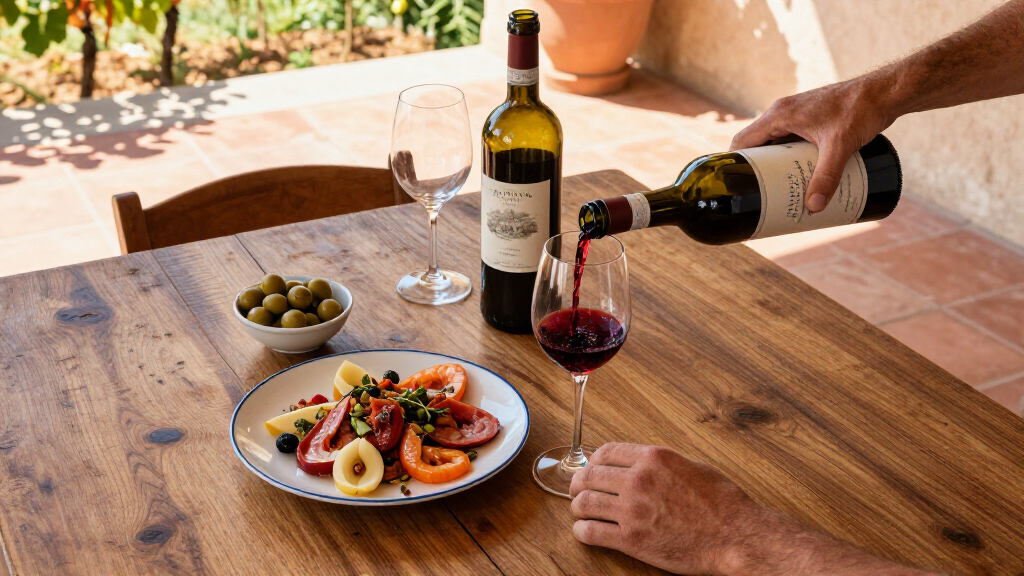
Serving can help a young bottle show more openly: give it air and pair it with substantial food such as braised beef. Older bottles may be more delicate, so handle them gently. Keep and serve wine according to sound food-safety practice: store bottles in a cool, stable place away from heat and light, and avoid leaving opened wine unrefrigerated for extended periods.
Campania · A wine guide
Aglianico &
Taurasi
Two names, one important distinction. Aglianico is a late-ripening grape found across southern Italy. Taurasi DOCG is a red wine from Irpinia, in Avellino province, made with at least 85% Aglianico. Its structure can support bottle aging, while each bottle’s development depends on producer, vintage and storage.
“Aglianico is the grape. Taurasi is a wine with a place and rules.”
Irpinia · Avellino · Campaniain Taurasi DOCG
Avellino province, inland Campania
Late ripening, with notable acidity
Can support development in bottle
No single timeline fits every bottle
01 / Read the label
Grape, place, wine
Taurasi is a specific designation, not another name for Aglianico. Origin and production rules give the wine its identity.
Aglianico
A late-ripening red grape associated with inland Campania and also grown in other southern Italian regions, including Basilicata.
Irpinia
An inland area in Avellino province, east of Naples. Elevated sites and cooler nights can help late-ripening fruit retain freshness.
Taurasi DOCG
A wine tied to a defined area and production standards. Its blend must include at least 85% Aglianico.
02 / In the glass
Structure that can evolve
Young Taurasi often feels firm and concentrated. With time, its profile may change, though evolution differs from bottle to bottle.
From dark fruit to savory detail
Young bottles can show dark fruit, lively acidity and firm tannins, with herbal, earthy or spicy notes. With bottle age, fruit may shift toward dried cherry as leather, earth and spice become more apparent. This is a possibility, not a guarantee.
Acidity, tannin and concentrated fruit can give Taurasi room to develop. Producer choices, vintage conditions, vineyard site and storage still shape each bottle. No universal drinking window applies.
03 / Bottle to table
Choose when to open
Use details for the specific wine to guide the decision. Ask about storage, consider the vintage and producer notes, and remember that extra age does not automatically mean better condition.
Producer & vintage
Look for the maker’s notes and the growing season’s conditions.
Age & storage
Keep bottles cool and stable, away from heat and light.
Air & hearty food
A young bottle may open with air; try it with braised beef or aged cheese.
Older bottles gently
Mature wine may be delicate. Open carefully and assess its condition.
04 / Ground & growing
Place informs; it doesn’t dictate
Irpinia’s inland setting and varied geology offer context, but a single soil description cannot predict a wine’s flavor.
Inland nights
Elevated vineyards and cooler nights can help Aglianico retain freshness as it ripens. Conditions vary by site and season.
Many formations
Irpinia includes volcanic materials, clay, limestone and other formations. The region is not defined by volcanic soil alone.
Many influences
Weather, vineyard work, harvest timing and cellar choices all matter. Producer and vintage details offer more useful clues.
05 / Key questions
Know before you pour
A quick guide to the grape, the wine and the choices that shape a bottle’s life.
Is Aglianico the same as Taurasi?
No. Aglianico is a grape; Taurasi is a wine from Irpinia in Avellino province, made with at least 85% Aglianico.
How long can Taurasi age?
There is no single aging period for every bottle. Producer, vintage, vineyard site and storage all affect how it develops.
What does young Taurasi taste like?
Often dark-fruited, with lively acidity and firm tannins. Savory or spicy notes vary, and a young wine may feel tight at first.
Does Taurasi always taste volcanic?
No. Irpinia has varied geology, and soil is one influence among grape, vintage, site and winemaking.
Why Taurasi Can Age
Taurasi’s combination of acidity, tannin and concentrated fruit can give it the structure to develop over time, making it a useful choice for drinkers interested in how a red wine changes in bottle. That potential is also why it can be misleading to judge every young bottle by how approachable it is on opening day.
The practical point is that age-worthiness is not a fixed promise. A producer’s decisions, a vintage’s conditions, vineyard site and the bottle’s storage all shape how the wine develops. Readers deciding whether to open or keep a bottle should use producer and vintage information rather than assuming every Taurasi needs the same number of years.
As an affiliate, we earn on qualifying purchases.
From Aglianico to Irpinia
Irpinia is inland, in Avellino province east of Naples, and differs from Campania’s coastal settings. Its vineyards include elevated sites, where cooler nights can help late-ripening Aglianico retain freshness as the fruit matures. These conditions help explain the grape’s combination of ripe fruit and acidity, but they do not make every wine taste alike.
The region’s geology includes volcanic materials as well as clay, limestone and other formations. Soil is only one influence among weather, vineyard work, harvest timing and cellar choices, so a broad reference to volcanic ground does not predict a particular wine’s flavor. The label’s origin, producer and vintage provide more useful clues than a single soil description.
What Shapes Each Bottle
The source material provides no dated announcement, new study or recent market development; it is an explanatory wine guide. It does not give specific producers, vintages, bottle examples or measured aging trials, so it cannot establish a single drinking window for Taurasi.
Producer, vintage and storage remain key unknowns when assessing any individual bottle. Hotter, drier growing seasons can raise questions about water stress, alcohol, acidity and harvest timing, but the material does not identify particular vintages or claim that all producers respond in the same way. Tasting descriptions and aging outcomes should be treated as general possibilities, not assurances.
Choosing When to Open
There is no reported next event or scheduled milestone. For readers choosing a bottle, the next step is to check the producer and vintage details, ask how the wine was stored, and consider whether it is being opened young or after years in bottle. If available, producer notes can clarify the intended style and the conditions of that growing season.
For a young Taurasi, serving it with air and hearty food may soften its first impression. For an older bottle, open it carefully and avoid assuming that extra age automatically means better condition. A side-by-side tasting of young and mature Taurasi can show how the wines differ, while underscoring that each bottle’s development is individual.
Key Questions
Is Aglianico the same as Taurasi?
No. Aglianico is a grape; Taurasi is a wine from Irpinia in Campania’s Avellino province, made with at least 85% Aglianico.
How long can Taurasi age?
There is no single aging period that applies to every bottle. Producer, vintage, vineyard site and storage affect how a Taurasi develops, so consult information for the specific wine.
What does young Taurasi taste like?
It commonly shows dark fruit, noticeable acidity and firm tannins, with savory or spicy notes that vary by producer and bottle. A young wine may feel tight before it has had time to open.
What food goes well with Taurasi?
Young Taurasi can suit hearty dishes such as braised beef, while aged cheese can also make a good pairing. The right match depends on the wine’s style and maturity.
Does Taurasi always taste volcanic?
No. Irpinia has varied geology, and soil is only one influence on a wine’s character. Grape, vintage, site and winemaking also shape what appears in the glass.
Source: Mad Tasting
Halloween Picks
halloween
As an affiliate, we earn on qualifying purchases.