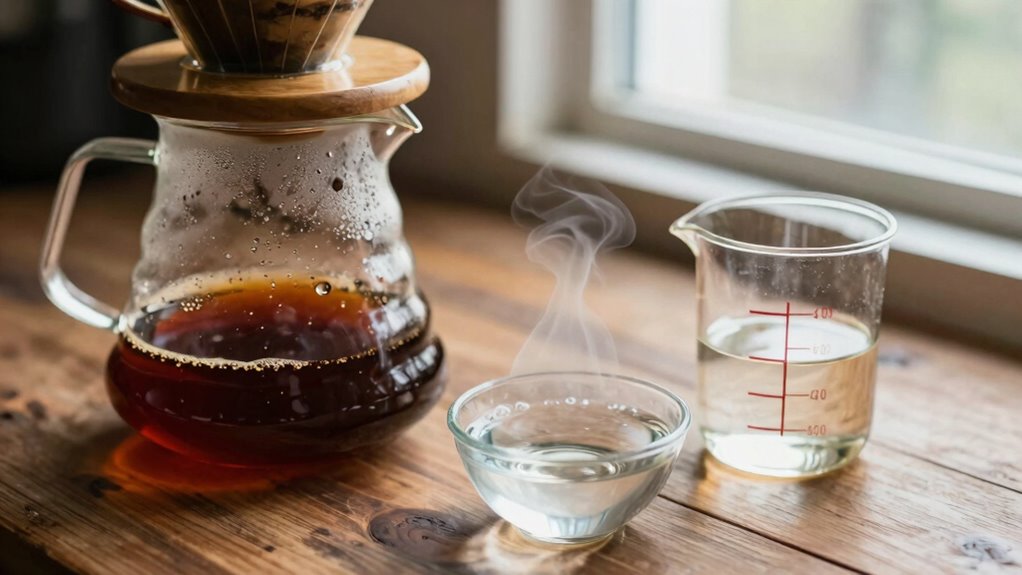

To make great coffee at home, focus on your water. Use clean, mineral-balanced water—adding a pinch of minerals or salt if needed—to enhance flavor. Keep the temperature between 195-205°F for ideal extraction without bitterness. Adjust for hardness if possible, as high calcium and magnesium help but too much can cause scale. Perfecting water quality and temperature can transform your brew more than the beans themselves. If you continue, you’ll discover how to perfect your water recipe effortlessly.
Key Takeaways
- Proper water mineralization enhances flavor extraction and prevents flat or bitter tastes in coffee.
- Use clean, filtered or bottled water to remove impurities that can negatively affect brewing.
- Adjust mineral content with minerals or salt to mimic ideal water profiles for optimal extraction.
- Maintain water temperature between 195-205°F (90-96°C) to maximize flavor without bitterness.
- Consistent water quality and temperature control are essential for achieving a balanced, flavorful brew.
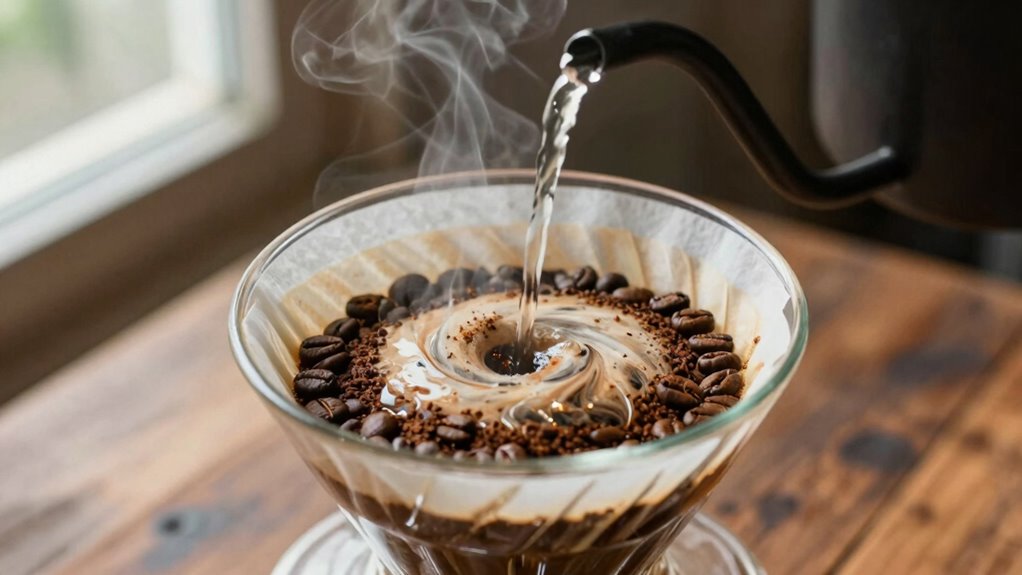
Water is the most essential resource for growing healthy beans, yet many people overlook its importance. When it comes to brewing the perfect cup of coffee, water plays an equally vital role. The quality of water you use can make or break your coffee’s flavor, aroma, and overall experience. Understanding how to maximize your water for brewing involves paying attention to brewing techniques and water quality. These elements work together to unlock the full potential of your coffee beans.
Maximize your coffee’s potential by focusing on water quality and brewing techniques for optimal flavor.
First, your choice of brewing techniques directly impacts how water interacts with the beans. Whether you prefer French press, pour-over, AeroPress, or drip coffee, each method requires a specific approach to water temperature, flow rate, and contact time. For instance, pour-over brewing benefits from precise pouring techniques that evenly saturate the grounds, maximizing extraction. The brewing process should be gentle and controlled to avoid under or over-extraction, which can lead to flat or bitter flavors. Consistency is key; mastering your brewing technique guarantees you get the best out of your beans every time, and that starts with using the right water.
Water quality is equally critical. Ideally, your water should be clean, free of impurities, and balanced in minerals. Hard water, rich in calcium and magnesium, can enhance flavor but may also cause scale buildup in your equipment over time. Conversely, soft water might lack the minerals needed for optimal extraction, resulting in a flat taste. The best approach involves testing your water and adjusting it as necessary. Using filtered or bottled water is often recommended to eliminate chlorine, chloramine, and other contaminants that can distort coffee flavor. Some enthusiasts even add a pinch of salt or minerals to their water to mimic the mineral profile of ideal brewing water, guaranteeing a balanced extraction.
Temperature control is also essential. Water that’s too hot can extract undesirable bitter compounds, while water that’s too cool might not extract enough flavor. Most experts recommend brewing at around 195-205°F (90-96°C). This temperature range maximizes solubility and flavor extraction. To achieve this, use a kettle with temperature control or bring your water to a boil and let it cool slightly before pouring.
Frequently Asked Questions
How Does Water Quality Affect Coffee Flavor?
Your water quality considerably impacts coffee flavor because mineralization influences coffee solubility. If your water has the right balance of minerals, it enhances extraction, bringing out richer flavors. Too much mineralization can cause over-extraction, making coffee bitter, while too little results in flat taste. Using clean, well-balanced water guarantees ideal solubility, so your brew is smooth, flavorful, and enjoyable. Adjust your water to improve your coffee’s overall taste.
Can Mineral Content Improve Coffee Extraction?
Yes, mineral content can improve coffee extraction when you balance minerals correctly. A good mineral balance, especially with appropriate water hardness, enhances flavor and extraction efficiency. Too soft water can lead to weak extraction, while overly hard water may cause over-extraction or scale buildup. By adjusting mineral levels—like calcium and magnesium—you optimize water quality for better flavor, clarity, and consistency in your brewed coffee.
What’s the Ideal Water Temperature for Brewing?
Imagine the perfect dance between water and coffee—your ideal brew temperature is just below boiling, around 195-205°F (90-96°C). This range helps balance extraction, considering your grind size and brew time. If water’s too hot, it over-extracts; too cool, and flavors stay hidden. Adjust your temperature slightly based on grind size and desired brew time for a smoother, more flavorful cup every time.
How Does Water pH Influence Coffee Taste?
Your water’s pH balance profoundly influences coffee taste. If your water is acidic, it can make your brew taste sour or sharp, while alkaline water tends to produce a smoother, more mellow flavor. A balanced pH (around 7) guarantees ideal extraction and flavor clarity. Adjusting your water to be slightly alkaline or neutral can enhance your coffee’s richness, bringing out the best in your beans.
Are Filtered or Tap Water Better for Brewing?
Choose filtered water over tap water for brewing, because it guarantees ideal water purification and consistent mineralization. Filtered water removes impurities and chlorine, enhancing flavor clarity, while maintaining beneficial minerals that influence coffee’s taste. Tap water varies in mineral content and purity, which can lead to inconsistent results. So, for a better cup, rely on filtered water that balances purification and mineralization, giving you a richer, more vibrant coffee experience.
Conclusion
Remember, the key to great coffee isn’t just the beans but the water you use. Think of it like baking a cake—without the right ingredients, it won’t turn out right. For example, imagine brewing your morning cup with perfectly filtered water; it’s like revealing a secret flavor that transforms your usual brew into something extraordinary. So, pay attention to your water, and your coffee will never taste the same again.