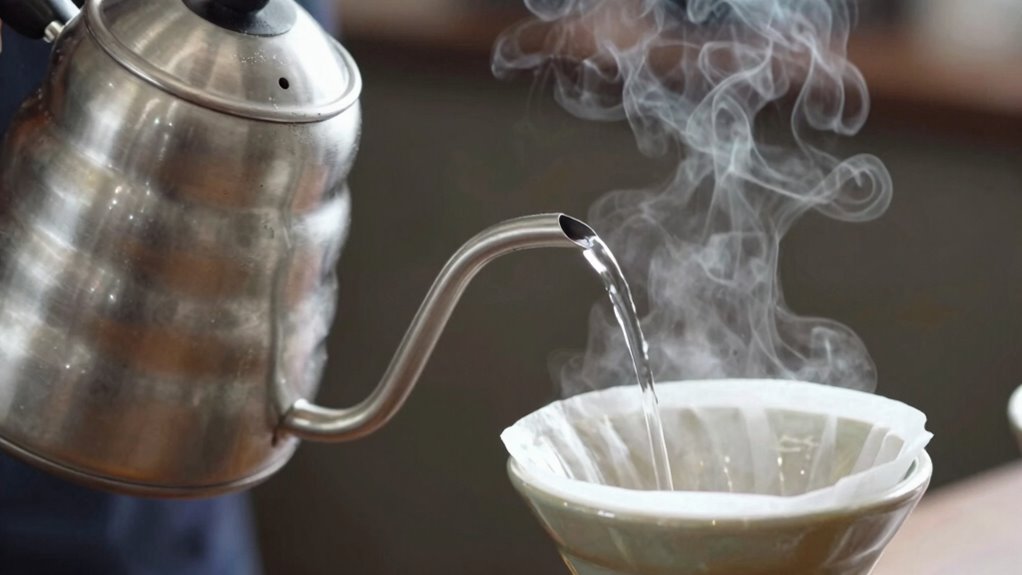
To fix your pour-over, focus on three key moves with your gooseneck kettle. First, pour slowly and steadily in a gentle circular motion to control flow and temperature. Second, start pouring at the center then spiral outward to guarantee even extraction. Finally, maintain a consistent wrist angle and flow rate for balance. Perfecting these moves takes practice, and mastering them will elevate your brew—stay tuned for tips to refine each step further.
Key Takeaways
- Maintain a steady, circular pouring motion to ensure even water distribution and extraction.
- Adjust your pour angle and flow rate to control water temperature and prevent over- or under-extraction.
- Begin pouring at the center and spiral outward, keeping a consistent wrist and flow speed throughout.
- Use small, controlled movements to fine-tune the water interaction with coffee grounds for optimal flavor.
- Practice with the gooseneck kettle to develop tactile awareness and achieve a balanced, clean cup.
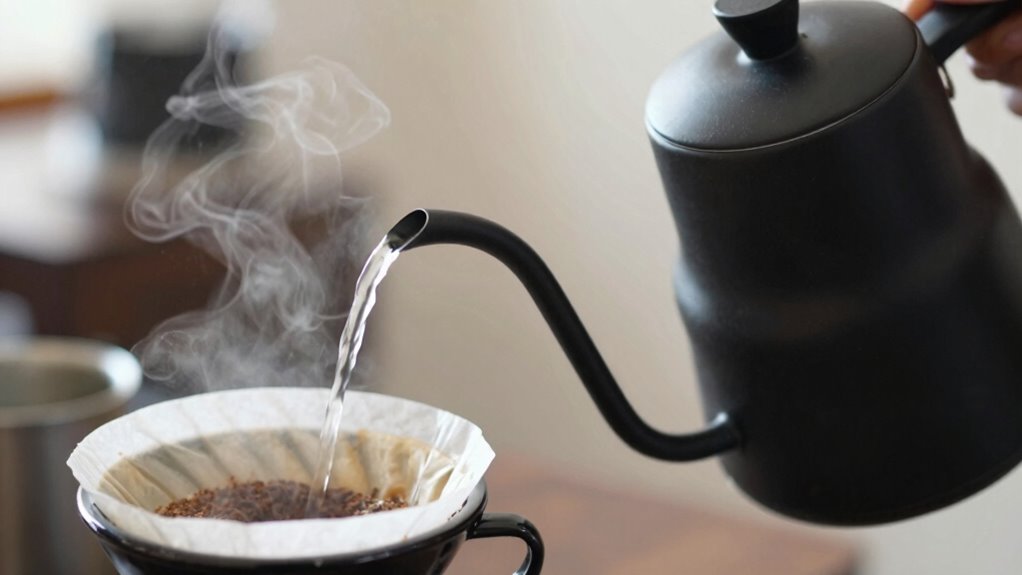
A gooseneck kettle is indispensable for achieving precise pouring control, especially when making pour-over coffee. The shape of the spout allows you to direct water exactly where you want it, which is essential for extracting the best flavors from your coffee grounds. But beyond the design, mastering your pouring technique and managing water temperature are key to dialing in that perfect brew. When you focus on these elements, you’ll notice a significant improvement in your coffee’s clarity, balance, and overall taste.
Your pouring technique is the foundation of a good pour-over. Start by pouring slowly and steadily in a circular motion, beginning at the center and spiraling outward. This ensures even saturation of your coffee grounds, preventing dry spots or over-extraction. Keep your wrist steady and maintain a consistent flow rate; sudden changes can lead to uneven extraction. As you pour, pay attention to the water level in your cone—adding just enough water to keep the grounds submerged without overflowing. This control is easier with a gooseneck kettle because you can fine-tune the angle and flow, giving you better command over the process. High precision in pouring technique is facilitated by the ergonomic handle and narrow spout of a gooseneck kettle.
Water temperature plays an essential role in extracting prime flavors. Ideally, aim for around 200°F (93°C). Too hot, and you’ll risk over-extraction, resulting in a bitter taste. Too cool, and you’ll under-extract, leaving your coffee flat and weak. With a gooseneck kettle, you can quickly adjust the heat or control the pouring speed to manage the water temperature at the pour point. For instance, if you’re noticing sour or under-extracted notes, slightly increasing the temperature or pouring more slowly can help. Conversely, if your coffee tastes bitter, lowering the water temperature or reducing the flow rate might be the fix.
Perfecting your pouring technique involves both practice and awareness. Watch how your water interacts with the coffee grounds, and adjust your movements accordingly. Keep the pour consistent, and aim for a steady, gentle stream, avoiding splashing or sudden bursts. The precision of a gooseneck kettle makes it easier to develop this skill, giving you the ability to control everything from the speed and angle to the water’s temperature. As you become more consistent, you’ll notice your pour-over coffee becoming more balanced and flavorful.
In essence, mastering your water temperature and pouring technique with a gooseneck kettle transforms your coffee-making process. It’s about more than just equipment; it’s about developing a tactile sense of control and understanding how small adjustments influence the final cup. With time and practice, you’ll brew coffee that’s clean, nuanced, and perfectly tailored to your taste.
gooseneck kettle for pour-over coffee
As an affiliate, we earn on qualifying purchases.
As an affiliate, we earn on qualifying purchases.
Frequently Asked Questions
How Do I Choose the Right Gooseneck Kettle for My Needs?
You should choose a gooseneck kettle based on your kettle capacity and ergonomic design needs. Consider how much coffee you typically brew—if you make multiple cups, opt for a larger capacity. Make sure the handle and spout are comfortable and easy to control, ensuring ergonomic design. This way, you get precise pouring, reduced strain, and a better pour-over experience tailored to your brewing habits.
Can Different Pour Techniques Improve Coffee Flavor?
Yes, different pour techniques can enhance your coffee flavor. By adjusting your pouring speed and wrist motion, you control extraction and flavor nuances. A slow, steady pour with a smooth wrist motion guarantees even saturation, highlighting delicate notes. Experimenting with faster or slower pours and varying wrist angles helps develop complex flavors. Practice these techniques regularly to refine your pour-over skills and reveal the full potential of your coffee.
What Maintenance Is Required for a Gooseneck Kettle?
You need to regularly clean your gooseneck kettle to keep it in top shape. Focus on kettle cleaning by descaling it with vinegar or a descaling solution to prevent mineral buildup. Also, pay attention to spout maintenance; confirm the spout remains clear and free of blockages by rinsing it thoroughly and checking for any debris. Proper maintenance guarantees smooth pouring and enhances your coffee experience every time.
How Does Kettle Material Affect Pour-Over Quality?
Kettle material critically impacts your pour-over quality by affecting heat retention and flow control. Copper kettles excel at keeping water hot, ensuring a steady pour, while stainless steel heats up faster but loses heat quicker, possibly leading to inconsistent brewing. Choose a material that balances heat retention with ease of handling. Your selection influences pour consistency and overall flavor extraction, making it an essential factor in your perfect pour-over.
Are There Specific Tips for Beginners Using a Gooseneck Kettle?
If you’re new to pour-over, focus on grip techniques and water temperature. For example, a beginner struggled with control until they relaxed their grip and practiced slow, steady pours. Keep the kettle close to the coffee bed, maintaining a consistent water temperature, ideally around 200°F. Practice small, circular motions, and stay patient—these tips help you develop precision and confidence with your gooseneck kettle.
precision pour-over kettle
As an affiliate, we earn on qualifying purchases.
As an affiliate, we earn on qualifying purchases.
Conclusion
Mastering your gooseneck kettle is like tending a delicate garden—each move shapes the perfect bloom. When you refine your pouring technique, you’re nurturing the symphony of flavors waiting to unfold. Remember, every steady pour is a gentle rain, guiding your coffee to its full potential. Embrace these moves, and watch your brew flourish—turning a simple ritual into an artful dance that awakens your senses and elevates your mornings.
best gooseneck kettle for coffee brewing
As an affiliate, we earn on qualifying purchases.
As an affiliate, we earn on qualifying purchases.
coffee pour-over accessories
As an affiliate, we earn on qualifying purchases.
As an affiliate, we earn on qualifying purchases.