
🔍 Read the full analysis: Lambrusco Redeemed: The Fizzy Red That Belongs With Rich Food on Mad Tasting

Get kitchen staples and gadgets delivered free with Prime
- Fast, free delivery on millions of items
- Prime Video, Amazon Music and more included
- Member-only deals all year
TL;DR
Lambrusco is a family of sparkling red and rosé wines from Emilia-Romagna, not a single sweet style. Dry and off-dry bottles can pair with rich foods such as cured meats, ragù, filled pasta, fried dishes and aged cheese; sweetness, body and fizz vary by bottle.
Lambrusco is not one style of sweet red wine, but a family of sparkling red and rosé wines from Emilia-Romagna that includes dry and off-dry bottles. A new guide to the category recommends choosing by sweetness, body and level of sparkle to match the wine with rich foods such as cured meats, ragù, filled pasta and aged cheese.
The category’s range is central to the guide’s message: the name Lambrusco alone does not tell a buyer whether a wine will be dry or sweet, lightly or fully sparkling, or delicate or more structured. Related grape varieties include Sorbara, Grasparossa, Salamino and Maestri, which can produce wines with different weights and aromas. The guide advises checking the producer, appellation and tasting notes rather than relying on the category name alone.
Labels offer some useful clues. Secco generally indicates dry wine, semisecco off-dry, amabile medium-sweet and dolce sweet. The guide notes that usage can vary, so buyers may need to consult producer descriptions or ask a wine merchant. For sparkle, frizzante refers to a gentler, lightly sparkling style, while spumante indicates fuller sparkling wine.
For food, the guide suggests matching a bottle’s weight and sweetness to the whole dish. Dry or off-dry Lambrusco can accompany savory meals such as lasagna, tortellini, pork and cured meats; a fruitier, slightly sweeter version may suit spicy food. The wine is best served cool, according to the guide, allowing its fruit to show while its acidity and bubbles refresh the palate.
Wine guide · Emilia-Romagna, Italy
Lambrusco Redeemed: The Fizzy Red That Belongs With Rich Food
Lambrusco is a family of sparkling red and rosé wines, not one sweet style. Match a bottle’s sweetness, body and sparkle to savory, rich or spicy food.
01 / The range
One name, many expressions
Producer, appellation and tasting notes help explain what is in the bottle. Related varieties can yield different weights and aromas, so the category name alone does not settle the style.
From crisp to sweet
Secco generally means dry; semisecco, off-dry; amabile, medium-sweet; and dolce, sweet. Usage can vary, so check producer descriptions or ask a wine merchant.
Choose your fizz
Frizzante describes a gentler, lightly sparkling style. Spumante indicates fuller sparkling wine. These terms describe bubbles, not sweetness.
Match the weight
Lighter, aromatic bottles can suit delicate flavors. Fuller, firmer wines may stand up to richer meat and cheese. The dish and preparation matter, too.
Label language is a starting point, not a guarantee of exact taste or body. Tasting notes can fill in the gaps.
02 / At the table
Pair the bottle with the meal
Acidity and bubbles can refresh the palate between rich or savory bites, while red-fruit flavors complement salty foods. Pick for the ingredients, seasoning and preparation.
Try with rich, savory food
- Cured meats
- Ragù
- Filled pasta
- Lasagna
- Tortellini
- Pork
- Fried dishes
- Aged cheese
A dry or off-dry bottle can be a lively alternative alongside hearty dishes. Match its weight to the richness on the plate.
Adjust for heat and delicacy
- Spicy food
- Delicate flavors
- Fruit-forward dishes
A fruitier, slightly sweeter Lambrusco may suit spicy food. Lighter, aromatic styles can work with delicate flavors. There is no single pairing for every bottle or recipe.
Acidity
Helps keep rich bites feeling fresh.
Bubbles
Refresh the palate between savory mouthfuls.
Red fruit
Complements the saltiness of cured meats and cheese.
03 / A practical buying path
From menu to bottle
A few focused questions make the category easier to navigate.
Read the dish
Is it savory, spicy, especially rich or delicate?
Pick sweetness & body
Ask for a style that fits the food’s weight and seasoning.
Check the clues
Look at sweetness, frizzante or spumante, producer and appellation.
Serve cool
Let the fruit show while acidity and bubbles refresh.
This is general buying and pairing advice. It names no specific bottle, producer, appellation, vintage or new research finding. The source provides no publication date or named author, and no sales figures or consumer survey to demonstrate a recent change in Lambrusco’s reputation.
04 / Quick answers
Lambrusco, clarified
Use these basics as a starting point, then check the bottle’s own notes.
Is Lambrusco always sweet?
No. The family includes dry, off-dry and sweeter styles, along with red and rosé wines. Terms such as secco, semisecco, amabile and dolce offer clues, though usage can vary.
What food pairs well with it?
Try cured meats, ragù, filled pasta, fried foods and aged cheese. The best match depends on the bottle’s sweetness and body as well as the dish.
How do frizzante and spumante differ?
Frizzante is lightly sparkling, with gentler bubbles. Spumante is more fully sparkling. Neither term tells you whether the wine is dry or sweet.
How should it be served?
Serve Lambrusco cool so its fruit can show and its acidity and bubbles can refresh the palate. The guide does not specify an exact temperature.
A Broader Choice for Rich Meals
The advice matters to diners who may dismiss sparkling red wine based on memories of inexpensive, sweet bottles. Lambrusco’s styles vary, so that reputation does not describe every bottle. Looking at sweetness, structure and fizz gives consumers a more specific way to choose wine for a meal instead of treating the category as interchangeable.
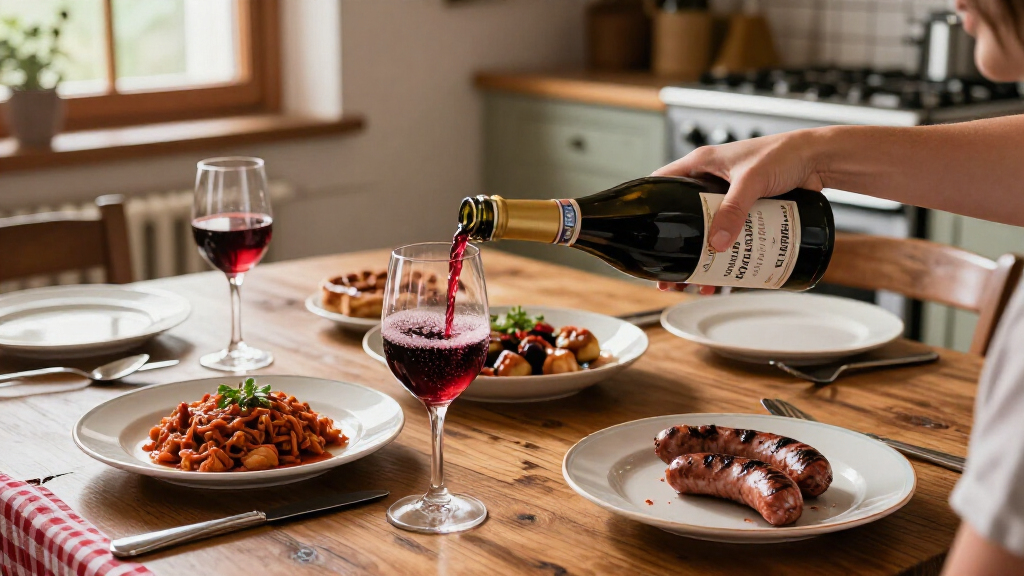
The pairing approach also offers an alternative to serving a heavy still red with rich food. The guide says acidity and bubbles can refresh the palate between fatty or savory bites, while red-fruit flavors complement salty foods. That makes Lambrusco a possible match for regional dishes including cured meats, ragù, filled pasta and aged cheese, though the best fit depends on the bottle and preparation.
As an affiliate, we earn on qualifying purchases.
From Sweet Reputation to Varied Styles
Lambrusco is associated with Emilia-Romagna in northern Italy, a region known for foods such as cured meats, filled pasta, ragù and aged cheeses. The guide connects the wine family’s variety to the range of foods it can accompany: lighter, aromatic bottles may work with delicate flavors, while fuller, firmer wines can stand up to richer meat and cheese.
The source material describes a lingering association with inexpensive, sweet Lambrusco from decades past, but provides no sales figures, consumer survey or date for a change in the category’s reputation. Its central point is practical rather than a claim of a new industry shift: the name covers multiple styles, and labels or tasting notes are needed to tell them apart.
What Labels Cannot Tell You
The guide does not identify a particular bottle, producer, appellation, vintage or new research finding. It is a general buying and pairing guide, not evidence that consumer preferences or the wine market have recently changed. No publication date or named author is supplied in the source material.
Label terms provide a starting point but may not fully convey a wine’s taste or weight. The guide says their usage can vary and recommends producer notes or merchant advice where details are sparse. The ideal pairing remains dish-specific: ingredients, seasoning and preparation can affect whether a lighter, drier or sweeter bottle works best.
Choosing a Bottle for Dinner
For a meal, start by identifying whether the food is savory, spicy or especially rich, then ask a merchant for a Lambrusco with a matching sweetness and body. Check whether the bottle is frizzante or spumante if the level of sparkle matters, and use the producer and appellation as additional clues. The guide offers no specific upcoming release or event; its practical next step for readers is to try a bottle suited to the menu and serve it cool.
Key Questions
Is Lambrusco always sweet?
No. Lambrusco includes dry, off-dry and sweeter styles, as well as red and rosé wines. Look for terms such as secco, semisecco, amabile and dolce, and check tasting notes because label usage can vary.
What food pairs well with Lambrusco?
The guide recommends trying it with cured meats, ragù, filled pasta, fried foods and aged cheese. The right match depends on the wine’s weight and sweetness as well as the dish; a fruitier, slightly sweeter bottle may work with spicy food.
What is the difference between frizzante and spumante?
Frizzante describes a lightly sparkling wine with gentler bubbles. Spumante means a more fully sparkling style. These terms describe the level of fizz, not whether the wine is dry or sweet.
How should Lambrusco be served?
The guide recommends serving Lambrusco cool so its fruit can show and its acidity and bubbles can refresh the palate. It does not specify an exact serving temperature.
Source: Mad Tasting
Halloween Picks
halloween
As an affiliate, we earn on qualifying purchases.