
TL;DR

Get kitchen staples and gadgets delivered free with Prime
- Fast, free delivery on millions of items
- Prime Video, Amazon Music and more included
- Member-only deals all year
Kitchen gadgets for home chefs are most useful when they fix a task you repeat, such as chopping vegetables, weighing flour, or checking meat temperature. Start with a digital scale, instant-read thermometer, and a comfortable knife if those match your cooking; then add appliances only when they earn their space through regular use.
A drawer full of gadgets can still leave you reaching for the same old knife. The tools that make a difference are usually less flashy: a scale that stops baking guesswork, a thermometer that tells you when chicken is done, or a peeler that turns a pile of carrots into dinner prep instead of a chore.
This guide helps you choose kitchen gadgets for home chefs by starting with what you cook and what slows you down. You’ll see which tools help with everyday prep, accuracy, and cooking, plus how to judge cleaning, durability, and storage before you buy. That way, your next gadget has a job before it reaches your counter.
Think about last Tuesday’s dinner. If chopping onions took longer than cooking them, a prep tool may help; if your bread came out dense, a scale may be the better buy. The right choice depends on your routine, not a long list of features.
Write down the kitchen task that frustrates you most before shopping.
Start with a scale, thermometer, or knife when one of those fixes a problem you meet often.
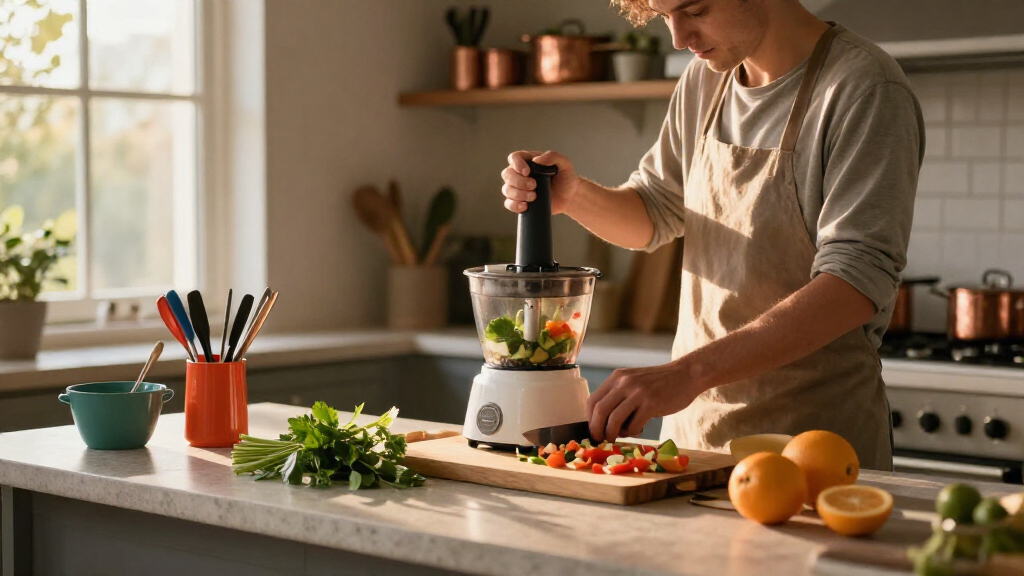
Pick a food processor for chopping and shredding, a blender for smooth liquids, and an immersion blender for soups in the pot.
Measure your storage space and check cleaning steps before buying a countertop appliance.
Pay for smart features only when you will use their alerts or guided cooking regularly.
Start with gadgets that solve a repeat kitchen problem
Kitchen gadgets for home chefs work best when they solve a task you repeat often, such as chopping, weighing, or checking temperature. Pick the job that slows you down most, then look for a tool that does that job safely and without adding a complicated cleanup routine. A gadget is useful when you reach for it again next week.
Try keeping a short note on your phone for one week. Write down the moments you think, “I wish this were faster,” or “I never know if this is done.” If you cook soup every Sunday and spend ten minutes transferring hot batches to a blender, an immersion blender may earn its place. If you bake twice a year, a large stand mixer may sit under a dust cover the other 363 days.
Function comes before features. A food chopper with several speed settings may sound clever, but a simple, sturdy knife could be quicker for a single onion. The question is not whether a gadget can do many things; it is whether it does your recurring task well.
- Choose a tool for a problem you meet at least weekly.
- Check if it replaces something you already own.
- Read the cleaning steps before buying, especially for blades and attachments.
That small audit helps you avoid novelty purchases. Your kitchen feels better when each tool has a clear role and a place to live.
Products Worth Considering

Vitamix 5200 Blender with 64 oz. Container, Black

Vitamix Touch & Go Advance 32-Ounce Bar Blender, White

Instant Pot Pro 6-Quart 10-in-1 Electric Pressure Cooker
As an affiliate, we earn on qualifying purchases.
Buy these three tools first for more consistent cooking
The most dependable starter gadgets are a digital kitchen scale, an instant-read thermometer, and a comfortable, sharp knife. Together, they improve measuring, doneness, and prep without taking over your counter. If you bake bread, roast meat, or cook vegetables often, these tools can make results easier to repeat.
A scale helps because flour scooped into a cup can vary with how tightly it is packed. When a recipe calls for 300 grams, weighing gives you a clear target. A thermometer answers a different question: instead of cutting into a chicken breast and losing its juices, you can check its center and cook to a safe temperature using current food-safety guidance. Keep raw meat and its juices away from ready-to-eat foods, and wash the probe between checks.
Your knife matters because it affects almost every meal. If you make a quick vegetable stir-fry after work, a well-maintained chef’s knife can turn carrots, peppers, and onions into evenly sized pieces that cook at roughly the same pace. Use a stable cutting board, keep fingertips curled back, and store blades where they cannot slide loose in a drawer.
- Choose a scale if you bake or want repeatable portions.
- Add a thermometer if you cook meat, fish, or temperature-sensitive dishes.
- Invest in a knife that feels secure in your hand, then keep it sharp.
Buy these one at a time if your budget is tight. A $20 scale you use each weekend may help more than an expensive appliance you rarely switch on.
Choose the right blender or processor for your weekly meals
A food processor, countertop blender, and immersion blender handle different jobs: processors chop and shred, countertop blenders make smooth liquids, and immersion blenders puree food right in its pot. Choose based on the texture you want and the dishes you make most. That simple distinction can save counter space and spare you from buying overlapping equipment.
Picture a week of cooking. You want to shred cabbage and grate carrots for slaw; a food processor with the right attachments does that quickly. You make smoothies every morning or blend a silky tomato soup in batches; a countertop blender usually suits those jobs. You simmer lentil soup on the stove and want fewer dishes; an immersion blender lets you puree it directly in the pot, once it is off the heat and safe to handle.
Versatility has limits. A multifunction appliance can combine chopping, blending, and mixing attachments, which appeals if you have a small kitchen. But if you make hummus every week, a processor with a bowl that is easy to clean may serve you better than a device that technically does ten things and does none especially well.
Before buying, check the capacity, the space needed to store attachments, and whether the parts can go in the dishwasher. A machine can make cooking faster, but only if you can assemble and wash it without turning a quick dinner into a cleanup project. For example, if a soup blender takes five minutes to rinse and dry, you may reach for a wooden spoon instead.
Make a small kitchen work with tools that store easily
In a small kitchen, the best gadget is one that earns its storage space by being compact, stackable, or useful for more than one regular task. Measure your cupboard and counter before you shop; product photos rarely show how a broad base or tall lid fits into a crowded cabinet. Your choices depend on what you cook, how often you do it, and where the tool will go.
A cook in a studio apartment might own a small digital scale, a nesting set of measuring spoons, and an immersion blender that hangs in a narrow drawer. That trio takes less room than a stand mixer or a full-size processor, yet it can support muffins, soups, and sauces. If you cook for a family and make large batches, however, a bigger processor may save enough prep time to justify a dedicated shelf.
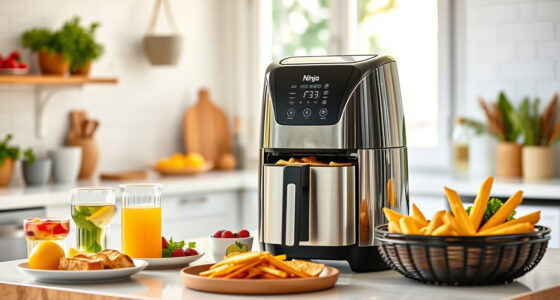
Compact countertop ovens and air fryers have drawn interest because they combine modes such as convection baking and crisping. Their small size can be handy when you are cooking for one or two, but a basket’s capacity may force you to cook in batches for a family. Compare the appliance’s usable cooking area with the food you usually prepare, not just its outside dimensions.
Try this space check before ordering: clear the exact shelf or counter spot, then measure its width, height, and depth. Include room to open a lid, pull out a basket, and let hot surfaces cool safely. A compact gadget that fits the shelf and gets used weekly beats a feature-packed machine that stays boxed beside the recycling.
Judge a gadget by cleanup, safety, and how long it lasts
A gadget is a good buy only if it stays safe and practical after the first use. Check that it sits firmly on the counter, has a secure grip, and keeps fingers away from blades or hot surfaces. Then look at how to clean it: removable parts, simple shapes, and dishwasher-safe pieces can matter more in daily use than extra settings.
Consider a mandoline, which can slice potatoes into neat, even sheets for gratin. Its exposed blade also calls for care. Use its hand guard every time, place the tool on a stable surface, and slow down near the last piece; a cut-resistant glove can offer added protection, though it does not replace careful handling. If those steps feel like too much for a task you do once a month, a sharp knife may be a better fit.
Durability is part of value. Look for sturdy construction, replacement parts, and clear warranty terms. A cheap peeler that bends after a few uses can cost more over time than a reliable one you keep for years. For an appliance, inspect the hinge, cord, controls, and attachments if you can; if an essential part breaks, find out whether you can replace it.
“If washing it feels harder than doing the task by hand, the gadget may not be saving you time.”
After cooking, cool hot equipment before cleaning it and follow the maker’s instructions. Keep electrical bases dry, wash removable food-contact parts promptly, and store blades with a guard or in a block. Those small habits protect your hands, food, and investment.
Spend your budget on the jobs you repeat most
On a limited budget, prioritize the tools that improve meals you already cook, then add appliances as a specific need appears. A good peeler, scale, thermometer, and knife often cover more everyday work than a trendy machine. The smartest order depends on your menu, cooking frequency, and available storage.
For example, a home chef who makes overnight oats, roasted vegetables, and baked salmon may get more from a scale and thermometer than a stand mixer. Someone who bakes sourdough every weekend could reasonably prioritize the scale and a sturdy mixer or dough tools. You do not need the same kit as a neighbor who makes fresh pasta every Sunday.
Smart or app-connected gadgets can offer guided recipes, timers, or phone alerts. Those features help if you regularly leave food unattended while doing other tasks. They add less value if you prefer to cook by feel or if you already use a basic timer. Treat app control as a convenience, not proof that the appliance performs better; check whether the core function still works without a phone connection.
Meal prep and storage tools can also save money by helping you use ingredients before they spoil. A few clear, stackable containers make leftover soup visible at eye level, so it is less likely to vanish behind the milk. A vacuum sealer may help if you portion and freeze food often, but occasional leftovers usually need only an airtight container. Buy the tool that matches your real weekly routine, and leave room in the budget for quality ingredients.
Frequently Asked Questions
Which kitchen gadgets are most useful for beginners?
Start with a comfortable chef’s knife, a stable cutting board, and a digital scale or instant-read thermometer if you bake or cook meat. These tools support many everyday meals and help you get repeatable results. Add appliances when you can name a task you do often that they would simplify.
Is an air fryer worth buying if I already have an oven?
It can be useful if you often cook small portions and want a compact appliance that heats quickly and crisps food. An oven may suit you better for larger trays or family-sized batches. Compare the usable basket or tray area with your usual portions before buying.
Should I get a food processor, blender, or immersion blender?
Choose a food processor for chopping, shredding, and slicing; a countertop blender for smoothies and smooth sauces; and an immersion blender for pureeing soups in their pot. Think about the texture and cleanup you want. If you make soup weekly but rarely shred vegetables, an immersion blender may be the most practical choice.
What kitchen gadgets help most with baking?
A digital scale helps you measure flour and other ingredients consistently, while a timer helps you track baking time. An oven thermometer can help if your oven runs hot or cool. A stand mixer is handy for frequent bread or cake baking, but hand mixing may be enough for occasional recipes.
How can I tell whether a kitchen gadget will last?
Check how solid the parts feel, whether the maker sells replacement parts, and what the warranty covers. For tools with blades or moving parts, look for secure fittings and a stable base. Also consider cleanup: parts that are awkward to wash may wear out faster if you avoid using or maintaining them.
How do I use kitchen gadgets safely?
Place slicers and processors on stable surfaces, use blade guards and hand guards, and keep fingers clear of cutting edges. Unplug appliances before cleaning around blades, and keep electrical bases dry. For meat, use a clean thermometer probe and follow current safe-temperature guidance from a trusted food-safety authority.
Conclusion
Choose your next gadget by naming the job it will do, the meals it will improve, and the place it will live. If it solves a weekly frustration, feels safe in your hands, and cleans up quickly, it has a fair chance of earning its spot.
Start with one tool, use it for a month, and see whether dinner gets easier. The best kitchen is not the one with the most gadgets; it is the one where the right knife, scale, or blender is ready when you need it.