To safely meal prep with sous vide, you should cook large batches at precise temperatures, then quickly chill the sealed bags in an ice bath to stop bacteria growth. Store the properly cooled meals in airtight containers and reheat only when needed, ensuring safety and quality. Using reliable equipment and following proper procedures helps you enjoy fresh, tasty dishes all week. Keep exploring to master safe, efficient sous vide meal prep.
Key Takeaways
- Ensure precise temperature control and proper cooking times to safely prepare large batches with sous vide.
- Use high-quality vacuum sealers and airtight containers to prevent contamination and spoilage.
- Rapidly chill cooked meals in an ice bath before storing to inhibit bacterial growth.
- Maintain a clean workspace and handle hot bags with utensils to ensure food safety.
- Follow recommended storage durations and reheating guidelines to preserve safety and flavor all week.

Have you ever wondered how to prepare delicious, perfectly cooked meals with minimal effort? If so, sous vide meal prep might just be your new best friend. This method involves sealing your ingredients in vacuum bags and cooking them slowly in a water bath at a precise temperature. It’s an excellent way to cook large batches of food at once, then store and enjoy them throughout the week. But before diving in, it’s essential to understand food safety and the proper kitchen equipment needed to keep your meals safe and tasty.
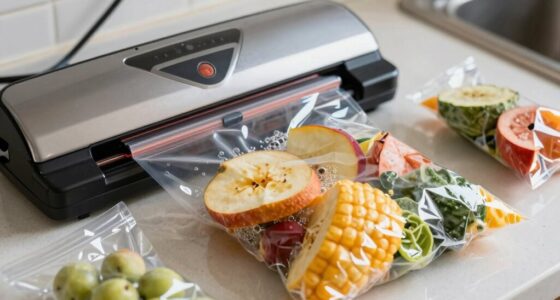
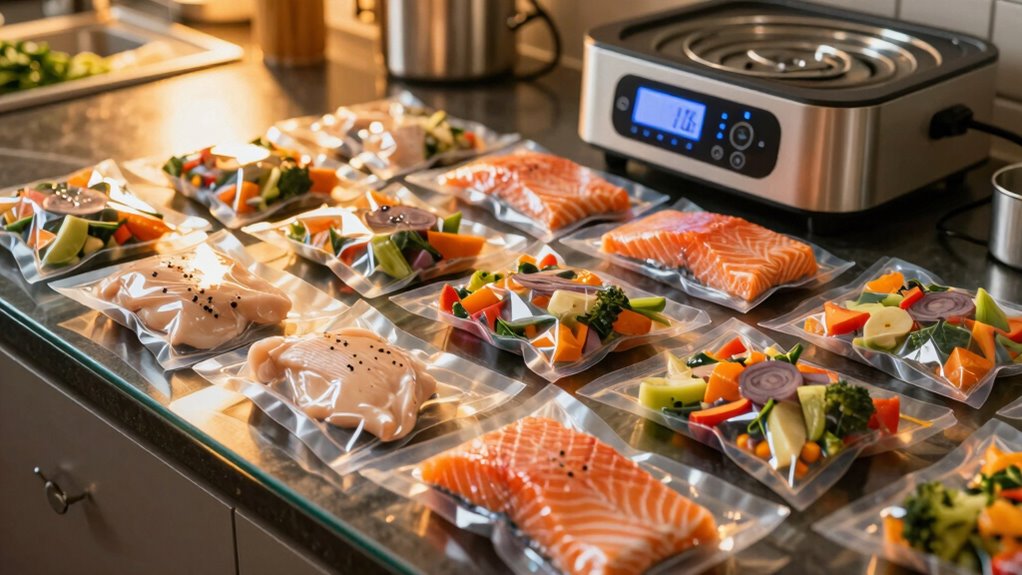
Food safety is a top priority when it comes to meal prep, especially with sous vide. Since you’re working with perishable ingredients, you need to guarantee they stay at safe temperatures to prevent bacterial growth. The key is to cook foods at the right temperature for the appropriate amount of time, then quickly chill and store them. Using a reliable vacuum sealer is critical for removing air from the bags, which helps prevent contamination and freezer burn. Additionally, investing in a quality immersion circulator ensures your water bath maintains a consistent temperature, which is indispensable for both safety and proper doneness.
Your kitchen equipment plays a significant role in the success of your sous vide meal prep. Besides the immersion circulator and vacuum sealer, you’ll want a large, sturdy container or a dedicated sous vide cooker that can hold enough water for your batch sizes. A digital thermometer helps you double-check the water temperature, giving you peace of mind that your food is cooking safely. It’s also helpful to have a slotted spoon or tongs for handling hot bags, and a clean workspace to prevent cross-contamination. Proper storage containers for leftovers are equally important, as they should be airtight to preserve freshness and prevent spoilage. Using appropriate food storage practices ensures your meals remain safe and delicious over time.
Getting your setup right means you can confidently prepare large quantities of meals in advance without risking food safety. Once your ingredients are vacuum-sealed and set in the water bath, you can forget about them for a while, knowing they’re cooking at a precise temperature. After cooking, rapid chilling in an ice bath helps stop the process and keeps your food safe until you’re ready to reheat and eat. By paying attention to food safety protocols and using the right kitchen equipment, you’ll enjoy perfectly cooked, nutritious meals all week long, with minimal fuss and maximum flavor.
Frequently Asked Questions
How Long Can Cooked Sous Vide Meals Be Stored Safely?
You can safely store cooked sous vide meals for up to 3-4 days in the refrigerator. Food safety is key, so keep the temperature below 40°F (4°C) and store in airtight containers. To extend storage duration, consider freezing the meals, which allows safe preservation for 2-3 months. Always reheat thoroughly and check for any signs of spoilage before eating to guarantee safety.
What Are the Best Containers for Sous Vide Meal Prep?
Choosing the best containers for sous vide meal prep means prioritizing practicality and protection. You want durable, leak-proof containers that can withstand heat and pressure. Vacuum sealing bags are excellent for sealing in freshness and flavor, ensuring safe storage. For reusable options, look for BPA-free, sturdy containers specifically designed for sous vide, like high-quality glass or food-grade plastic, which keep your meals safe, secure, and easily storable for the week ahead.
Can I Reheat Sous Vide Meals Without Overcooking?
Yes, you can reheat sous vide meals without overcooking by focusing on reheating safety and temperature control. Set your water bath to around 130-140°F, depending on the food, and reheat the meal in the sealed bag for 30-60 minutes. This gentle method guarantees even reheating while maintaining texture and safety. Always check that the internal temperature reaches a safe level before serving to prevent any food safety issues.
Are There Specific Foods That Don’T Freeze Well After Sous Vide Cooking?
Certain delicate foods, like fish and soft fruits, don’t freeze well after sous vide cooking because freezing can impact their texture. You might find these foods become mushy or lose their firmness once thawed. If you plan to freeze, consider freezing them quickly and consuming within a short period to minimize texture changes. For best results, research specific foods’ freezing recommendations to guarantee quality stays intact.
How Do I Prevent Bacterial Growth During Extended Storage?
To prevent bacterial growth during extended storage, you should vacuum seal your cooked food tightly to remove air, which slows bacteria. Store it promptly in cold storage at or below 40°F. Keep an eye on storage times—typically, cooked vacuum-sealed foods last 1-2 weeks. Always reheat thoroughly before eating, and avoid leaving food out at room temperature to guarantee safety.
Conclusion
Think of sous vide meal prep as planting a garden—you set everything up once, and each day, you harvest perfectly cooked meals without extra effort. By mastering this method, you’re creating a steady stream of delicious, safe dishes that keep your week running smoothly. With a little planning, you can enjoy the bountiful harvest of convenience and flavor, making your weekly routine as effortless as reaping the rewards of a well-tended garden.