
To keep your lunch ingredients fresh and useful, store leafy greens and herbs in airtight containers with paper towels to absorb moisture, and keep root vegetables in cool, dark spots or crisper drawers wrapped in damp cloth. Use sealed containers and label them to prevent cross-contamination and waste. Control moisture through proper ventilation and temperature management, which slows spoilage. Master these storage habits, and you’ll discover more ways to extend the life of your ingredients longer.

Get kitchen staples and gadgets delivered free with Prime
- Fast, free delivery on millions of items
- Prime Video, Amazon Music and more included
- Member-only deals all year
Key Takeaways
- Store leafy greens and herbs in airtight containers with paper towels to absorb moisture and maintain freshness.
- Keep root vegetables in cool, dark areas or perforated bags to regulate humidity and prevent spoilage.
- Use clear, airtight containers, and label them with dates to ensure proper rotation and minimize waste.
- Maintain proper temperature and avoid temperature fluctuations to slow spoilage and bacterial growth.
- Ensure proper ventilation and moisture control to prevent bacterial growth and extend ingredient shelf life.
Proper storage of lunch ingredients can make a significant difference in maintaining freshness and preventing waste. When you pay attention to how you store your ingredients, you not only extend their shelf life but also improve your overall meal prep efficiency. Fresh ingredients are the foundation of a satisfying lunch, so knowing the right techniques to preserve freshness is essential. Investing in the proper containers and understanding storage best practices can save you time and money, while reducing the frustration of spoiled food.
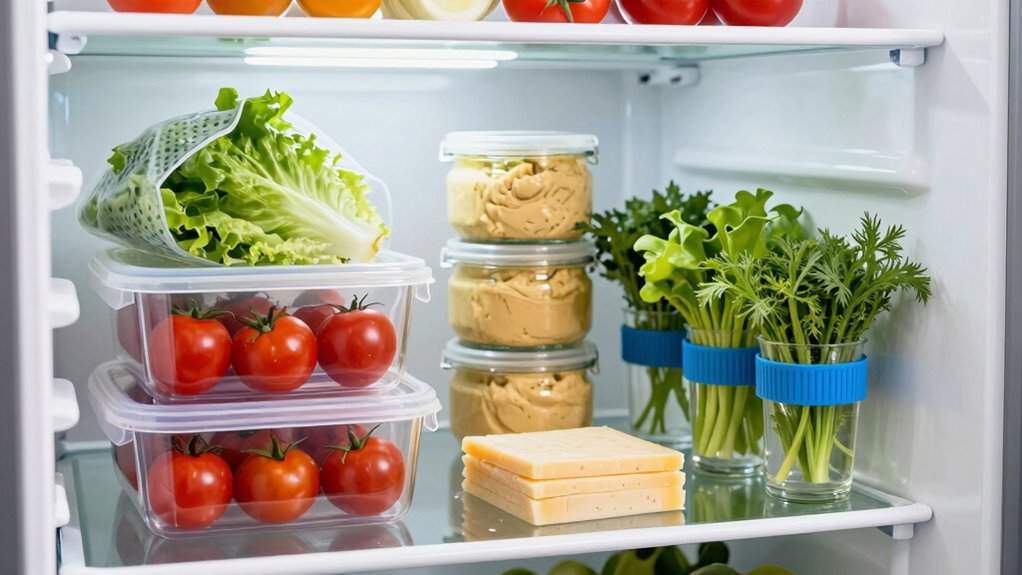
To maximize freshness preservation techniques, start by organizing your ingredients based on their specific needs. For instance, leafy greens and herbs are delicate and should be stored in airtight containers with a paper towel to absorb excess moisture. This helps prevent wilting and spoilage. Root vegetables like carrots and celery fare better when stored in a cool, dark place or in the crisper drawer of your fridge, ideally wrapped in a damp cloth or stored in perforated bags to maintain humidity. When you separate ingredients properly, you make sure each stays fresh longer, which directly boosts your meal prep efficiency by reducing the frequency of unnecessary grocery runs. Additionally, understanding the importance of temperature control can significantly extend the lifespan of your ingredients. Maintaining the correct temperature slows down spoilage and inhibits bacterial growth, which is crucial for keeping ingredients fresh.
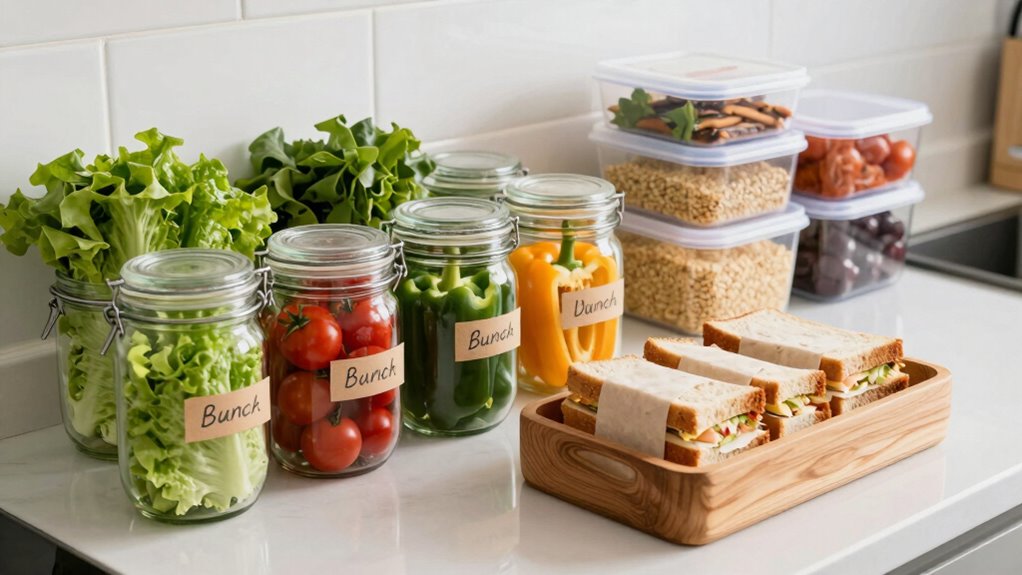
Using the right storage containers is equally essential. Invest in clear, airtight containers that seal tightly to keep out air and moisture, which are primary culprits in spoilage. Label your containers with dates so you always know what to use first, helping you plan your meals better and minimize waste. Properly sealed containers also prevent cross-contamination of flavors and odors, keeping your ingredients tasting fresh. When storing cooked or prepped ingredients, let them cool completely before sealing and refrigerating. This prevents condensation inside containers, which can promote bacterial growth and spoilage. Additionally, placing ingredients in properly ventilated containers can further help maintain their quality over time. Proper ventilation allows excess moisture to escape, further helping to preserve the ingredients’ freshness.
airtight food storage containers
As an affiliate, we earn on qualifying purchases.
As an affiliate, we earn on qualifying purchases.
Frequently Asked Questions
How Long Do Different Lunch Ingredients Stay Fresh?
You can usually keep lunch ingredients fresh for 3-4 days, but it varies. Leafy greens stay crisp 1-2 days, while cooked grains last about 4-5 days. Use meal prep tips like storing dairy separately to prevent sogginess. Labeling strategies help you track freshness and avoid waste. For longer storage, consider freezing items like cooked meats and beans. Properly sealing and organizing your ingredients guarantees they stay fresh longer.
What’s the Best Way to Prevent Cross-Contamination?
To prevent cross-contamination, follow food safety protocols by keeping raw meats separate from ready-to-eat foods. Use proper container selection—airtight, leak-proof containers—to prevent spills and mixing. Always store raw ingredients on the bottom shelf of your fridge to avoid drips contaminating other items. Wash hands thoroughly before handling food, and clean all surfaces and utensils after preparing different ingredients. These habits protect your food and guarantee safety.
Can Certain Ingredients Be Stored Together Safely?
Certain ingredients can be stored together safely if you consider food pairing and use proper storage containers. Keep incompatible items, like raw meats and ready-to-eat foods, separate to prevent cross-contamination. Use airtight storage containers to maintain freshness and avoid spills. Fruits and vegetables can often be stored together, but always check specific storage needs. Proper organization helps you quickly access ingredients and keeps your lunch ingredients fresh and safe.
How Do I Keep Produce Crisp Longer?
Think of your produce as a delicate dance partner—gentle handling keeps them crisp longer. Store fruits and veggies in reusable containers with proper ventilation, and keep your fridge at the right temperature—around 37-40°F. Avoid overcrowding, which can suffocate freshness. By controlling temperature and choosing the right containers, you’re giving your produce a luxurious spa treatment, ensuring they stay crisp and vibrant for days.
What Are Common Mistakes in Storing Lunch Ingredients?
You often make mistakes like not using proper containers or forgetting to rotate ingredients, which can lead to spoilage. To improve, follow meal prep tips by storing perishables in airtight containers and keeping a clear schedule for ingredient rotation. This helps prevent waste and keeps your lunch ingredients fresh longer. Be mindful of expiry dates, and organize your fridge so you use older items first, maintaining peak freshness and flavor.
Conclusion
By mastering these storage habits, you’ll transform your lunch prep into a well-oiled machine that never runs out of fresh ingredients. Keep your produce crisp, your leftovers vibrant, and your snacks ready to go with just a few simple tricks. When you store your lunch ingredients properly, you’re not just saving time—you’re creating a culinary fortress that keeps freshness alive like a superhero protecting its city. Now, go conquer your midday meals with confidence!
Halloween Picks
halloween
As an affiliate, we earn on qualifying purchases.