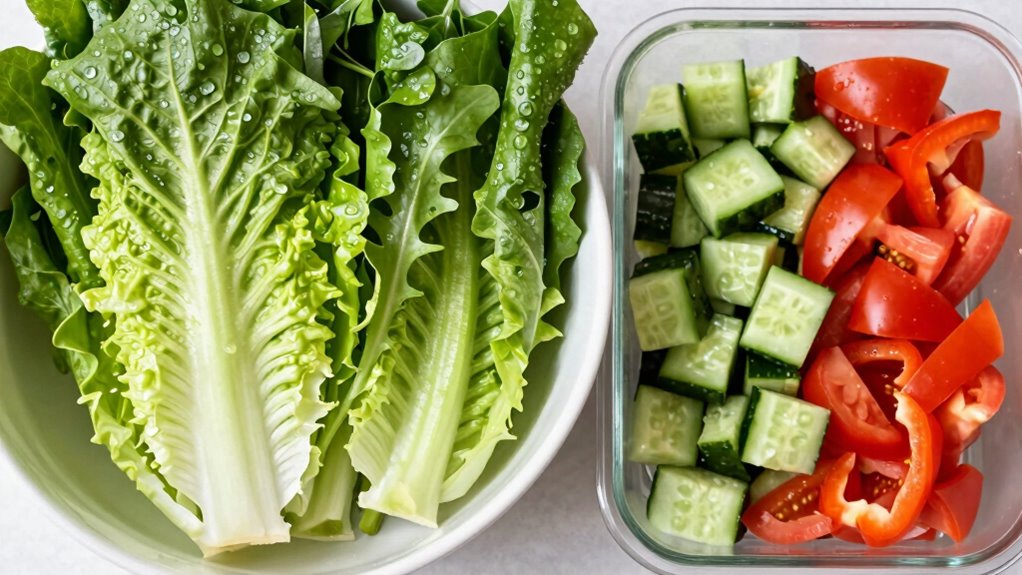

You need different approaches for leafy and chopped salads because their ingredients have distinct textures and needs. Leafy greens are delicate and benefit from light, smooth dressings that won’t wilt or obscure their texture, while chopped salads feature sturdier ingredients that cling better to thicker dressings. Proper layering and gentle tossing help avoid sogginess and preserve freshness in both types. If you want to master these techniques, keep exploring more tips to make every salad perfect.

Get kitchen staples and gadgets delivered free — and shop member deals
- Fast, free delivery on millions of items
- Access to Prime Big Deal Days deals on October 6–7
- Prime Video, Amazon Music and more included
Key Takeaways
- Leafy salads require light, smooth dressings to preserve delicate greens, while chopped salads benefit from thicker dressings for better adherence.
- Proper layering in chopped salads prevents sogginess, unlike leafy salads which need minimal layering for even dressing distribution.
- Gentle tossing in leafy salads maintains crispness, whereas staged dressing and layering in chopped salads protect softer ingredients.
- Different textures among greens and ingredients demand tailored dressing consistency and application methods.
- Ingredient interactions and flavor balance vary, requiring distinct techniques to optimize taste and presentation for each salad type.

Salads might seem straightforward, but when it comes to leafy versus chopped salades, they actually require different approaches to preparation and dressing. The key difference lies in how you manage dressing consistency and ingredient layering. Leafy salads, with their delicate greens like lettuce or spinach, benefit from a lighter touch. You want to avoid drowning the leaves in heavy dressing, which can wilt them and obscure their fresh texture. Instead, aim for a dressing that’s smooth but not overly thick, so it evenly coats the leaves without overpowering them. A good technique is to start with a small amount of dressing, then gently toss the greens to distribute it evenly. This method ensures that each leaf gets just enough flavor without becoming soggy or weighed down. Additionally, using appropriate utensils can help you control the dressing application more precisely. Employing the right tools can make a significant difference in achieving the desired dressing distribution. Moreover, understanding the texture differences between various greens can help you select the appropriate dressing consistency for optimal flavor and freshness. Recognizing how different greens respond to dressing can further refine your technique, ensuring each salad is perfectly balanced. Incorporating proper mixing techniques can also prevent greens from tearing or losing their crispness, enhancing the overall presentation.
In contrast, chopped salads involve a variety of ingredients—crisp vegetables, proteins, cheeses—that demand a different layering strategy. You can’t just pour dressing over everything and hope for even coverage. Instead, you should consider ingredient layering: placing sturdier ingredients like carrots or cucumbers at the bottom, then adding softer items like tomatoes or avocado on top. This way, the dressing can be applied more precisely, either drizzled in small amounts or tossed separately with each component. The goal is to maintain the integrity of each ingredient’s texture and flavor, preventing sogginess or flavor dilution. For chopped salads, a slightly thicker or more viscous dressing often works better because it clings to the various textures and ingredients without pooling excessively. Proper salad layering techniques help keep ingredients fresh and prevent them from becoming mushy or overly mixed. To further enhance flavor, some cooks prefer to dress chopped salads in stages, allowing each layer to absorb just enough dressing for a balanced taste. This staged approach also ensures that the flavors meld well without overpowering delicate ingredients. When preparing chopped salads, considering ingredient compatibility can make a notable difference in the overall taste experience. Additionally, understanding how different ingredients interact can help prevent unintended flavor clashes, making the salad more harmonious.
As an affiliate, we earn on qualifying purchases.
Frequently Asked Questions
How Do Different Dressings Affect Leafy Versus Chopped Salads?
Different dressings influence leafy and chopped salads uniquely because dressing compatibility varies with texture. Leafy salads benefit from lighter dressings that enhance flavor without overpowering delicate greens, while chopped salads handle thicker, more robust dressings that coat all ingredients evenly. You’ll find that choosing the right dressing boosts flavor enhancement and guarantees each bite is balanced, making your salads more enjoyable and well-integrated.
What Tools Are Best for Preparing Leafy Salads?
You should use a gentle salad spinner or large, airy bowls with a salad spinner to prepare leafy salads. These tools help remove excess water, ensuring your salad dressing sticks well without becoming soggy. When storing, keep leafy greens in airtight containers with paper towels to absorb moisture, maintaining freshness. Proper tools and storage methods help your leafy salads stay crisp and flavorful, making every bite enjoyable.
How Does Salad Storage Differ for Leafy and Chopped Varieties?
You should store leafy salads in airtight storage containers to maintain their salad freshness and prevent wilting, as they’re more delicate. Chopped salads, however, benefit from being kept in larger, resealable containers that allow easy mixing and keep ingredients fresh longer. Proper storage guarantees both types stay crisp and flavorful, but leafy greens need quicker consumption, while chopped salads can be prepared in advance for convenience.
Are There Specific Nutritional Considerations for Each Salad Type?
You should consider nutritional density and ingredient diversity when choosing salads. Leafy salads often have higher nutritional density, offering vitamins and fiber from greens like spinach and kale. Chopped salads tend to feature a broader ingredient diversity, including vegetables, proteins, and grains, which can boost overall nutrients and flavor. Tailoring your salad choice based on these factors guarantees you get a balanced, nutrient-rich meal that suits your dietary needs.
How Does Salad Presentation Vary Between Leafy and Chopped Salads?
Like a knight preparing for battle, you should consider garnishing techniques and serving temperature when presenting salads. Leafy salads often feature whole or torn leaves, giving them a fresh, vibrant look that’s best served chilled. Chopped salads, however, benefit from uniform pieces, making them easier to toss and serve at a moderate temperature. Proper presentation highlights each salad’s unique texture and flavor, enticing your guests with visual appeal and ideal taste.
Conclusion
So, next time you toss together a leafy salad, remember it’s not just about greens—it’s about understanding their delicate nature. Chopped salads, on the other hand, demand a different approach, even if it seems obvious. Ironically, what seems simple actually requires more thought. So, go ahead, embrace the complexity, and enjoy your salads, knowing that even the smallest detail can turn a good salad into a great one. Who knew salads could be so sophisticated?
NFL season / tailgating Picks
team gear
As an affiliate, we earn on qualifying purchases.