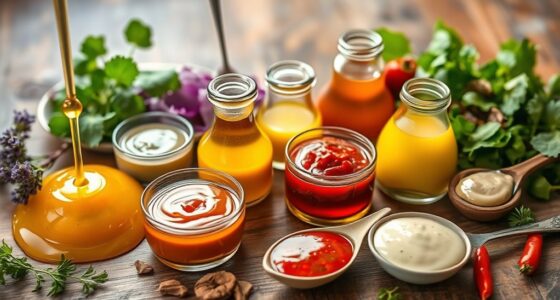
To use nuts and seeds cleverly in salads, focus on proper preparation—toast them lightly to boost flavor and nutrients, and add them just before serving for crunch. Chop larger nuts to distribute evenly and use a variety for exciting textures. Balance their flavors with greens and dressings, ensuring each bite offers a satisfying contrast. For more tips on maximizing their benefits and perfect pairings, keep exploring ways to elevate your salad game.

Get kitchen staples and gadgets delivered free with Prime
- Fast, free delivery on millions of items
- Prime Video, Amazon Music and more included
- Member-only deals all year
Key Takeaways
- Toast nuts and seeds to enhance flavor, texture, and nutrient bioavailability before adding to salads.
- Chop larger nuts for even distribution and easier eating.
- Use a variety of nuts and seeds to create contrasting textures and flavors.
- Incorporate nuts and seeds at the last moment to preserve crunch and freshness.
- Balance nut-to-salad ratios for optimal flavor and nutritional benefits.
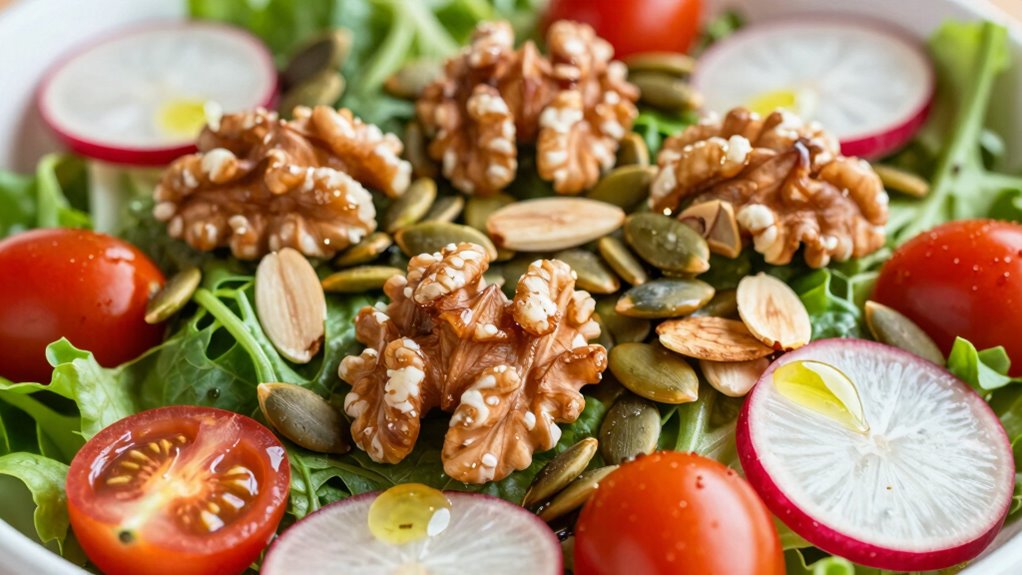
Adding nuts and seeds to salads not only enhances their flavor but also boosts their nutritional value. When you think about incorporating these ingredients, it’s vital to consider flavor pairing. Different nuts and seeds bring unique tastes and textures, so choosing the right combination can elevate your salad from ordinary to extraordinary. For example, crunchy walnuts complement leafy greens nicely, while toasted sesame seeds add a subtle nuttiness that pairs well with Asian-inspired dressings. Almonds provide a mild sweetness that balances bitter greens like arugula or radicchio. By understanding how flavors interact, you can craft salads that are both satisfying and harmonious.
Beyond flavor, nuts and seeds are powerhouses of nutritional benefits. They are rich in healthy fats, protein, fiber, and essential micronutrients like magnesium, vitamin E, and zinc. Adding a handful of walnuts or sunflower seeds can help you feel fuller longer, making your salad more filling and nutritious. These ingredients also provide antioxidants that support your overall health and can help reduce inflammation. When you include a variety of nuts and seeds, you diversify your nutrient intake, which is vital for a balanced diet. Additionally, understanding how to prepare these ingredients properly can maximize their health benefits. Proper preparation ensures you get the most nutritional value from your nuts and seeds. Incorporating nut-to-salad ratios thoughtfully can help maintain balance and ensure a delightful eating experience. Furthermore, selecting fresh and quality nuts and seeds can significantly impact both flavor and nutritional content, so sourcing from reputable suppliers is recommended.
To maximize these benefits, reflect on how you prepare your nuts and seeds. Toasting them lightly enhances their flavor and makes the nutrients more bioavailable. You can do this in a dry skillet or oven, just until they’re fragrant. Adding them at the last minute preserves their crunch and prevents them from becoming soggy. This way, every bite offers a satisfying texture contrasted with fresh vegetables or greens. Also, chopping larger nuts like almonds or pecans into smaller pieces ensures even distribution and easier eating, especially if you’re serving the salad to a group. A variety of choices based on the salad type can also help keep the dish interesting and flavorful.
As an affiliate, we earn on qualifying purchases.
Frequently Asked Questions
How Do Nuts and Seeds Affect Salad Calorie Content?
Nuts and seeds add calories to your salad, but they also boost nutrient absorption and satiety enhancement. Their healthy fats help your body absorb fat-soluble vitamins, making your meal more nutritious. Plus, the protein and fiber help you feel full longer, reducing overall calorie intake later. Just keep portions moderate to enjoy these benefits without markedly increasing your salad’s calorie content.
Can Nuts and Seeds Be Pre-Soaked or Roasted for Better Flavor?
Yes, you can pre-soak or roast nuts and seeds for better flavor and texture. Soaking helps reduce bitterness and enhances flavor, while roasting adds a delightful crunch and smoky notes. Both methods boost flavor enhancement and can improve nutritional benefits by making nutrients more accessible. Just be sure to avoid over-roasting, which can diminish their health benefits, and enjoy the enriched taste and added crunch in your salads.
Are There Specific Nuts or Seeds Best for Different Types of Salads?
You should choose nuts and seeds based on your salad’s flavor combinations and nutritional benefits. For leafy greens, almonds add crunch and vitamin E, while walnuts enhance earthy flavors and omega-3s. Seeds like sunflower or pumpkin seeds boost texture and provide minerals. Mixing different nuts and seeds offers diverse flavors and maximizes nutritional benefits, making your salad both tasty and healthful. Select according to your taste and dietary goals for best results.
How Do I Store Leftover Nuts and Seeds to Maintain Freshness?
To keep your leftover nuts and seeds fresh, store them in an airtight container in a cool, dark place. Proper storage tips include keeping them away from moisture and heat, which can shorten their shelf life. For longer freshness, consider refrigerating or freezing them, especially if you won’t use them soon. Always check for signs of spoilage before use, and reseal tightly after each use to maintain their crunch and flavor.
Are There Any Allergy Concerns With Common Salad Nuts and Seeds?
Nut allergy awareness is essential when adding nuts and seeds to salads, as these can trigger severe allergic reactions. You should always check labels for cross-contamination risks and avoid nuts if you or your guests have known allergies. To stay safe, consider offering allergy-friendly alternatives like roasted chickpeas or seeds, and inform everyone about the ingredients used. Being cautious helps prevent accidental allergic responses and guarantees a safe, enjoyable salad experience.
Conclusion
By incorporating nuts and seeds into your salads, you’re not just adding crunch—you’re boosting flavor, texture, and nutrition. Think of them as the secret ingredient that elevates a simple dish to something special. Don’t be afraid to experiment and find your perfect combo. Remember, variety is the spice of life, so mix it up and keep your salads interesting. Once you master this, you’ll see how nuts and seeds can truly be the cherry on top.
Halloween Picks
halloween
As an affiliate, we earn on qualifying purchases.