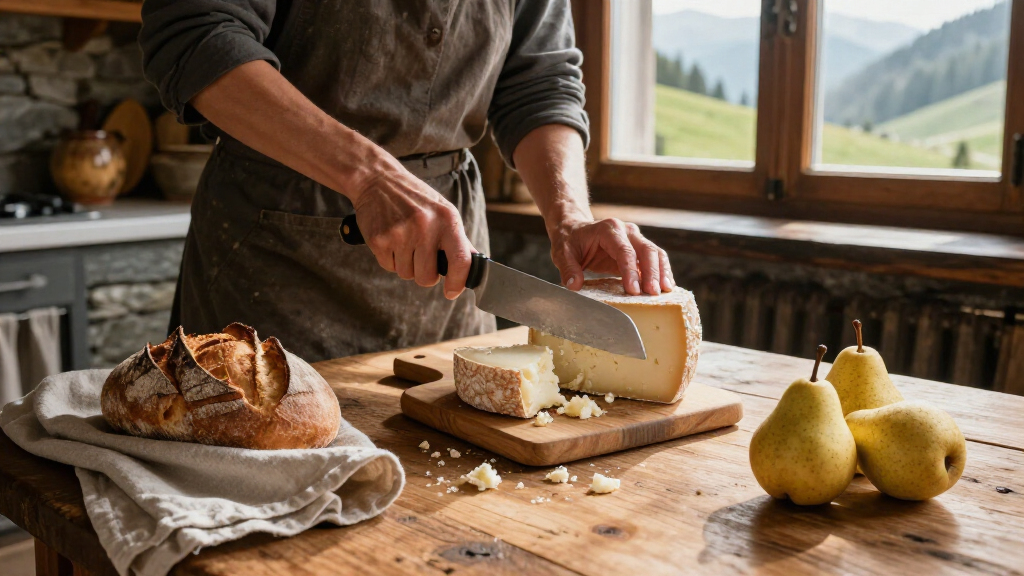
The best mountain cheeses depend on whether you want a reliable melter, a cheese-board centerpiece, or a firm cheese for cooking. I rank Cave-Aged Swiss Gruyere as the best overall for its broad cooking and serving range, while Comté AOC stands out for layered flavor and Alpinage Mount Raclette for raclette-style meals. The main tradeoffs are intensity, texture, and how much of a specialty cheese you can use before its character becomes limiting. Formats also matter: a small wedge is easier to finish, while a larger wheel suits sharing. Read on for the full comparison and guidance on choosing the right cheese for your table.

Get kitchen staples and gadgets delivered free — and shop member deals
- Fast, free delivery on millions of items
- Access to Prime Big Deal Days deals on October 6–7
- Prime Video, Amazon Music and more included
Key Takeaways
- Gruyere is the most adaptable pick: its place at the top reflects its usefulness for both cooking and serving, while more specialized options suit narrower occasions.
- Comté is the flavor-led alternative: it offers a distinctive French mountain-cheese profile, but buyers seeking a simple melting cheese may prefer Raclette.
- Raclette is built around a meal: its wedge format and melting role make it a practical choice for shared dinners, though it is less versatile as an all-purpose cheese.
- Format changes the buying decision: the 6 oz Baby Swiss and small Emmentaler cut are easier to portion, while the larger wheels and pieces call for a plan to serve or store them.
- The lineup spans more than cow’s milk: P’tit Basque brings sheep’s milk character, while Vacche Rosse Parmigiano Reggiano offers a firm, aged option for grating and small servings.
| Alpinage Mount Raclette Cheese, 2-Pack, 8 oz Wedges |  | Best for Melting | Brand: Alpinage | Quantity: 2 wedges | Weight: 8 oz per wedge | VIEW LATEST PRICE | See Our Full Breakdown |
| Swiss Emmentaler Cheese, 1-Pound Cut |  | Best for Mild, Everyday Serving | Weight: 1 pound | Origin: Emme Valley, Switzerland | Certification: AOP | VIEW LATEST PRICE | See Our Full Breakdown |
| Comté AOC Fort St. Antoine French Cheese, 1 lb (454 g) |  | Best for Aged Complexity | Origin: Jura region, France | Milk: Unpasteurized cow’s milk | Texture: Semi-firm, supple, and buttery | VIEW LATEST PRICE | See Our Full Breakdown |
| P’tit Basque French Sheep’s Milk Cheese, 1.2–1.4 lb Wheel |  | Best for Approachable Sheep’s Milk Flavor | Product type: Semi-soft sheep’s milk cheese | Origin: French Basque region | Milk: Pasteurized sheep’s milk | VIEW LATEST PRICE | See Our Full Breakdown |
| Tête de Moine Swiss Cheese (Approximately 1.8 lb) |  | Best for a Distinctive Cheese-Board Centerpiece | Weight: Approximately 1.8 lb per wheel | Origin: Switzerland | Milk type: Cow’s milk | VIEW LATEST PRICE | See Our Full Breakdown |
| Organic Parmigiano Reggiano Vacche Rosse, Aged 24 Months, 2.2 lb Piece |  | Best for Distinctive Italian Character | Cheese: Parmigiano Reggiano DOP | Milk: Organic milk from Reggiane Red Cows | Aging: 24 months | VIEW LATEST PRICE | See Our Full Breakdown |
| Cave-Aged Swiss Gruyere Cheese, 1 lb |  | Best for Cooking and Fondue | Cheese type: Swiss Gruyere | Origin: Switzerland | Aging: Over 12 months | VIEW LATEST PRICE | See Our Full Breakdown |
| Farmers Market Alpine Baby Swiss Cheese, 6 oz |  | Best for Mild Everyday Snacking | Cheese style: Alpine-style Baby Swiss | Origin: Wisconsin | Package size: 6 oz block | VIEW LATEST PRICE | See Our Full Breakdown |
| mountain cheese | Origin | Weight | Texture | Aging |
|---|---|---|---|---|
| Alpinage Mount Raclette Cheese | Wisconsin | 8 oz per wedge | Semi-hard | At least 60 days |
| Swiss Emmentaler Cheese | Emme Valley, Switzerland | 1 pound | Smooth | — |
| Comté AOC Fort St. Antoine Fre | Jura region, France | 1 lb (454 g) | Semi-firm, supple, and buttery | 14 months |
| P’tit Basque French Sheep’s Mi | French Basque region | 1.2–1.4 lb (0.54–0.64 kg) | Supple and slightly firm | At least 70 days |
| Tête de Moine Swiss Cheese | Switzerland | Approximately 1.8 lb per wheel | Semi-hard, firm, and creamy | — |
| Organic Parmigiano Reggiano Va | Reggio Emilia, Italy | 2.2 lb | — | 24 months |
| Cave-Aged Swiss Gruyere Cheese | Switzerland | 1 lb (16 oz) | Firm | Over 12 months |
| Farmers Market Alpine Baby Swi | Wisconsin | — | Smooth and creamy | — |
More Details on Our Top Picks
Alpinage Mount Raclette Cheese, 2-Pack, 8 oz Wedges
Alpinage Mount Raclette is my pick for mountain-cheese dishes where a creamy melt matters as much as flavor. Its raw Wisconsin cow’s milk, washed rind, and minimum 60-day aging give it buttery richness with nutty, earthy, fruity, and funky notes. The two wedges let you portion some for melting and keep the rest for a board. Compared with Swiss Emmentaler, which is milder and better suited to a broad range of palates, this raclette brings a more assertive aroma and savorier character when heated. That intensity is its tradeoff: diners who prefer delicate cheese may find it overpowering, and it needs refrigeration on arrival. Choose it when potatoes, fondue, or a bold cheese board are the plan; skip it if you want a mild, low-aroma staple.
Pros:- Creamy, buttery texture suits melting over potatoes
- Layered nutty, earthy, fruity, and funky flavors add character to a board
- Raw Wisconsin farmstead milk gives it a distinct regional identity
- Two separate wedges make it easier to portion
Cons:- Pungent aroma and stronger heated flavor may overwhelm some palates
- Must be refrigerated upon arrival
Best for: Raclette and fondue cooks who want a creamy, savory melt with a pronounced mountain-cheese character
Not ideal for: Shoppers seeking a mild cheese for aroma-sensitive diners or a product that can be stored unrefrigerated
- Brand:Alpinage
- Quantity:2 wedges
- Weight:8 oz per wedge
- Milk:Raw cow’s milk
- Origin:Wisconsin
- Aging:At least 60 days
- Texture:Semi-hard
- Rind:Washed rind
- Storage:Refrigerate upon arrival
Our verdict“Choose this raclette for creamy melting and assertive flavor; pick Swiss Emmentaler for a milder, more crowd-friendly option.”
Swiss Emmentaler Cheese, 1-Pound Cut
Swiss Emmentaler earns a place for buyers who want a recognizable mountain cheese with a gentle, nutty profile. Its Emme Valley AOP origin gives it a clear regional identity, while the smooth texture and signature holes make it easy to slice for sandwiches, snacks, or a cheese board. The one-pound cut is vacuum sealed and cut fresh to order, a practical format for keeping and serving a larger piece. Compared with the more intensely flavored Alpinage Mount Raclette, Emmentaler is the safer choice for mixed company, though it gives up raclette’s bold, buttery punch. Its mildness can also feel understated to shoppers seeking the caramelized depth of Comté AOC Fort St. Antoine. Pick it for versatility and restraint; pass if you want a forceful, aged flavor.
Pros:- Authentic Emme Valley Emmentaler with AOP certification
- Mild, naturally nutty flavor suits a broad range of palates
- Smooth texture and characteristic holes are easy to slice and serve
- Cut fresh to order and vacuum sealed
Cons:- Milder flavor has less depth than the aged Comté
- A one-pound cut may be more cheese than occasional snackers need
Best for: Households and hosts who want an authentic Swiss cheese with a mild flavor for slicing, snacking, and boards
Not ideal for: Cheese enthusiasts seeking strong funk, pronounced aged complexity, or a cheese specifically chosen for raclette-style melting
- Weight:1 pound
- Origin:Emme Valley, Switzerland
- Certification:AOP
- Packaging:Vacuum sealed
- Texture:Smooth
- Flavor:Mild and naturally nutty
- Appearance:Signature holes
Our verdict“Choose Emmentaler for a mild, versatile Swiss staple; opt for Comté when you want more layered aged flavor.”
Comté AOC Fort St. Antoine French Cheese, 1 lb (454 g)
Comté AOC Fort St. Antoine is my choice for a board centered on layered, developed flavor. Its 14 months of cave aging in the Jura produce a supple, buttery paste with nutty and caramelized notes alongside fruit and floral hints. Sweetness and saltiness keep that complexity balanced, giving it more dimension than the mild Swiss Emmentaler. Compared with Alpinage Mount Raclette, Comté leans toward tasting and pairing rather than a pungent, buttery melt. That character makes it rewarding for curious cheese eaters, but its unpasteurized milk and strong flavor may not suit every buyer or guest. The one-pound piece also suits a planned board better than a small, occasional snack. Choose it when you want a substantial Jura cheese with cave-aged depth.
Pros:- Fourteen months of cave aging build nutty and caramelized depth
- Buttery, supple texture is easy to portion for a board
- Fruit and floral notes add complexity beyond Swiss Emmentaler’s milder profile
- Pairs well with Chardonnay
Cons:- Unpasteurized milk may not suit every buyer
- Complex, assertive flavor can be too strong for mild-cheese fans
Best for: Cheese-board hosts and adventurous eaters who enjoy layered, cave-aged flavor and wine pairings
Not ideal for: Shoppers who need pasteurized cheese, prefer mild flavors, or want a small portion for occasional snacking
- Origin:Jura region, France
- Milk:Unpasteurized cow’s milk
- Texture:Semi-firm, supple, and buttery
- Aging:14 months
- Aging location:Cool, humid cave at Fort St. Antoine
- Weight:1 lb (454 g)
- Flavor notes:Nutty, caramelized, fruity, floral, sweet, and salty
Our verdict“Choose this Comté when cave-aged complexity is the priority and unpasteurized cheese suits your needs.”
P’tit Basque French Sheep’s Milk Cheese, 1.2–1.4 lb Wheel
P’tit Basque brings a different mountain-region character to this lineup: supple sheep’s milk cheese with mild sweetness and nutty, earthy notes. Its pasteurized milk and at least 70 days of aging make it a more approachable entry point than the unpasteurized, 14-month Comté, while the natural basket-weave rind gives the wheel a distinctive look for a board. It pairs readily with fruit, charcuterie, bread, and wine, and can also go into cooked dishes. Compared with Swiss Emmentaler, it offers a sweeter, earthier profile and a larger wheel, but sheep’s milk is a specific preference rather than a universal substitute. The 1.2–1.4-pound size may be more than a small household wants. Choose it for versatile serving and a gentle Basque profile.
Pros:- Mildly sweet, nutty flavor is approachable for a sheep’s milk cheese
- Pasteurized milk suits buyers who avoid unpasteurized Comté
- Works on boards, with snacks, and in cooked dishes
- Natural basket-weave rind gives the wheel a distinctive presentation
Cons:- Sheep’s milk may not suit all dietary needs or preferences
- The wheel’s size may be excessive for occasional cheese eaters
Best for: Hosts and sheep’s milk newcomers who want a mild, pasteurized cheese for boards, snacks, and cooking
Not ideal for: Buyers who avoid sheep’s milk or small households unlikely to use a 1.2–1.4-pound wheel
- Product type:Semi-soft sheep’s milk cheese
- Origin:French Basque region
- Milk:Pasteurized sheep’s milk
- Aging:At least 70 days
- Weight:1.2–1.4 lb (0.54–0.64 kg)
- Texture:Supple and slightly firm
- Flavor:Earthy, nutty, mildly sweet, and subtly savory
- Rind:Natural basket-weave pattern
Our verdict“Choose P’tit Basque for a versatile, gentle sheep’s milk option; pick Emmentaler if you prefer cow’s milk and a classic Swiss profile.”
Tête de Moine Swiss Cheese (Approximately 1.8 lb)
Tête de Moine is the most presentation-focused pick here: its firm, creamy Swiss cheese is traditionally shaved with a girolle into frilly curls. That serving method turns its sweet, tangy flavor and nutty, musty aroma into a centerpiece, setting it apart from the slice-friendly Swiss Emmentaler and the melting-first Alpinage Mount Raclette. The tradeoff is a strong smell, plus the need to remove the soft outer rind, which is not meant to be eaten. Its approximately 1.8-pound wheel is also a commitment, especially if you do not have a girolle for the traditional curls. Choose it when serving style matters and the aroma suits your table; for straightforward slicing, Emmentaler is simpler.
Pros:- Sweet, tangy flavor with nutty, musty aromas stands apart from mild Emmentaler
- Traditional girolle shaving creates distinctive frilly curls
- Imported Swiss cow’s milk cheese offers a memorable board presentation
Cons:- Strong smell may be unwelcome to aroma-sensitive diners
- Soft outer rind is not meant to be eaten and must be removed
- Traditional curls require a girolle
Best for: Hosts who want a Swiss cheese centerpiece and have a girolle for making traditional curls
Not ideal for: Buyers who dislike strong cheese aromas, want a ready-to-slice option, or do not want to trim the rind
- Weight:Approximately 1.8 lb per wheel
- Origin:Switzerland
- Milk type:Cow’s milk
- Texture:Semi-hard, firm, and creamy
- Flavor:Sweet and tangy
- Aroma:Nutty and musty; strong smell
- Rind:Soft outer rind, not meant to be eaten
- Serving method:Shave into curls with a girolle
Our verdict“Choose Tête de Moine for a distinctive Swiss cheese-board centerpiece if you enjoy its aroma and can shave it with a girolle.”
Organic Parmigiano Reggiano Vacche Rosse, Aged 24 Months, 2.2 lb Piece
For buyers who want a mountain cheese with a clearly stated milk source and a long, gentle finish, this 24-month Parmigiano Reggiano is the most distinctive choice here. Organic milk from Reggiane Red Cows gives it a more specific identity than the Swiss Gruyere, whose appeal centers on cave aging and versatility. Its described sweet, delicate flavor suits eating in pieces with honey, jam, or balsamic vinegar, while the substantial 2.2-pound cut leaves plenty to grate or share. The tradeoff is that Red Cows produce less milk, which can make this variety more expensive than alternatives. Choose it for provenance and a refined cheese-board pairing; skip it if you mainly need an everyday melting cheese like the Gruyere.
Pros:- Made with organic milk from Reggiane Red Cows
- Aged 24 months for a developed flavor
- Sweet, delicate flavor is suited to honey, jam, and balsamic pairings
- Large 2.2-pound piece works for sharing, serving, and grating
Cons:- Red Cows produce less milk, which can make this cheese more expensive than other varieties
- Its delicate flavor may be less suited to buyers seeking the stronger, nutty profile described for cave-aged Gruyere
Best for: Cheese-board hosts and Italian cheese enthusiasts seeking organic Red Cow milk, a large cut, and sweet pairings
Not ideal for: Budget-minded cooks looking for an everyday cheese mainly for melting or sandwiches
- Cheese:Parmigiano Reggiano DOP
- Milk:Organic milk from Reggiane Red Cows
- Aging:24 months
- Weight:2.2 lb
- Ingredients:Organic Reggiane Red Cow milk, Cervia salt, rennet
- Origin:Reggio Emilia, Italy
Our verdict“Pick this Parmigiano if organic Red Cow milk and sweet, refined pairings matter more to you than an everyday melting cheese.”
Cave-Aged Swiss Gruyere Cheese, 1 lb
This is the lineup’s most practical pick for cooks who want one Alpine cheese to serve at the board and use at the stove. The firm texture can be sliced or grated, and its melting ability makes it suited to fondue, gratins, and sandwiches. More than 12 months of cave aging gives the Gruyere a nutty aroma and subtle sweetness, a more savory direction than the sweet, delicate profile described for the Organic Parmigiano Reggiano Vacche Rosse. Its one-pound cut is easier to portion for a household than that 2.2-pound piece, though it offers less volume for a crowd. The tradeoffs are the need for refrigeration and temperature-sensitive shipping materials. Pick it for kitchen range; skip it if you want a small, mild snack cheese like Baby Swiss.
Pros:- Can be sliced, grated, or melted for a range of dishes
- Cave-aged for over 12 months
- Nutty aroma and subtle sweetness suit both cooking and cheese boards
- One-pound cut offers a useful amount for household cooking
Cons:- Requires refrigeration
- Shipping packaging may include gel packs and a dry ice box
- Less suitable than the mild Baby Swiss for buyers who prefer a very gentle flavor
Best for: Home cooks who want a Swiss Alpine cheese for fondue, gratins, sandwiches, and occasional cheese-board servings
Not ideal for: Shoppers seeking a mild, small-format cheese for simple snacks or a cheese that can be stored unrefrigerated
- Cheese type:Swiss Gruyere
- Origin:Switzerland
- Aging:Over 12 months
- Weight:1 lb (16 oz)
- Texture:Firm
- Storage:Keep refrigerated
Our verdict“Choose this Gruyere if you want a versatile Alpine cheese that can move from fondue to a cheese board.”
Farmers Market Alpine Baby Swiss Cheese, 6 oz
Baby Swiss takes the gentlest route through this mountain-cheese lineup. Its smooth, creamy texture and mild, buttery flavor make it an approachable option for sandwiches, snacks, or a modest cheese board, especially for households that find cave-aged Gruyere too assertive. The Wisconsin-made Alpine-style block is only six ounces, so it is easy to portion and store, but it will run short for larger gatherings or frequent cooking. Unlike the Gruyere, which is specifically described as a fondue and gratin cheese, this product is framed around everyday slicing and melting rather than extended aging or a pronounced nutty aroma. The individual wrapping helps with freshness between uses. Choose it for a mild, convenient staple; skip it if you want a substantial piece for entertaining or a more characterful aged cheese.
Pros:- Mild, buttery flavor is approachable for everyday eating
- Smooth, creamy texture suits slicing and melting
- Individually wrapped block supports storage between uses
- Wisconsin-made Alpine style offers a local take on Swiss-inspired cheese
Cons:- Six-ounce package may be too small for gatherings or frequent cooking
- Mild flavor may feel less distinctive than the aged Gruyere or Parmigiano
- Product data does not specify an aging period
Best for: Households seeking a mild, individually wrapped cheese for sandwiches, snacks, and small cheese boards
Not ideal for: Hosts serving a group or cheese enthusiasts seeking a pronounced aged flavor and a larger cut
- Cheese style:Alpine-style Baby Swiss
- Origin:Wisconsin
- Package size:6 oz block
- Texture:Smooth and creamy
- Flavor:Mild and buttery
- Protein:6 g per serving
- Sugar:0 g
- Dietary notes:Gluten-free and keto-friendly
- Storage:Individually wrapped
Our verdict“Choose Baby Swiss for mild everyday sandwiches and snacks, but look to Gruyere for cooking that calls for a stronger Alpine flavor.”
How We Picked
I compared the eight cheeses by how well each fits the mountain-cheese promise: a clear connection to Alpine or nearby European cheesemaking traditions, a distinct flavor or texture, and practical uses at home. I weighed versatility, format, milk type, aging cues, and whether a cheese is better suited to melting, cooking, grazing, or a focused tasting. The descriptions here rely on the product details provided; they do not imply firsthand tasting or testing.
Gruyere ranks first because it offers the broadest mix of serving and cooking uses. Comté follows for buyers who want a more distinctive French option, while Raclette earns a dedicated role for melting. The remaining cheeses rank by their more specific strengths: sharing, sheep’s milk character, grating, or easy portioning. Product size and stated attributes inform the comparison, but no price, provenance beyond the product names, or unlisted production claim determines a place.
| mountain cheese | Milk | Origin | Flavor |
|---|---|---|---|
| Alpinage Mount Raclette Cheese | Raw cow’s milk | Wisconsin | — |
| Swiss Emmentaler Cheese | — | Emme Valley, Switzerland | Mild and naturally nutty |
| Comté AOC Fort St. Antoine Fre | Unpasteurized cow’s milk | Jura region, France | — |
| P’tit Basque French Sheep’s Mi | Pasteurized sheep’s milk | French Basque region | Earthy, nutty, mildly sweet, and subtly savory |
| Tête de Moine Swiss Cheese | — | Switzerland | Sweet and tangy |
| Organic Parmigiano Reggiano Va | Organic milk from Reggiane Red Cows | Reggio Emilia, Italy | — |
| Cave-Aged Swiss Gruyere Cheese | — | Switzerland | — |
| Farmers Market Alpine Baby Swi | — | Wisconsin | Mild and buttery |
Factors to Consider When Choosing Best Mountain Cheeses
Before choosing, decide how the cheese will fit into a meal and how quickly you expect to use it. Mountain-style cheeses can range from mild and sliceable to firm and assertive, so matching format and intensity to your plans usually matters more than choosing the most specialized name.
Choose the job before the cheese
Start with the main use: melting, cooking, snacking, or serving on a board. A cheese chosen for a hot dish needs to behave well when heated, while a board cheese should offer enough character to eat in small pieces. Buyers often assume one cheese can cover every role, then find a specialty pick less useful between planned meals. If you want one purchase to do several jobs, favor versatility over a narrowly defined serving tradition. If the meal itself is the point, a focused option such as raclette can make more sense.
Match intensity to the people eating
Flavor intensity affects whether a cheese works as a snack, an ingredient, or a centerpiece. A sharper, more aged profile can bring depth to a dish, but may dominate mild ingredients or be less inviting to someone new to mountain cheeses. For mixed groups, pair a familiar, mild cheese with a more distinctive one rather than asking one selection to satisfy everyone. Think about how the cheese will be portioned: small shavings or thin slices make assertive flavors easier to approach. The product name alone may not tell you exactly how strong a particular cut tastes, so check any available tasting notes before ordering.
Buy a format you can finish
A large wheel or multi-pound piece is most practical when several people will share it or you have recurring uses for it. Smaller cuts reduce leftovers and make it easier to try a new style without committing to a large quantity. Do not compare package weights without considering how the cheese will be served; a firm grating cheese can last across multiple recipes, while a soft meal-specific purchase may have a narrower window of use. Once opened, wrap and refrigerate cheese according to its packaging or the seller’s storage advice. If you are unsure about your household’s pace, a smaller format is the safer first choice.
Read milk type and style as signals
Milk type can help you choose variety, but it does not guarantee a particular flavor or texture. Sheep’s milk cheese such as P’tit Basque offers a different point of comparison from the lineup’s cow’s milk options, making it useful when you want contrast on a board. Firm, aged cheeses are often easier to grate or serve in small pieces than a cheese selected for melting. Look for the actual product details and intended use instead of treating labels like “Alpine” or “Swiss” as a complete tasting guide. When buying for guests, ask about dietary needs and check the package rather than inferring ingredients from a regional style.
Pay more for a clear use, not just a label
A specialty name or a longer aging claim matters most when it gives you a result you actively want, such as a firmer texture, more concentrated flavor, or a particular role in a meal. For everyday cooking, a dependable, versatile cheese may be a better fit than a distinctive piece that you only enjoy in one setting. A premium selection makes more sense when you plan a tasting, gift, or shared meal where its character can stand out. Compare the format and stated production details alongside the name, since the label alone cannot tell you how convenient it will be at home. Choose the option whose defining trait has a place in your menu.
Frequently Asked Questions
Which mountain cheese should I buy if I want one option for cooking and a cheese board?
Cave-Aged Swiss Gruyere is the strongest all-around starting point in this lineup because the comparison gives it both cooking and serving roles. Comté is a good alternative if you want the board cheese to bring a more distinctive French character. Raclette makes more sense when melting is the main plan. If you cook only occasionally, pick a package size you can use before buying a large piece. The best single choice is the one that matches your most common use, not every possible use.
Is Raclette a good choice if I do not own a raclette grill?
Yes, it can still suit you if you plan to melt it using another suitable method, such as under a broiler or in a dish. Its role here is specifically tied to melting and shared meals, so it may be less useful if you mainly want a cheese for sandwiches or general snacking. Check the product instructions and your appliance’s guidance before heating it. If you want a cheese with broader uses, Gruyere is the more flexible pick in this group. Choose Raclette when the meal plan justifies a more specialized purchase.
How should I choose between Comté and Gruyere?
Choose Gruyere if you want the lineup’s most versatile option for both the table and the kitchen. Comté is the better fit when you want a French mountain cheese with a more individual identity on a tasting board. The difference is less about one being universally superior and more about whether flexibility or distinction matters more for your meal. If you are serving both, use them in different roles so their contrasts are clear. Check seller notes for the specific cut, since flavor can vary across cheeses and batches.
Which option is easiest for a first-time mountain-cheese buyer?
The 6 oz Farmers Market Alpine Baby Swiss is a manageable entry point if you prefer a small format and a familiar Swiss-style direction. Emmentaler is another approachable option when you want a modest cut for slicing or sharing. A smaller package lets you learn what textures and flavors you like without being left with a large remainder. For a first purchase meant to support several kinds of cooking, Gruyere offers more range. Read the product’s tasting and storage notes, since “Baby Swiss” does not by itself specify exactly how mild a particular cheese will be.
When does a large cheese piece make more sense than a small cut?
A larger piece is practical when you are feeding a group, preparing several dishes, or buying a firm cheese that you will grate in small amounts over time. The Vacche Rosse Parmigiano Reggiano piece is positioned for a specific grating and aged-cheese role, so its size is easier to justify if those uses are already part of your routine. For a new style or a one-off meal, a smaller cut limits waste and storage effort. Consider how often you will open it and whether you have suitable wrapping and refrigerator space. Package size should follow a real serving plan.
Conclusion
For the best overall pick, choose Cave-Aged Swiss Gruyere when you want one cheese for both serving and cooking. Comté AOC is the flavor-led choice for buyers building a more distinctive board, while Alpinage Mount Raclette is the best fit for a melting-focused shared meal. For a first purchase or a smaller household, the 6 oz Baby Swiss or 1-pound Emmentaler cut offers a more manageable format. Choose P’tit Basque for sheep’s milk character and Vacche Rosse Parmigiano Reggiano when grating is the priority. In this roundup, the best value is the cheese whose format and range of uses match how you actually eat: Gruyere for flexibility, or a smaller cut if avoiding leftovers matters most.
NFL season / tailgating Picks
team gear
As an affiliate, we earn on qualifying purchases.