In East African cuisine, you’ll find traditional dishes like ugali, made by slowly stirring maize flour into boiling water for a dense texture rooted in cultural practices, while nyama choma features grilled meat flavored with regional spices. Spice mixes often include cumin, coriander, and cardamom, adding aroma and depth. Ingredients vary by region, influenced by local resources and climate. To uncover more about these flavors and techniques, explore how history shapes every bite.
Key Takeaways
- Ugali, a staple dish, is traditionally made by slowly stirring maize flour into boiling water to achieve a dense, dough-like consistency.
- Nyama Choma, a popular East African grilled meat, is often seasoned with regional spice mixes like cumin, coriander, and cardamom for rich flavor.
- Spice mixes in East African cuisine vary by region, incorporating ingredients like turmeric, chili, cinnamon, and cloves for authentic tastes.
- Regional ingredients such as millet, sorghum, sweet potatoes, and coconut milk influence the flavors and textures of traditional dishes.
- Culinary techniques and spice blends reflect cultural heritage, resourcefulness, and local identity across East African communities.
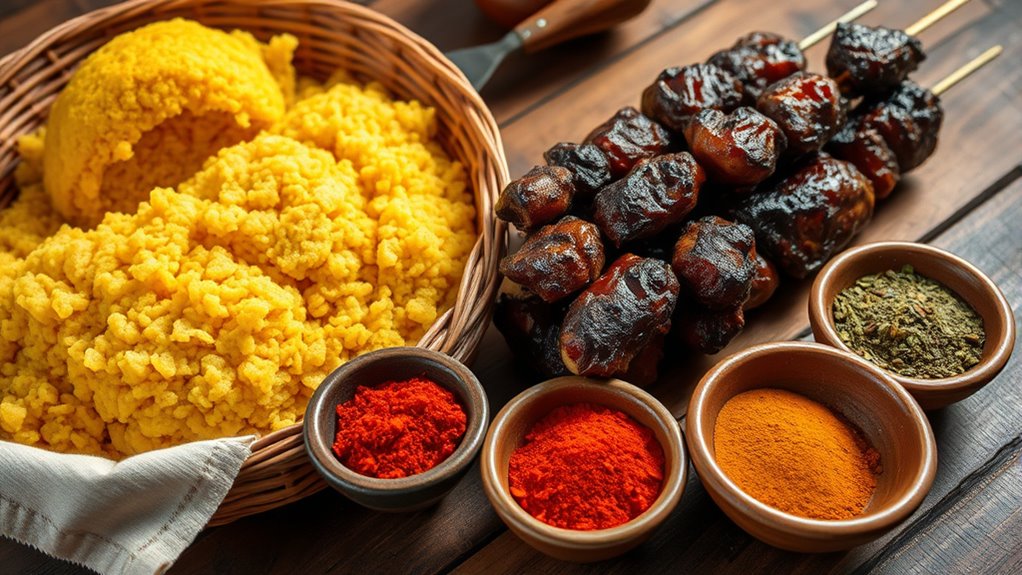
Have you ever wondered what makes East African cuisine so vibrant and diverse? It all comes down to the rich tapestry of traditional cooking techniques and regional ingredient variations that define each dish. When preparing staples like ugali, the method of cooking is straightforward yet rooted in tradition. You’ll find that many cooks use a simple technique: slowly stirring maize flour into boiling water until it thickens and forms a dense, dough-like consistency. This process isn’t just about making food; it’s about preserving cultural heritage. In different regions, you might notice subtle variations—some areas prefer a slightly softer texture, while others aim for a firmer consistency, all influenced by local preferences and available ingredients.
Regional ingredient variations play a significant role in shaping East African dishes. For instance, in Kenya, millet and sorghum are common substitutes for maize, giving dishes a distinct flavor. In Tanzania and Uganda, sweet potatoes and plantains are often incorporated into meals, adding sweetness and nutritional diversity. These ingredients aren’t randomly chosen—they reflect what’s abundant in the area. Coastal regions, like Zanzibar, feature plenty of spices and coconut milk, which influence the taste of dishes like pilau or coconut rice. Inland areas, with more access to cattle, emphasize nyama choma—grilled meat—prepared with spice mixes unique to each community. These variations showcase how geography, climate, and local resources influence cuisine, making each region’s flavors uniquely its own. Additionally, the importance of cultural heritage in shaping culinary traditions underscores the deep-rooted connection between history and food in East Africa.
Regional ingredients like millet, sweet potatoes, and coconut milk define East African flavors.
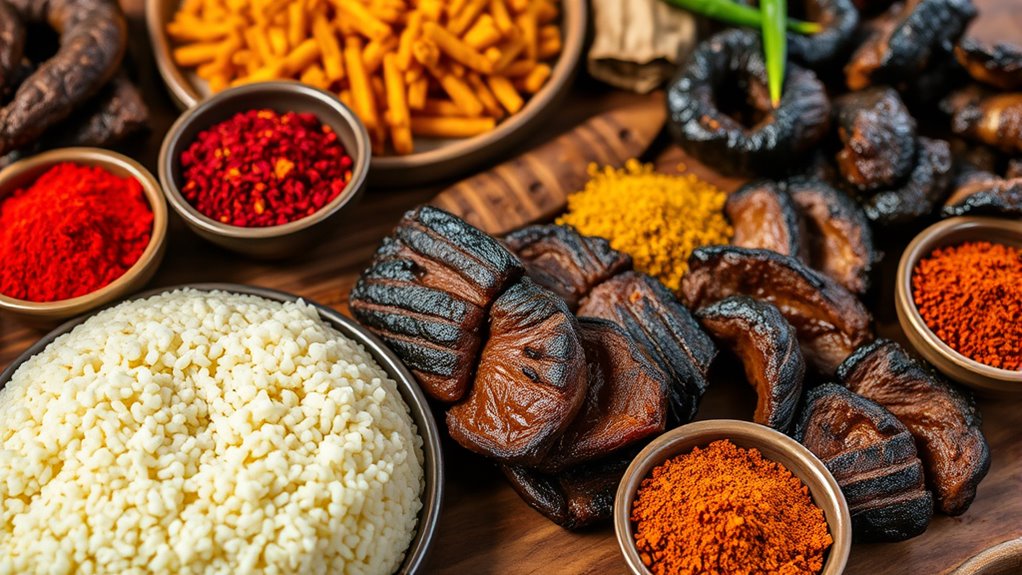
When it comes to spice mixes, you’ll quickly notice their importance in East African cooking. They’re often made with simple ingredients such as cumin, coriander, cardamom, and cloves, but the combinations can vary widely. Some communities create their own signature blends, adding ingredients like turmeric, cinnamon, or chili peppers to enhance flavor. These spice mixes are usually freshly ground and used to marinate meats or flavor stews, infusing dishes with warm, aromatic notes. For example, nyama choma is often served with a side of spicy, flavorful seasoning that complements the smoky grilled meat perfectly. The use of spices isn’t just about taste; it’s about tradition and passing down recipes from generation to generation, ensuring each dish remains authentic.
In essence, East African cuisine is a reflection of its people’s resourcefulness and cultural history. The traditional cooking techniques highlight a deep connection to the land and climate, while regional ingredient variations and spice mixes ensure each dish is a unique expression of local identity. When you explore these dishes, you’re not just tasting food—you’re experiencing a centuries-old culinary story that’s rich, diverse, and full of life.
Frequently Asked Questions
What Are Authentic East African Spice Mixes?
You’ll want authentic East African spice mixes to elevate your dishes, often created through herb infusion techniques that bring out rich flavor profiles. These mixes typically include ingredients like cumin, coriander, cardamom, cloves, and sometimes cinnamon or turmeric. They add depth and warmth to your cooking, creating a fragrant, balanced taste. Using fresh herbs and traditional blends helps you achieve the genuine flavors that define East African cuisine.
How Is Ugali Traditionally Prepared?
You start by boiling water, then gradually add maize flour while stirring constantly to prevent lumps. Keep stirring until the mixture thickens into a dense, smooth cornmeal porridge. Once it reaches a firm consistency, reduce heat and cover the pot for a few minutes. You can then serve ugali hot, often accompanied by meats or vegetables. The key is careful maize flour preparation and continuous stirring.
What Are Common Side Dishes for Nyama Choma?
You’ll often serve nyama choma with grilled vegetable options like peppers, onions, and tomatoes, which add freshness and crunch. Traditional dipping sauces, such as spicy chili or tangy tomato-based sauces, complement the smoky meat flavor perfectly. You might also include sides like Ugali or roasted maize to round out the meal. These accompaniments enhance the flavors and make your nyama choma experience truly memorable.
Are There Regional Variations in East African Cuisine?
Think of East African cuisine as a vibrant tapestry, each region adding its unique thread. You’ll find regional variations shaped by traditional cooking methods and regional ingredient differences. For example, coastal areas favor coconut milk and seafood, while inland regions use hearty grains and meats. These differences reflect the diverse landscapes and cultures, creating a rich mosaic of flavors that make East African dishes truly special and varied across the region.
How Do You Store East African Spice Blends?
To preserve your East African spice blends, store them in an airtight container away from direct sunlight and heat. Homemade spice storage works best in small, sealed jars or tins to maintain freshness and flavor. Avoid moisture, which can cause spoilage. For long-term spice blend preservation, consider keeping them in a cool, dark place, and always use clean utensils to prevent contamination. This keeps your spices flavorful and vibrant.
Conclusion
So, explore East African cuisine, and you’ll discover flavors so vibrant and bold, they’ll ignite your senses like a fireworks display in your mouth. Ugali, nyama choma, and spice mixes aren’t just food—they’re an epic adventure that transforms every meal into a celebration of life itself. Once you taste these dishes, you’ll realize your taste buds will never settle for anything less. Prepare yourself; this culinary journey will blow your mind and leave you craving more forever.