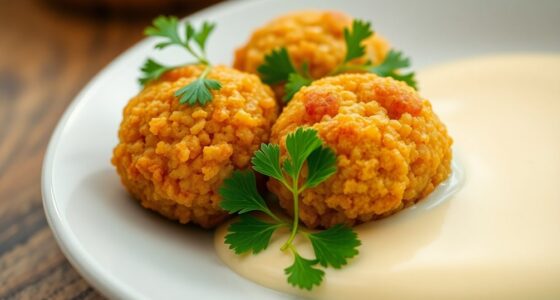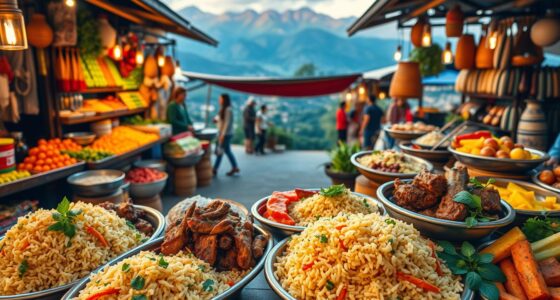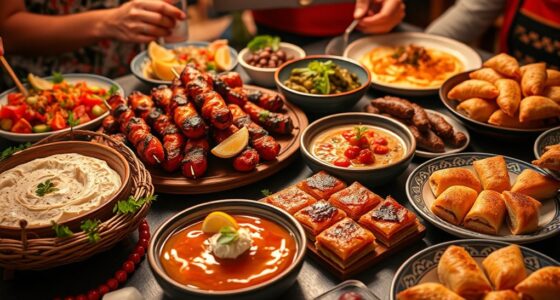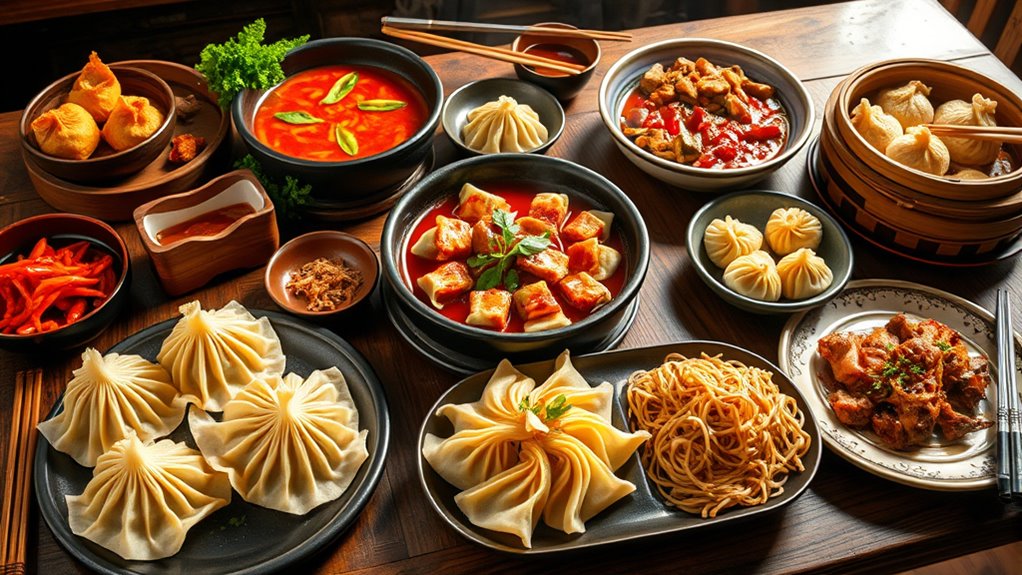
Exploring Chinese cuisine reveals a rich tapestry of regional flavors and signature dishes. In the south, you’ll find delicate dim sum, showcasing Cantonese hospitality with steamed dumplings and buns. The north features hearty hot pot, perfect for sharing and social bonding, with spicy or herbal broths. Each region adds its own twist, reflecting local ingredients and traditions. To uncover more about China’s diverse culinary landscape, keep exploring these vibrant dishes and their cultural roots.

Get kitchen staples and gadgets delivered free with Prime
- Fast, free delivery on millions of items
- Prime Video, Amazon Music and more included
- Member-only deals all year
Key Takeaways
- Regional Chinese cuisines vary greatly, with southern provinces like Guangdong emphasizing dim sum and northern regions favoring hot pot.
- Signature dishes such as dim sum and hot pot reflect local ingredients, flavors, and cultural practices emphasizing social dining.
- Cantonese cuisine showcases delicate, steamed dim sum items served with fragrant tea, highlighting freshness and craftsmanship.
- Northern hot pot features hearty, communal cooking with spicy, mild, or herbal broths and regional ingredient variations.
- Both dishes exemplify China’s diverse culinary heritage, emphasizing social bonding, fresh ingredients, and regional flavor profiles.
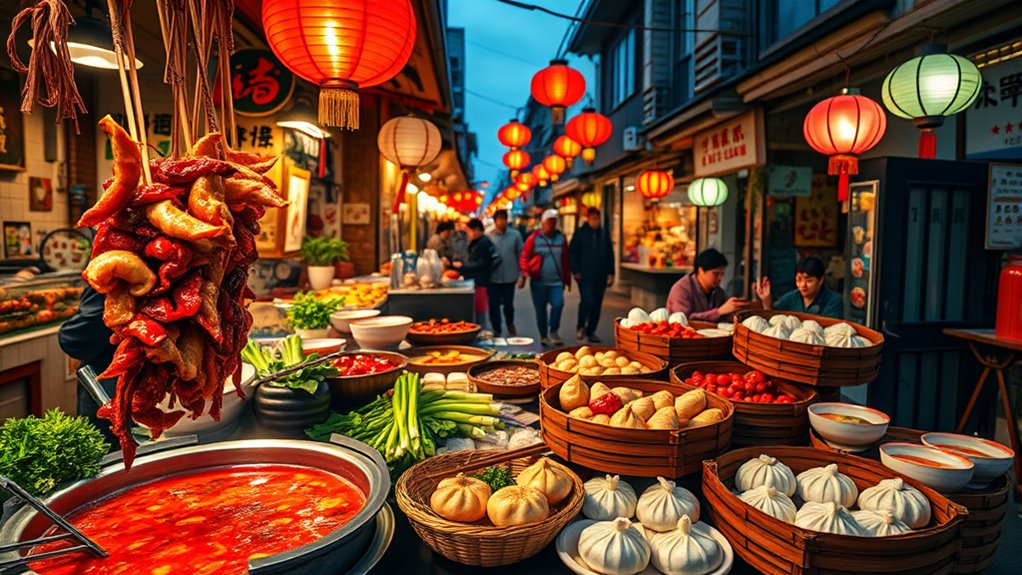
Chinese cuisine offers a diverse array of regional dishes that reflect the country’s rich cultural history and local ingredients. When you explore Chinese food, you quickly realize how much variety exists from one region to another. For instance, in the southern provinces like Guangdong, you’re likely to encounter dim sum—those bite-sized delights that are perfect for sharing and offer a taste of Cantonese hospitality. Dim sum is more than just a meal; it’s a social experience. You’ll find steamed dumplings, buns, and rolls filled with everything from shrimp to pork, often served with fragrant teas. These small dishes showcase the delicate balance of flavors that Cantonese cuisine is famous for, emphasizing freshness, subtlety, and skillful preparation. As you investigate further, you’ll notice that dim sum is typically enjoyed in lively teahouses, where the aroma of steaming baskets fills the air and the pace is relaxed yet lively.
Moving to the northern parts of China, hot pot takes center stage. This communal dish invites you to cook your own ingredients right at the table, making it both interactive and hearty. You choose your broth—spicy, mild, or herbal—and then add thin slices of meat, fresh vegetables, tofu, and noodles. The thrill of hot pot lies in the customization and the shared experience, as everyone dips and cooks their selections in the bubbling broth. It’s a perfect way to warm up during colder months and a reflection of China’s tradition of gathering around food to strengthen bonds. Each region offers its own twist on hot pot, with variations in broth flavorings and ingredients, but the core idea remains the same: a communal, flavorful feast that emphasizes bonding and local ingredients.
Both dim sum and hot pot exemplify how regional differences shape Chinese cuisine, yet they also highlight a common thread—an emphasis on fresh ingredients, bold flavors, and social dining. When you try these dishes, you’re not just tasting food; you’re experiencing a slice of Chinese culture and history. The diversity of flavors, techniques, and traditions across regions means you can enjoy a different culinary adventure every time you explore China’s regional dishes. Whether you’re savoring delicate dim sum in the south or sharing a steaming hot pot in the north, you’re immersing yourself in a culinary journey that celebrates China’s vibrant, layered food heritage.
As an affiliate, we earn on qualifying purchases.
Frequently Asked Questions
How Have Chinese Culinary Techniques Evolved Over Centuries?
You’ve seen how Chinese culinary techniques have evolved over centuries through innovations in fermentation methods and the development of cooking tools. You now use traditional fermentation to create rich flavors like soy sauce and fermented bean pastes, while modern tools like woks and steamers make cooking faster and more efficient. This evolution reflects a blend of ancient traditions and modern advancements, shaping the diverse and vibrant Chinese cuisine you enjoy today.
What Influence Does Geography Have on Regional Ingredient Availability?
Think of Chinese regions as different gardens, each shaped by its unique geography. Your access to local produce depends on the climate impact; coastal areas offer seafood, while mountain regions flourish with hearty vegetables. These natural factors directly influence the ingredients chefs use, resulting in diverse flavors across the country. Geography acts as a guiding hand, shaping the culinary treasures you enjoy, making each region’s cuisine a reflection of its land and climate.
How Do Chinese Festivals Influence Traditional Dishes?
Chinese festivals heavily influence traditional dishes, infusing them with festive flavors and celebratory significance. During these events, you’ll find specific dishes that symbolize luck, prosperity, or unity, like dumplings for wealth or rice cakes for progress. These celebratory dishes become central to the festivities, encouraging families and communities to gather around the table, sharing in the joy and cultural heritage that each festival brings.
What Are the Health Benefits of Typical Chinese Ingredients?
Did you know that many Chinese ingredients have superfood properties and medicinal benefits? For example, goji berries boost immunity and improve eye health, while ginger aids digestion and reduces inflammation. These ingredients are rich in antioxidants and nutrients, supporting your overall wellness. Incorporating traditional Chinese ingredients into your diet can enhance your health naturally, offering powerful benefits backed by centuries of medicinal use.
How Is Modern Chinese Cuisine Blending Traditional and Western Flavors?
Modern Chinese cuisine blends traditional and Western flavors through innovative fusion cuisine, where chefs experiment with flavor pairing to create unique dishes. You’ll notice classic ingredients are combined with Western techniques, balancing familiar tastes with new sensations. This approach enhances the dining experience, making it both authentic and contemporary. As you explore, you’ll enjoy how traditional Chinese flavors are reimagined, offering a delicious fusion that appeals to diverse palates.
Conclusion
By exploring Chinese cuisine, you discover diversity in flavors, richness in traditions, and uniqueness in each region. You taste the boldness of Sichuan, the delicacy of Cantonese, and the heart of Hunan. You embrace the variety of ingredients, the artistry of cooking, and the stories behind every signature dish. In this journey, you experience more than food—you experience a vibrant cultural tapestry, a delicious adventure, and a culinary heritage waiting to be savored and celebrated.
Fall Picks
fall essentials
As an affiliate, we earn on qualifying purchases.