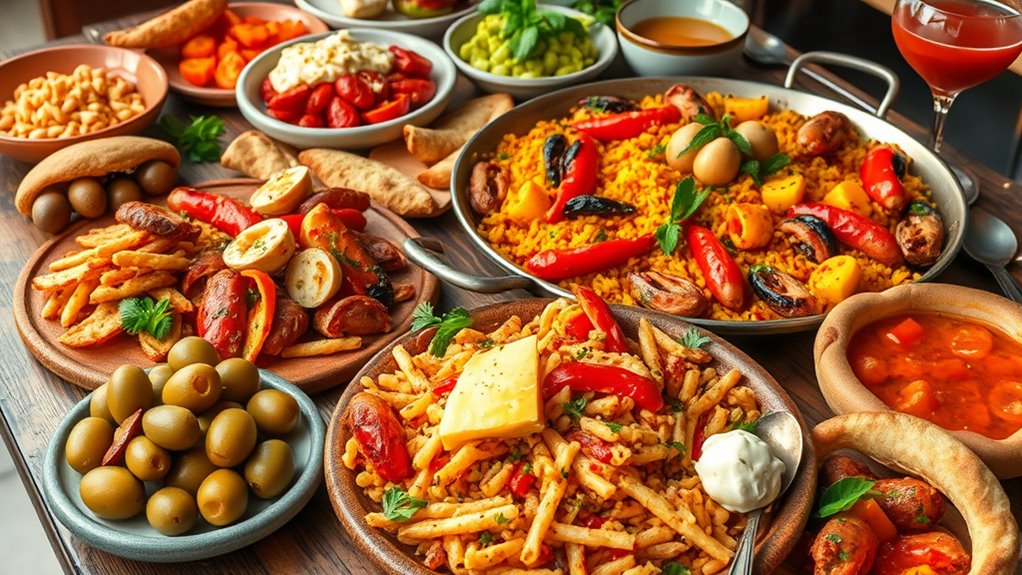

Spanish cuisine offers a vibrant mix of tapas, paella, and regional flavors that reflect centuries of tradition. You’ll find small bites packed with fresh ingredients like cured ham, cheeses, and marinated olives, perfect for sharing. Paella showcases regional seafood and rice, highlighting local ingredients and craftsmanship. Each region adds its unique touch, creating diverse tastes across Spain. Explore more to discover how these dishes celebrate Spain’s rich culinary heritage and regional diversity.
Key Takeaways
- Tapas are small, shareable dishes showcasing traditional ingredients like cured ham, cheese, and olives, emphasizing social dining.
- Paella is a saffron-infused rice dish featuring seafood, meats, or vegetables, with regional variations across Spain.
- Spanish cuisine highlights regional diversity, with each area offering unique flavors and ingredients reflecting local traditions.
- Core ingredients such as olive oil, garlic, and fresh seafood underpin many traditional Spanish dishes.
- Culinary craftsmanship and regional practices preserve authenticity and differentiate local culinary styles.

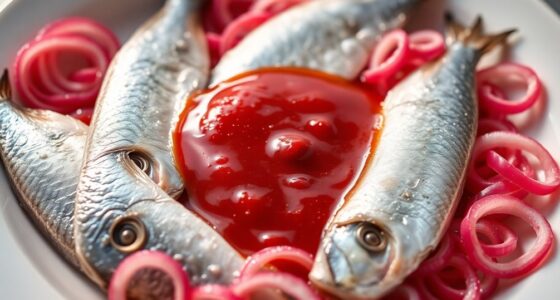
Have you ever wondered what makes Spanish cuisine so vibrant and flavorful? It’s the rich tapestry of Mediterranean flavors infused into every dish, combining fresh ingredients, bold spices, and centuries-old culinary traditions. Spanish food is rooted in traditional ingredients like olive oil, garlic, saffron, tomatoes, and seafood, which come together to create dishes that are both hearty and refined. These ingredients form the backbone of many recipes, giving each dish a distinctive taste that’s both familiar and exciting. Whether you’re enjoying a simple tapa or a complex paella, you’re experiencing a culinary tradition that emphasizes freshness, quality, and balance. The art of culinary craftsmanship plays a significant role in maintaining the authenticity and excellence of Spanish dishes. Tapas, those small plates of assorted bites, exemplify the social aspect of Spanish eating. They’re more than just snacks; they’re a way to savor a variety of flavors in one sitting. When you try tapas, you’ll notice the emphasis on traditional ingredients like cured ham, manchego cheese, marinated olives, and grilled vegetables. These bites often highlight Mediterranean flavors — tangy, savory, and aromatic notes that awaken your palate. The beauty of tapas is their versatility; they can be simple like a slice of bread topped with anchovies or more elaborate like patatas bravas with spicy tomato sauce. As you share these dishes with friends or family, you’re participating in a centuries-old tradition of communal dining that celebrates local ingredients and flavors.
As an affiliate, we earn on qualifying purchases.
Frequently Asked Questions
How Are Regional Ingredients Integrated Into Traditional Dishes?
You see regional ingredients seamlessly integrated into traditional dishes through local ingredient adaptation, where chefs incorporate fresh, regional produce and products to enhance authentic flavors. This process highlights regional flavor profiles, making each dish unique to its area. By using locally sourced ingredients like seafood, herbs, or vegetables, your dishes gain a distinctive character, reflecting the diverse culinary landscape of Spain and celebrating regional culinary traditions.
What Are the Key Differences Between Catalan and Valencian Paella?
You’ll notice that Catalan paella often features ingredients like rabbit, snails, and artichokes, reflecting regional culinary influences, while Valencian paella primarily uses chicken, rabbit, and sometimes snails, emphasizing local traditions. The key differences lie in the ingredients and cooking styles, with Valencian paella typically cooked over an open fire and showcasing saffron for flavor, whereas Catalan versions may include a wider variety of regional ingredients and seasoning techniques.
How Do Spanish Dining Customs Influence Meal Presentation?
You’re about to experience Spanish dining customs that emphasize shared plates and lively presentation styles. These customs influence how meals are served, encouraging you to follow proper dining etiquette—like using shared dishes and respecting serving traditions. This creates an inviting atmosphere where presentation isn’t just visual but a reflection of cultural respect. As you partake, you’ll notice how the presentation styles foster connection and authenticity, making every meal a memorable cultural experience.
Are There Vegetarian or Vegan Tapas Options Available?
Yes, you can find plenty of vegetarian tapas, and vegan options are increasingly available across Spain. Many bars and restaurants offer dishes like grilled vegetables, patatas bravas, and stuffed peppers for vegetarians, while vegan options include marinated mushrooms, chickpea hummus, and vegetable skewers. When you go out, ask about plant-based tapas, and you’ll discover delicious choices that cater to your dietary preferences, reflecting Spain’s growing emphasis on inclusive cuisine.
How Has Spanish Cuisine Evolved With Modern Culinary Trends?
You’ll notice Spanish cuisine has evolved with modern culinary trends by embracing fusion cuisine, blending traditional flavors with global influences. Chefs now prioritize sustainability practices, sourcing local ingredients and reducing waste. This shift results in innovative dishes that honor regional roots while appealing to contemporary tastes. As a result, you get a vibrant, eco-conscious dining experience that respects tradition but also pushes culinary boundaries, making Spanish food more exciting and responsible today.
Conclusion
As you explore Spanish cuisine, you’ll find it’s a delicate dance of flavors, each region offering its own subtle charm. Tapas, paella, and regional dishes invite you to appreciate the gentle nuances that make Spain unique. Embrace the journey, savoring the understated richness woven into every bite. Through this culinary tapestry, you’ll discover that the true beauty lies in the quiet elegance of tradition, softly revealing its timeless story with every taste.