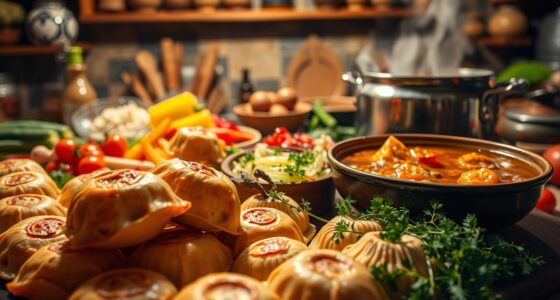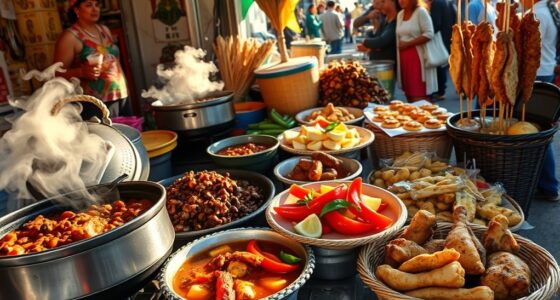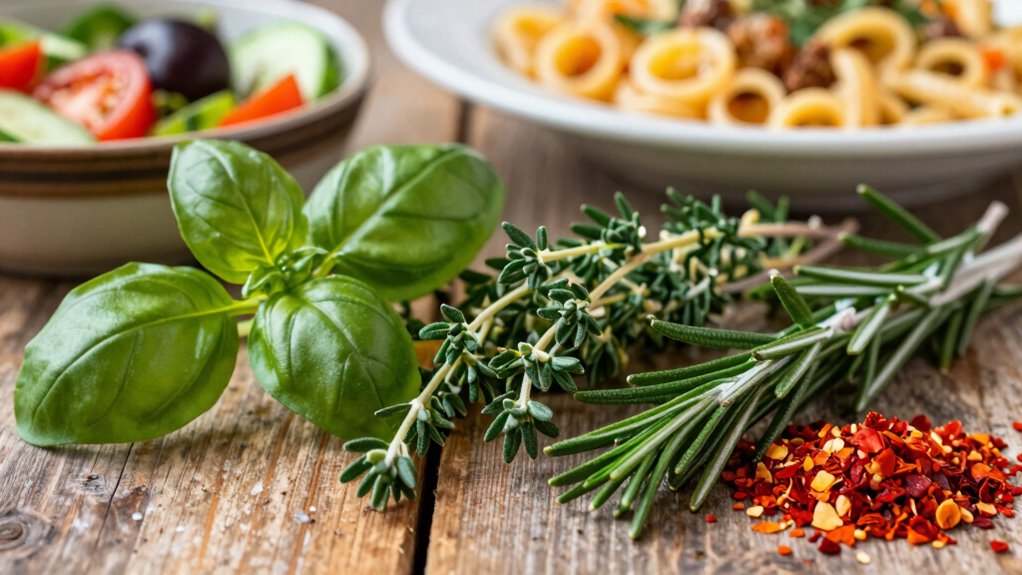

Herbs shape your culinary identity by reflecting cultural values, traditions, and community ties. Different herbs symbolize unique beliefs or social status, influencing how cuisines are perceived and experienced. As you explore various cultures, you’ll notice how herbs like basil, turmeric, or cilantro connect you to heritage or broaden your understanding of identity. Embracing this herb diversity reveals how cuisines evolve and adapt. Keep exploring to discover the fascinating ways herbs continue to influence cultural stories and personal identities.

Get kitchen staples and gadgets delivered free with Prime
- Fast, free delivery on millions of items
- Prime Video, Amazon Music and more included
- Member-only deals all year
Key Takeaways
- Herbs serve as cultural symbols, reflecting values, beliefs, and social status across different cuisines.
- The use of specific herbs links dishes to their cultural and historical origins, shaping culinary identity.
- Incorporating herbs from diverse traditions broadens and evolves a cuisine’s cultural narrative.
- Cultivating and experimenting with herbs influences personal and collective culinary identities.
- Herbs facilitate storytelling, connecting cuisines to heritage while allowing adaptation and cultural fluidity.

Have you ever considered how herbs shape your sense of identity? It’s fascinating how a simple sprig of basil or a pinch of turmeric can carry so much cultural weight, acting as symbols that connect you to your roots and traditions. Herb symbolism runs deep, often representing values, beliefs, or even social status within a community. For example, in some cultures, sage isn’t just an ingredient; it embodies wisdom and purification. When you incorporate herbs into your cooking, you’re not only adding flavor but also engaging in a form of cultural expression that ties you to a specific heritage. Your culinary choices become a reflection of your identity, revealing where you come from and what you value.
Culinary heritage plays an essential role in how herbs influence your sense of self. Every culture has its unique set of herbs that define its cuisine, shaping how people connect with their history through food. Think about Italian cuisine and its reliance on basil, oregano, and rosemary—these herbs aren’t just ingredients; they’re part of a tradition that’s been passed down through generations. When you use these herbs, you’re participating in a ritual that sustains your cultural legacy. Similarly, in Indian cooking, turmeric and cumin evoke a rich history of spice trade and medicinal practices, embedding a sense of identity in every dish. Your choice of herbs can serve as a bridge to your ancestors, honoring their culinary heritage and keeping their stories alive. Additionally, the cultural significance of herbs often influences how they are cultivated and prepared within different communities.
Moreover, herbs influence how you see yourself within a community. They act as symbols of belonging, tradition, and shared experiences. When you cook with herbs that are native to your region, it reinforces your connection to your homeland. Conversely, experimenting with herbs from other cultures can expand your understanding of identity, opening your palate to diverse worldviews. This exchange enriches your sense of self, showing that identity isn’t static but fluid, shaped by the herbs you embrace and the culinary stories you tell through your cooking. As awareness of biodiversity grows, so does the recognition of how cultivating a variety of herbs supports environmental sustainability and cultural preservation. Ultimately, herbs do more than flavor food—they help craft and express your unique cultural narrative, linking you to your past and shaping your identity in a constantly evolving culinary landscape.
As an affiliate, we earn on qualifying purchases.
Frequently Asked Questions
How Do Herbs Influence Regional Food Traditions?
Herbs influence regional food traditions by shaping unique flavors through herb cultivation and culinary integration. When you incorporate local herbs into dishes, you create authentic tastes that reflect regional identity. Different regions cultivate specific herbs, which become key ingredients in their cuisine. This culinary integration helps preserve traditions, connect communities, and showcase local agricultural practices, making herbs essential to defining and maintaining the distinctiveness of regional food cultures.
Can Herbs Change Flavor Profiles Over Time?
Yes, herbs can change flavor profiles over time through herb aging, which impacts their potency and aromatic qualities. As herbs age, their flavor evolution often results in a milder, less vibrant taste, or sometimes a more complex, earthy note. You might notice dried herbs losing some of their fresh brightness, but they can develop deeper flavors, impacting how you use them in your dishes. Proper storage can slow this process and preserve their original flavor.
Do Cultural Beliefs Affect Herb Usage?
You’ll find that cultural beliefs greatly influence herb usage, with studies showing over 60% of traditional societies attributing symbolic or spiritual significance to herbs. Herb symbolism often guides culinary healing practices and rituals, shaping how herbs are perceived beyond their flavor. For example, basil symbolizes love in some cultures, affecting its use in dishes and medicinal practices. Your cultural background influences whether herbs are seen as food, medicine, or spiritual tools.
Are There Herbs Unique to Specific Cuisines?
Yes, many herbs are unique to specific cuisines due to their herb cultivation history and regional climates. You’ll find herbs like Thai basil in Thai dishes or za’atar in Middle Eastern cuisine. When you explore different culinary experimentation, you discover these herbs shape each cuisine’s distinct identity. Using herbs tied to a region adds authenticity and depth, making your dishes more vibrant and culturally rich.
How Does Climate Affect Herb Characteristics?
Think of climate as nature’s artist, shaping herbs like a sculptor molds clay. Your herbs adapt through climate adaptation, which influences their flavor, aroma, and resilience. Warm, sunny climates often intensify herbs’ oils, while cooler, damp environments may soften their essence. Using herb cultivation techniques like proper watering and soil choice helps you guide this transformation, ensuring your herbs thrive and retain their unique character regardless of where you plant them.
Conclusion
As you explore the world of herbs, you realize they’re more than just flavors—they’re whispers of tradition, threads weaving cultures together. Each leaf, a symbol of history and identity, dances in your hands, transforming dishes into stories. With every sprinkle, you carry their essence across borders, blending the familiar with the new. Herbs, in their silent language, remind you that food is more than sustenance—it’s a living, breathing symbol of who we are and where we belong.
Fall Picks
fall essentials
As an affiliate, we earn on qualifying purchases.