Mexican culinary heritage blends indigenous flavors with Spanish influences, creating a vibrant food culture you can enjoy through dishes like tacos, rich moles, and regional specialties. You’ll discover local ingredients such as corn, chili peppers, and cacao, prepared with traditional techniques like nixtamalization and slow simmering. Each dish tells a story of land, history, and community. Keep exploring to uncover more about the rich flavors and cultural significance behind these beloved Mexican foods.
Key Takeaways
- Mexican cuisine blends indigenous ingredients like corn, chilies, and beans with Spanish influences, creating diverse and flavorful dishes.
- Traditional cooking techniques such as nixtamalization and roasting preserve authentic flavors and cultural heritage.
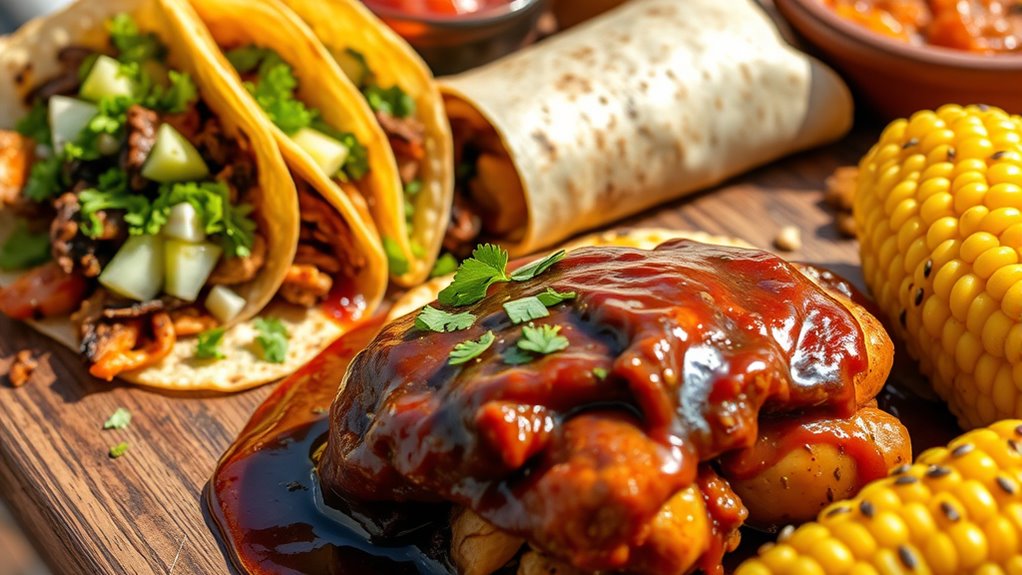
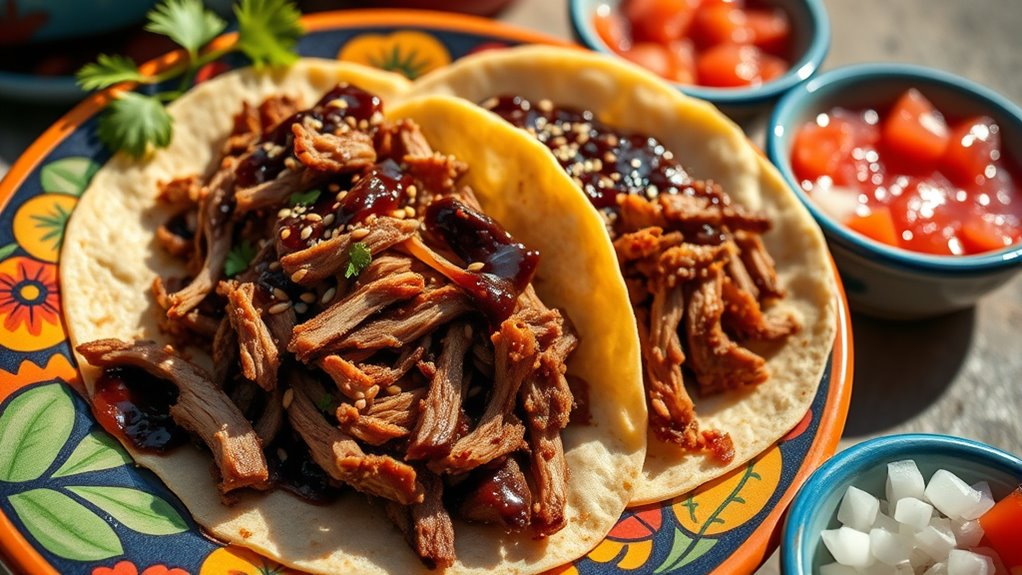
- Tacos exemplify regional diversity, with variations using local ingredients and preparations across Mexico.
- Mole sauces showcase complex spice blends, indigenous chilies, and cacao, reflecting deep culinary craftsmanship.
- Mexican food embodies community, history, and land’s bounty, celebrating centuries of cultural and culinary evolution.
Mexican culinary heritage is a vibrant tapestry woven from centuries of indigenous traditions and Spanish influences. When you explore this rich cuisine, you’ll notice how deeply it’s rooted in the use of regional ingredients and traditional cooking techniques. These elements shape every dish, making Mexican food not just flavorful but also meaningful. From the bustling markets to humble home kitchens, the freshness of local produce, herbs, and spices plays a vital role. Corn, beans, chili peppers, tomatoes, avocados, and cacao are staples that reflect the land’s bounty and history. Each region offers its unique ingredients, influencing the flavors and preparations you’ll encounter. For example, Oaxaca is known for its diverse moles made with indigenous chilies and spices, while coastal areas rely heavily on fresh seafood and tropical fruits.
You’ll also find that traditional cooking techniques are key to revealing the full depth of Mexican flavors. Many methods have been passed down through generations, often involving simple, yet effective, processes. Nixtamalization, for instance, transforms dried corn into masa, which is essential for making tortillas, tamales, and other staples. This process enhances the nutritional value and flavor, demonstrating how indigenous techniques still dominate Mexican cuisine today. Roasting chilies over open flames not only intensifies their smoky aroma but also adds a depth of flavor to salsas and sauces. Slow cooking and simmering are common, especially when preparing dishes like mole, where a complex blend of spices, seeds, and chocolate meld together over hours. These methods showcase patience and respect for tradition, ensuring every bite is packed with authentic taste.
As you dive deeper into Mexican cooking, you’ll see how regional ingredients and traditional techniques create a mosaic of flavors that are both bold and nuanced. Whether you’re rolling fresh tortillas by hand or simmering a pot of mole sauce, you’ll be engaging with centuries of culinary history. This heritage isn’t static; it continues to evolve, incorporating new influences while honoring its roots. By understanding and appreciating the importance of regional ingredients and traditional cooking techniques, you’ll gain a greater respect for the artistry behind every dish. Mexican cuisine isn’t just about eating; it’s about experiencing a culture that values community, history, and the land’s gifts. So, next time you enjoy a taco or a bowl of mole, remember the centuries of tradition, the local ingredients, and the time-honored techniques that make each bite extraordinary.
Frequently Asked Questions
What Are the Regional Variations of Traditional Mexican Tacos?
You’ll notice regional taco styles vary greatly across Mexico, each with distinct tortilla types and fillings. In Baja, fish tacos wrapped in soft corn tortillas are popular, while in Oaxaca, tacos often feature rich moles with thick corn tortillas. In Yucatán, you might try cochinita pibil tacos on banana leaf-wrapped tortillas. These regional variations showcase local ingredients, flavors, and traditional methods, making each taco experience uniquely Mexican.
How Is Authentic Mole Sauce Prepared From Scratch?
Imagine weaving a rich tapestry of flavors—that’s how you prepare authentic mole sauce from scratch. You start with traditional cooking techniques, roasting chilies, seeds, and spices to deepen the flavor. Then, you grind and simmer these ingredients with chocolate and broth, allowing the flavors to meld into a complex, velvety sauce. Patience and care transform simple ingredients into a culinary masterpiece that tells a story of Mexican heritage.
What Are the Key Ingredients in Mexican Culinary Heritage?
You focus on key ingredients like corn, chili peppers, beans, and herbs, which form the foundation of Mexican cuisine. To honor its culinary heritage, you prioritize sustainable sourcing, ensuring ingredients are ethically obtained. Modern fusion influences your cooking, blending traditional flavors with contemporary techniques. This approach keeps the cuisine vibrant, authentic, and innovative, allowing you to celebrate Mexico’s rich culinary history while embracing new culinary trends.
How Has Mexican Cuisine Evolved Over Centuries?
Imagine a plate that tells a story—you’re holding a vibrant evolution of Mexican cuisine. Over centuries, it’s been shaped by cultural influences like Spanish, Indigenous, and African flavors, creating a rich tapestry. Today, modern adaptations blend traditional ingredients with innovative techniques, keeping the cuisine fresh and exciting. You experience this dynamic history every time you enjoy a taco or sip on a modern mole—proof of Mexico’s culinary journey through time.
Are There Specific Rituals Associated With Mexican Food Traditions?
You’ll find that Mexican food traditions often include meaningful rituals, emphasizing cultural significance. During ritual food preparation, you might observe specific steps like blessing ingredients or using traditional tools, which deepen the connection to heritage. These customs honor ancestors and reinforce community bonds, making every meal more than just nourishment. Embracing these rituals enriches your understanding of Mexican culture and highlights the importance of preserving these cherished culinary practices.
Conclusion
As you explore Mexican cuisine, you’re opening a treasure chest of vibrant flavors and ancient traditions. Each taco and spoonful of mole tells a story woven through generations, like a colorful tapestry in your hands. Embrace the richness, let the spices dance on your palate, and carry this culinary heritage with you. After all, Mexican food isn’t just a meal—it’s a lively celebration of history, culture, and soul that invites you to taste its magic.